
Smart BESS for Construction: Cut Costs & Boost Safety with Pre-Integrated PV Containers
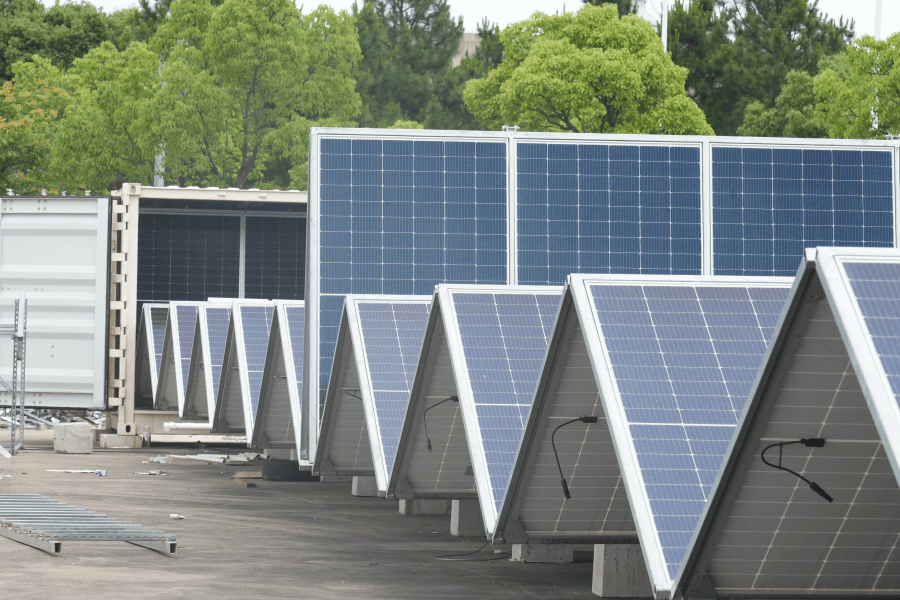
Table of Contents
- The Silent Power Problem on Every Construction Site
- The Real Costs Go Way Beyond Diesel Fuel
- A Smarter Way to Power Up: It's More Than Just a Box
- From Blueprint to Reality: A Case Study in Texas
- Under the Hood: An Engineer's Take on What Really Matters
- Making It Work for You: Beyond the Spec Sheet
The Silent Power Problem on Every Construction Site
Let's be honest. When you're managing a construction project, temporary power is often an afterthought. The default has been diesel generators for decades C they're loud, they smell, and honestly, they're a massive operational headache. But the real issue I've seen firsthand on sites from California to Bavaria isn't just the noise; it's the unpredictable costs and the sheer logistical nightmare of keeping them fed and running. You're dealing with fuel theft, delivery delays, and emissions regulations that are tightening every year. The IEA reports that diesel generators account for a significant portion of a site's non-process energy use and emissions, something ESG-focused projects can no longer ignore. It's a reactive, costly way to power progress.
The Real Costs Go Way Beyond Diesel Fuel
Agitating this further, let's talk about three hidden killers: volatility, vulnerability, and verification. Fuel prices swing wildly C a geopolitical event or a supply chain hiccup, and your bottom line takes a direct hit. Then there's vulnerability. A single generator failure can halt an entire crew. I've been on sites where a critical pour was delayed for hours because of a mechanical issue, costing thousands in labor downtime. Finally, verification. More clients and regulators demand proof of clean energy usage and carbon footprint. A diesel gen-set just gives you a fuel receipt and a smoke trail. You have no data, no transparency, and no way to optimize. This old-school approach turns your power supply from a utility into a liability.
A Smarter Way to Power Up: It's More Than Just a Box
This is where the concept of a Smart BMS Monitored Pre-integrated PV Container changes the game. It's a mouthful, I know. But think of it not as a product, but as a power service in a delivered box. The solution directly targets those pain points. "Pre-integrated" means it arrives on your site 95% ready to go C the solar panels, the battery racks, the inverter, the climate control, and the brain (the Smart BMS) are all factory-assembled and tested in a single, ruggedized shipping container. This slashes commissioning time from weeks to days. The "Smart BMS Monitored" part is crucial. It's not just protecting the battery; it's giving you a live dashboard of your power: how much solar you're generating, your state of charge, system health, and crucially, your diesel displacement and carbon savings. This is the data you need for reports and for smart operational decisions.

From Blueprint to Reality: A Case Study in Texas
We deployed a system based on this exact technical specification for a large logistics warehouse development outside Houston. The challenge was classic: remote site, no grid connection for months, and a mandate to reduce the project's environmental footprint. The temporary power plan originally called for three large diesel generators running 24/7. We positioned one of our pre-integrated containers as the primary source, paired with a much smaller, silent generator as a backup for peak demand or long cloudy periods.
The Smart BMS was the star. It automatically orchestrated the power flow: using solar to charge the batteries during the day, powering the site from the battery bank, and only calling on the backup generator when absolutely necessary. The project manager told me they cut their diesel runtime by over 70%. They had real-time data to show the client, and the near-silent operation was a huge win for worker morale and community relations. The system's built-in UL 9540 and IEC 62933 certification also smoothed over permitting, which in that region, is no small feat.
Under the Hood: An Engineer's Take on What Really Matters
When you look at the technical spec for a system like this, don't just get lost in kWh and kW numbers. Let me translate the key bits that impact you:
- Smart BMS & Thermal Management: This is the system's immune system. A high-quality BMS doesn't just monitor voltage; it manages cell-level balance and, critically, thermal management. Batteries hate extreme temperatures. Our design uses an active liquid cooling system that keeps the cells in their "Goldilocks zone" (around 25C/77F) regardless of the Texas heat or Norwegian cold. This extends lifespan by years and eliminates the safety risks of thermal runaway. It's the difference between a battery that lasts 5 years and one that lasts 15+.
- C-rate in Plain English: You'll see charge/discharge rates like "0.5C" or "1C". Simply put, this is how fast you can drain or fill the battery. A 1C rate on a 100 kWh battery means you can pull 100 kW from it. For construction, you need a high enough C-rate to start big equipment (like cranes or welders) without tripping the system. Our spec is engineered for the high, short bursts typical of site work, not just steady trickles.
- The LCOE (Levelized Cost of Energy) Win: This is your ultimate financial metric. While the upfront cost might be higher than a generator, the LCOE over a 2-3 year project tells the true story. With nearly free solar fuel, minimal maintenance (no oil changes, no filters), and 70% less diesel, the total cost plummets. You're buying predictable, stable energy costs for the project's duration.

Making It Work for You: Beyond the Spec Sheet
At Highjoule, we've learned that a great technical specification is only the start. The real magic is in making it work seamlessly on your site. That's why our approach includes what we call "deployment empathy." We think about the ground conditions, the local utility requirements (whether it's IEEE 1547 in the US or grid codes in the EU), and provide a single point of contact for the entire lifecycle C from site assessment and permitting support to remote monitoring and eventual decommissioning. Our containers are built to the same core safety standards (UL, IEC) but configured for your local reality.
The question isn't really whether temporary power technology has evolved. It has. The question is whether your next project's budget, schedule, and sustainability goals can afford to ignore it. What's the one power-related delay or cost overrun you could eliminate if you had a smarter, quieter, and data-rich alternative from day one?
Tags: Construction Site Power UL Standard BESS LCOE Europe US Market Renewable Energy Smart BMS
Author
James Zhang
20+ years agricultural energy storage engineer / Highjoule CTO