
The Ultimate Guide to 20ft High Cube Industrial ESS Container for Telecom Base Stations
Contents
- The Silent Crisis at the Tower's Base
- Why "Just Any" Container Isn't Enough
- The 20ft High Cube: More Than Just a Box
- The Heart of Reliability: Thermal & Safety Systems
- A Real-World Case: From Grid Anxiety to Energy Independence
- Thinking Beyond the Purchase: The Total Cost of Ownership
The Silent Crisis at the Tower's Base
Let's be honest. When you think about telecom infrastructure, you picture the tower, the antennas, maybe the fiber backhaul. The power system? It's often an afterthought, tucked away at the base. But after 20+ years on sites from California to North Rhine-Westphalia, I can tell you this: that's where the real battle for network uptime is fought. Telecom operators in the US and Europe are facing a perfect storm. Grid reliability isn't what it used to be - public safety power shutoffs in California, voltage fluctuations in aging European grids. Diesel gensets are becoming a PR and cost nightmare. And the push for sustainability? It's not just a nice-to-have anymore; it's a boardroom mandate. You need a resilient, clean, and economical power source. That's where industrial-scale energy storage comes in, but the path to deploying it is littered with headaches: complex local codes (UL 9540 in the US, IEC 62933 in Europe), endless permitting, and the sheer engineering challenge of making a powerful, safe, and compact system. I've seen projects stall for months because the container solution wasn't a perfect fit for the site's constraints or the local inspector's checklist.
Why "Just Any" Container Isn't Enough
Here's a common scenario I encounter. A team decides they need BESS for their base stations. They see a standard 20ft container and think, "We'll just stuff it with batteries and an inverter." This is where the agitation begins. A standard container isn't designed for the microclimate a battery system creates. In Arizona, internal temps can soar, killing cell lifespan. In Norway, condensation becomes a silent killer. Then there's safety. A poorly managed thermal event in a sealed metal box is every engineer's worst nightmare. The financial pain is real, too. According to the National Renewable Energy Laboratory (NREL), ineffective thermal management can increase the Levelized Cost of Storage (LCOS) by up to 20% over the system's life. You're not just buying a container; you're buying 15+ years of predictable performance. A sub-par design becomes a money pit of lost energy, maintenance call-outs, and premature replacement.
The 20ft High Cube: More Than Just a Box
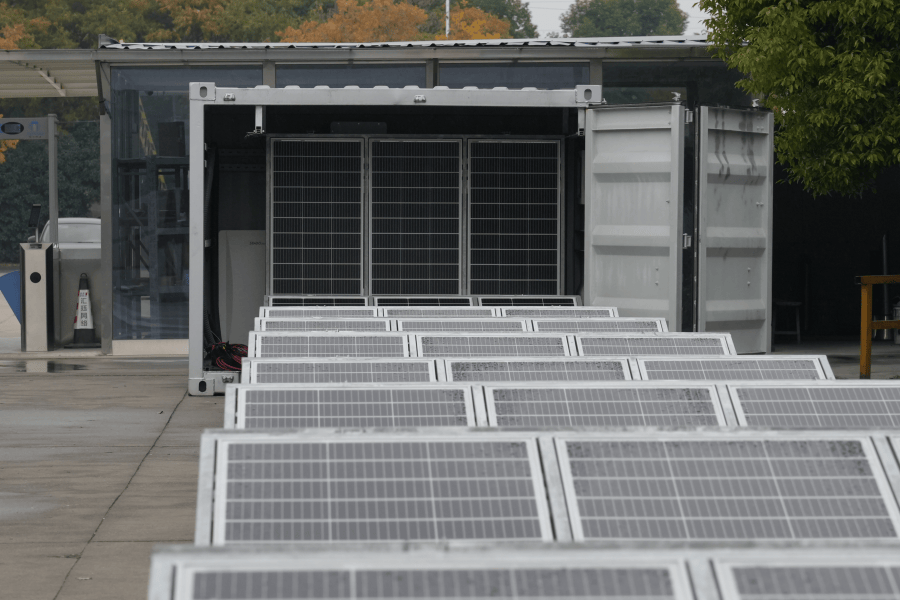
This is why the industrial 20ft High Cube container has become the de facto standard for serious telecom BESS deployments. The "High Cube" part is crucial - that extra foot of height isn't for storage; it's for intelligence. It gives us the physical space to engineer proper airflow plenums, separate climate-controlled zones for batteries and power electronics, and integrate safety systems without turning the interior into an impossible-to-service maze. At Highjoule, we view this container not as an enclosure, but as the foundational platform for the entire system. It's why our PowerCube? Industrial platform is designed from the ground up around this form factor. We pre-integrate everything - battery racks, HVAC, fire suppression, transformer, PCS - in a controlled factory environment. This means we can deliver a system that's already UL 9540 certified or built to IEC 62933, dramatically cutting down your site-specific certification timeline. Honestly, showing up to a site with a fully certified, plug-and-play unit is a game-changer for project managers.

The Heart of Reliability: Thermal & Safety Systems
Let's get technical for a minute, but I'll keep it simple. Two concepts define a good BESS: C-rate and Thermal Management. C-rate is basically how fast you charge or discharge the battery. For telecom, you often need high power (a high C-rate) for short durations to cover grid drops or to shave peak demand. But high C-rate generates more heat. That's where Thermal Management is everything. I've opened containers where they just slapped a standard AC unit on the side. It creates hot and cold spots, leading to some battery modules working harder and aging faster than others. Our approach is what we call "directed active cooling." It's like having a dedicated, precisely controlled climate for each battery rack, ensuring even temperature distribution. This single design choice, which that High Cube space enables, is what maximizes cycle life and keeps your LCOS low. Paired with a multi-tier gas-based fire suppression system that triggers on cell-level off-gassing (not just heat), it turns the container into a fortress.
A Real-World Case: From Grid Anxiety to Energy Independence
Let me give you a concrete example from a project we completed last year in a rural part of Germany. A major telecom operator had a cluster of base stations fed by a single, unreliable medium-voltage line. Frequent micro-outages were causing drops, and running diesel was unsustainable. Their challenge was space - each site had a tiny footprint - and strict German building codes. Our 20ft High Cube PowerCube Industrial was the only solution that fit. We deployed three units, each acting as a microgrid controller for its base station. The containers arrived pre-commissioned. Because they were built to IEC standards, local inspection was streamlined. The result? Grid consumption during peak times dropped by over 95%, outages were eliminated, and the operator now has a clear path to integrating solar PV directly into the container's DC bus. The site manager told me it was the first time he'd slept through a storm warning without expecting a call. That's the power of getting the foundation right.
Thinking Beyond the Purchase: The Total Cost of Ownership
When evaluating a guide like this, the smartest question you can ask isn't about the sticker price. It's about the Total Cost of Ownership over 10 or 20 years. A cheaper, less robust container will cost you more in energy losses, maintenance, and earlier replacement. The right 20ft High Cube industrial ESS is an asset that depreciates predictably. Our focus at Highjoule isn't just on selling a container; it's on guaranteeing a certain Levelized Cost of Energy (LCOE) outcome. We achieve that through the engineering choices we've talked about - superior thermal management for longer life, high round-trip efficiency (often over 95% AC-AC) to capture every kilowatt-hour, and a global service network that can provide remote diagnostics and predictive maintenance. This turns a capital expense into a long-term, predictable operational advantage.
So, the next time you're planning power for a critical base station, look past the tower. What's going at the base? Does your container solution feel like an integrated platform, or just a box? I'd love to hear what your biggest site-power challenge has been lately - feel free to reach out.
Tags: Energy Storage Container UL Standard BESS LCOE Renewable Energy Telecom Power
Author
James Zhang
20+ years agricultural energy storage engineer / Highjoule CTO