
The Ultimate Guide to Air-cooled Mobile Power Container for Eco-resorts
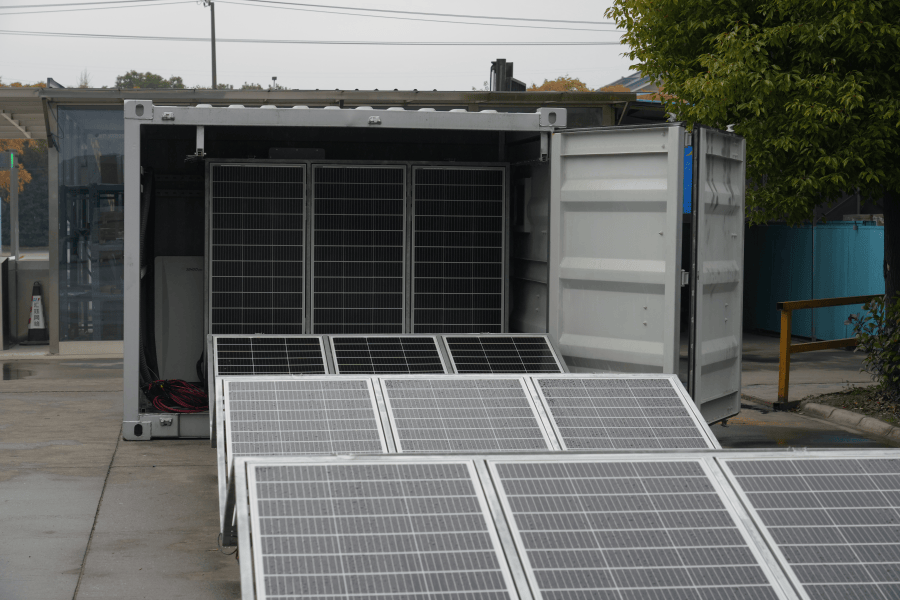
Table of Contents
- The Real Problem: It's Not Just About Going Green
- Why It Hurts Your Bottom Line (And Your Peace of Mind)
- The Mobile, Air-Cooled Solution: Flexibility Meets Reliability
- A Case in Point: A California Eco-Lodge's Story
- Expert Deep Dive: What Really Matters Inside the Box
- Making It Work for You: The Highjoule Approach
The Real Problem: It's Not Just About Going Green
Let's be honest. When you're running an eco-resort, your energy challenges are unique. You're not just trying to reduce a utility bill from the grid - you often are the grid. I've been on-site at remote properties from the mountains of Colorado to the islands of Greece, and the story is similar. The core problem isn't the desire for renewables; it's the daunting, complex, and expensive reality of deploying a resilient, safe, and cost-effective energy storage system that can handle your specific loads. You need power for guest villas, water treatment, kitchen facilities, and maybe a desalination plant, all while maintaining that pristine, quiet environment your guests pay a premium for. A traditional, fixed BESS installation can feel like pouring concrete - it's permanent, disruptive, and the upfront CapEx can make any CFO wince.
Why It Hurts Your Bottom Line (And Your Peace of Mind)
This pain goes beyond initial sticker shock. The International Renewable Energy Agency (IRENA) points out that for off-grid and weak-grid applications, system design flaws and poor technology selection are leading causes of project failure and inflated Levelized Cost of Energy (LCOE). What does that mean on the ground? I've seen a resort in the Caribbean struggle with a poorly sized system that couldn't handle the peak demand from their air conditioning units during a heatwave, leading to generator overuse and sky-high diesel costs. Another common issue? Thermal runaway fears. When you're miles from the nearest fire station, the safety standards of your battery system aren't just a checkbox - they're your resort's lifeline. Every day you delay a smart storage solution, you're burning money on fuel, risking guest satisfaction with power outages, and potentially locking yourself into an inflexible infrastructure that can't adapt as you expand.
The Mobile, Air-Cooled Solution: Flexibility Meets Reliability
This is where the concept of an air-cooled mobile power container shifts the paradigm. Think of it not as a construction project, but as a strategic asset you can literally wheel into place. The solution addresses the core pains head-on: deployment speed, capital flexibility, and inherent safety. Instead of a multi-month, civil-engineering-heavy installation, you're looking at a plug-and-play unit that's pre-engineered, factory-tested, and delivered on a trailer. It's a game-changer for phased development - you can start with one unit to cover your critical loads and add another as you build more villas. And by focusing on advanced air-cooled thermal management (more on that below), the system simplifies maintenance and eliminates the complexity and potential points of failure of liquid cooling loops, which is a big deal in remote locations without specialized technicians.

A Case in Point: A California Eco-Lodge's Story
Let me tell you about a project we did with Highjoule for a high-end eco-lodge in Northern California. Their challenge was classic: they wanted to go 100% renewable, but their peak summer occupancy loads were triple their winter baseload. They also had strict noise ordinances (ruling out constant generator use) and a sensitive forest environment where extensive ground-breaking was prohibited. Our solution was a two-phase deployment of UL 9540 and IEC 62619 certified mobile, air-cooled containers. The first unit was commissioned in under three weeks from arrival on-site, handling the base lodge and staff housing. The following year, a second identical unit was added to support a new wing of guest suites. The modularity was key. Honestly, the resort manager told me the biggest benefit wasn't just the diesel savings - which were substantial - but the "set-it-and-forget-it" reliability. The system automatically manages the solar PV input, battery C-rate (basically, how hard you're charging or discharging the battery), and guest load demand, all while keeping the battery packs in their optimal temperature range with minimal fan noise.
Expert Deep Dive: What Really Matters Inside the Box
Okay, let's get technical for a minute, but I'll keep it in plain English. When evaluating a mobile container, don't just look at the megawatt-hour (MWh) rating. Here are the three things I check first on site:
- Thermal Management Strategy: Air-cooling gets a bad rap sometimes, as if it's the "lesser" technology. That's outdated. Modern, intelligently ducted forced-air systems with variable-speed fans and precise sensor placement can be incredibly effective, especially for the moderate C-rates (typically 0.5C to 1C) that are ideal for resort duty cycles. They're simpler, have fewer parts to fail, and are easier for local electricians to understand and maintain. The goal is uniformity - keeping every battery cell within a tight temperature window to maximize lifespan.
- The True "LCOE" Drivers: Your Levelized Cost of Energy is determined by the total system cost divided by the total energy it will deliver over its life. A cheaper battery that degrades quickly in a hot climate is the most expensive choice you can make. A well-designed air-cooled system, matched to the local ambient conditions, protects that battery life. At Highjoule, we model this precisely for each site - it's not an off-the-shelf guess.
- Grid-Forming Capability: For true off-grid resorts, your BESS isn't just storing energy; it's creating a stable microgrid. The inverter's ability to "form" a voltage and frequency waveform (like a traditional grid does) without relying on a spinning generator is critical for power quality and running sensitive loads like medical equipment or commercial kitchen appliances.
Making It Work for You: The Highjoule Approach
So, how do you move from concept to reality? It starts with treating the container as part of a holistic system. Our process is built on 20 years of field lessons: we begin with a deep dive into your load profiles, solar/wind resource, and expansion plans - not just today's needs. We then engineer the container solution around that, ensuring it's not just a box of batteries, but a fully integrated power plant with the right UL and IEC certifications for your region. The mobility aspect is a strategic tool. Maybe you need to temporarily relocate power for a new construction area, or perhaps regulations change. The asset isn't stranded. And post-deployment, our remote monitoring platform gives you (and us) a real-time window into performance, allowing for predictive maintenance. It's about delivering energy independence without the operational headache.
What's the one energy constraint you wish you could solve at your property today?
Tags: UL Standard BESS Off-grid Power Renewable Energy Mobile Power Container Eco-Resort Air-cooled ESS
Author
James Zhang
20+ years agricultural energy storage engineer / Highjoule CTO