
All-in-One Energy Storage Container for Mining in Mauritania: A Practical Guide
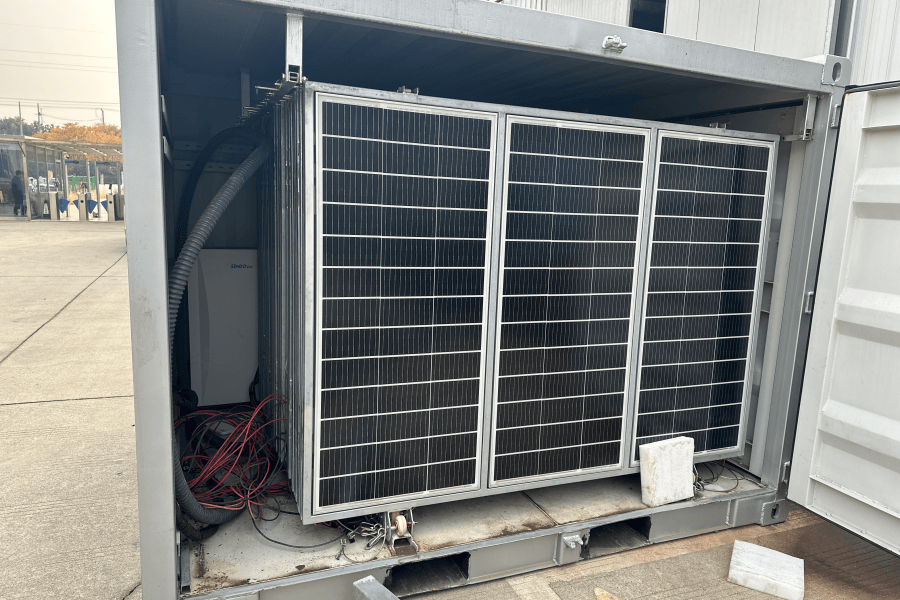
Table of Contents
- The Real Problem: It's More Than Just Power
- Why It Hurts: Cost, Risk, and Wasted Potential
- The Integrated Answer: More Than a Box of Batteries
- Making It Work: Lessons from the Field
- Your Next Step: Asking the Right Questions
The Real Problem: It's More Than Just Power
Let's be honest. When we talk about energy for remote mining sites, especially in places like the vast landscapes of Mauritania, the conversation usually starts with "we need power" and quickly jumps to diesel generators. But after 20+ years on sites from the Australian outback to the Chilean highlands, I can tell you the core problem isn't generation. It's delivery. It's getting stable, predictable, and safe power to your crushing plant, your conveyors, and your camp exactly when you need it, despite dust, heat, and a grid connection that might be hundreds of kilometers away.
You're not just managing an energy source; you're managing a chain of vulnerabilities. A generator's hiccup can mean a full shutdown. Fuel logistics are a constant headache and a massive cost line. And honestly, the push for sustainability isn't just about PR anymore - it's a financial and operational imperative. The International Energy Agency (IEA) highlights that industrial sectors like mining are under increasing pressure to reduce emissions while maintaining reliability. So, the problem is threefold: reliability, cost, and now, environmental footprint.
Why It Hurts: Cost, Risk, and Wasted Potential
Let's agitate that a bit. I've seen this firsthand. The true cost of power in remote mining isn't just the price of diesel. It's the convoy of trucks burning fuel to deliver more fuel. It's the spare parts inventory you have to maintain in the middle of nowhere. It's the downtime when a critical piece fails. This operational complexity directly hits your bottom line.
Then there's the wasted potential. Many sites have excellent solar or wind resources. Mauritania has some of the best solar irradiance in the world. But renewables are intermittent. You can't run a 24/7 processing plant on sunshine alone. So, you either underutilize a fantastic clean resource or you oversize your fossil-fuel backup, locking in high costs and emissions for decades. It's a frustrating catch-22. Without a way to store that abundant solar energy for use at night or during dust storms, you're leaving money and resilience on the table.

The Standards Gap
Here's another layer for my North American and European readers: the standards gap. Deploying equipment in a remote location doesn't mean lowering your safety expectations. If anything, it raises them. You need systems built to global benchmarks like UL 9540 for energy storage systems and IEC 62933 for safety. I've been called to sites where "cost-effective" solutions turned into regulatory nightmares because they weren't built with these certifications from the ground up. The risk isn't just operational; it's legal and reputational.
The Integrated Answer: More Than a Box of Batteries
This is where the modern, all-in-one integrated energy storage container changes the game. Forget the old idea of piecing together batteries, inverters, and cooling systems from different vendors. The solution is a pre-engineered, pre-tested power plant in a shipping container.
Think of it like this: instead of building a computer from scratch, you buy a powerful, reliable laptop. It just works. An integrated container from a reputable provider like us at Highjoule Technologies comes with the battery racks, the thermal management system, the power conversion system (PCS), and the fire suppression all talking to each other seamlessly. It's designed, tested, and certified as one unit. For a site in Mauritania, this means it arrives on a truck, gets placed on a simple foundation, and is connected. The complexity is handled by the engineers before it leaves the factory.
Decoding the Tech for Decision-Makers
Let me break down two key terms you'll hear, in plain English:
- Thermal Management: This is the climate control for your batteries. In Mauritania's heat, it's everything. A poor system cooks the batteries, shortening their life from 15 years to maybe 5. A proper liquid-cooling system, which we use, keeps them at the perfect temperature year-round, maximizing lifespan and safety.
- LCOE (Levelized Cost of Energy): This is your true "cost per kWh" over the system's entire life. A cheap system with a 5-year life has a terrible LCOE. A robust, integrated container with a 15+ year life, lower maintenance, and higher efficiency delivers a superior LCOE. You're buying long-term cost certainty.
The goal is to optimize the entire system's LCOE, not just minimize the upfront battery price. That's how you get real ROI.
Making It Work: Lessons from the Field
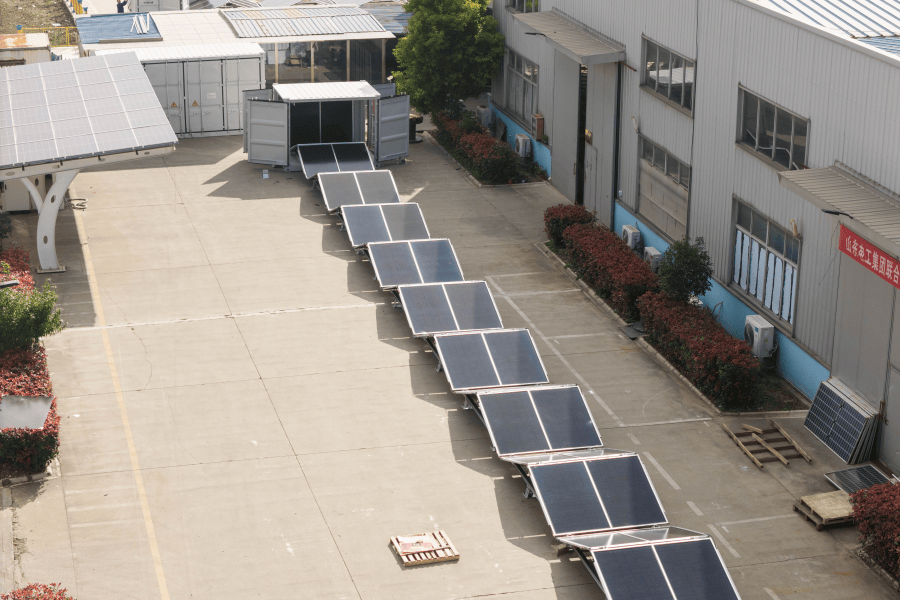
Let's talk about a project that mirrors what's needed in Mauritania. We deployed a 4 MWh all-in-one container for an industrial microgrid at a remote processing facility in Nevada, USA. The challenges were similar: extreme heat, dust, and a need to integrate with existing solar PV to cut diesel use.
The client's main fear was maintenance. They didn't want a PhD in battery science on staff. Our solution was the integrated container with remote monitoring. Our team in Europe can see the system's vitals - cell voltages, temperatures, state of charge - in real-time. We do predictive maintenance alerts. For the local crew, it's about as complex as managing a large generator set, but with far fewer moving parts. The result? A 60% reduction in diesel runtime in the first year, and peace of mind.
For a mining operation in Mauritania, this model is perfect. The expertise is baked into the product and the ongoing support. You focus on mining; we focus on keeping your power stable.
Why Standards Are Your Safety Net
Every Highjoule container is designed to UL and IEC standards from day one. This isn't a checkbox exercise. It means the electrical safety, the fire suppression design, the battery management software logic - all of it has been scrutinized against the toughest global benchmarks. In a remote location, where emergency response is hours away, this inherent safety-by-design is non-negotiable. It protects your asset and, more importantly, your people.
Your Next Step: Asking the Right Questions
So, if you're evaluating an energy storage solution for a mining operation in Mauritania or anywhere remote, move beyond "what's the price per kWh of the battery." Start asking the integrated system questions:
- "Is the entire container UL 9540 or IEC 62933 certified as a unit?"
- "What is the projected LCOE of this solution over 15 years, including maintenance?"
- "How does the thermal management system perform in 50C ambient temperature?"
- "What does the remote monitoring and support look like after installation?"
The right all-in-one container isn't a commodity purchase; it's a long-term partnership for energy resilience. It turns your site's biggest operational headache - power - into a predictable, clean, and competitive advantage. Honestly, that's the shift I've seen forward-thinking operators make, and it's what allows them to dig deeper, more sustainably, and more profitably.
What's the one power reliability issue on your site that, if solved, would unlock the most value next quarter?
Tags: Energy Storage Container UL Standard BESS Mining Operations Mauritania
Author
James Zhang
20+ years agricultural energy storage engineer / Highjoule CTO