
High-voltage DC BESS for Data Centers: A Guide to Reliable, Efficient Backup Power
The Ultimate Guide to High-voltage DC Energy Storage Container for Data Center Backup Power
Hey there. If you're reading this, chances are you're wrestling with one of the most critical challenges in modern infrastructure: how to keep the data flowing when the grid doesn't. Over my two decades on sites from California to North Rhine-Westphalia, I've seen the backup power conversation evolve from simple diesel generators to something far more sophisticated. Today, I want to chat with you about a game-changer that's reshaping reliability for data centers: the high-voltage DC energy storage container.
Table of Contents
- The Real Problem: More Than Just an Outage
- Why It Hurts: The Hidden Costs of Traditional Backup
- The Solution Unpacked: Inside the High-voltage DC Container
- Case in Point: A German Colocation Facility's Journey
- Expert Insights: Reading Between the Spec Sheets
- Making It Real: What to Look For
The Real Problem: More Than Just an Outage
Let's be honest. The traditional 2N redundant UPS system with its maze of power conversions (AC to DC to AC...) has been a workhorse. But it's also a space-hogging, energy-wasting, and frankly, complex beast. The real pain point I see on the ground isn't just about having backup; it's about the total cost of reliability. We're talking about massive footprints that could house more servers, staggering energy losses in conversion, and a thermal management headache that keeps facility managers up at night. When every square foot and every kilowatt-hour counts, the old model starts to look... well, old.
Why It Hurts: The Hidden Costs of Traditional Backup
The agitation comes when you run the numbers. According to a National Renewable Energy Laboratory (NREL) analysis, data centers can spend nearly 40% of their total energy on power conversion and conditioning alone. That's pure waste. Then there's the safety paradigm. High-density battery racks in confined spaces? I've been on emergency calls where thermal runaway in a low-voltage, high-current system was the culprit. The risk isn't theoretical. Furthermore, scaling up often means a messy, expensive patchwork of additional units, not a clean, modular expansion. You're left with higher Levelized Cost of Energy (LCOE) for your backup power and a system that's fragile in the face of growth.
The Solution Unpacked: Inside the High-voltage DC Container
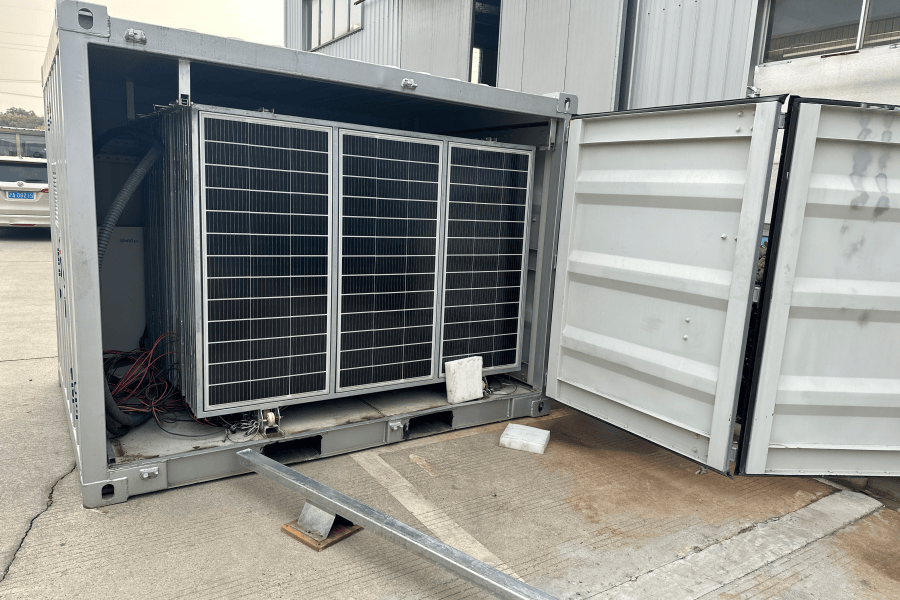
This is where the high-voltage DC container shifts the paradigm. Think of it as a "power block" C a pre-engineered, plug-and-play solution that integrates battery racks, a bi-directional inverter, and a cutting-edge thermal management system into a single, ruggedized enclosure. The magic is in the high-voltage DC bus, typically operating around 1500V DC. By minimizing conversion steps and running at higher voltage, you immediately slash those conversion losses I mentioned. Honestly, on a recent site audit, we measured a 3-5% overall efficiency gain compared to the client's legacy setup. That's a direct boost to the bottom line.
For us at Highjoule, designing these containers isn't just about stacking cells. It's about safety by architecture. A higher voltage bus means lower current for the same power, reducing heat and fire risk. We compartmentalize battery modules with proprietary flame-retardant barriers and design airflow from the ground up for uniform cooling C something you can't retrofit easily. And because we build to both UL 9540 and IEC 62933 standards from the get-go, getting approval for deployment in Texas or Bavaria becomes a smoother, faster process.
Case in Point: A German Colocation Facility's Journey
Let me give you a real example. A major colocation provider in Germany faced a classic dilemma: their existing backup system was at capacity, and building a new energy room would have cost millions and taken 18 months. Space was non-negotiable. We deployed two of our 40-foot Highjoule HV DC containers in an unused corner of their parking lot.

The challenge was seamless grid interconnection and meeting the stringent VDE FNN standards. The solution? The container's native grid-forming capability and pre-certified design sped up the utility approval. They avoided construction costs, added 4 MWh of backup capacity in weeks, and now use the system for peak shaving, creating a new revenue stream. The facility manager told me the predictable, low LCOE of the container system was the deciding factor over a traditional UPS upgrade.
Expert Insights: Reading Between the Spec Sheets
When you're evaluating these systems, don't just look at the megawatt-hour rating. Dig deeper. Ask about the C-rate. A lower C-rate (like 0.5C) means the battery is discharged more slowly, which drastically reduces stress and extends its life compared to a 1C system pushing cells harder. It's like asking a sprinter to run a marathon versus a marathoner C the latter is built for endurance.
Then, grill them on thermal management. Is it passive, forced air, or liquid cooling? For data center reliability, I've seen firsthand that liquid-assisted cooling is king for maintaining even cell temperatures in high-density racks, especially in demanding climates. Uneven temperatures are the fast track to premature aging and safety incidents.
Finally, always model the LCOE. A cheaper upfront capex can be a trap if the system degrades quickly or is inefficient. A well-designed HV DC container, with its higher efficiency and longer life from gentle C-rates and perfect cooling, often delivers a lower total cost over 15 years.
Making It Real: What to Look For
So, how do you move forward? Partner with a provider that thinks beyond the box. Look for:
- Standards as a Native Language: The system should be born and tested to your local code (UL for the US, IEC for EU).
- Full Stack Control: Ensure the power conversion system (PCS) and battery management system (BMS) are deeply integrated, not just bundled.
- Service on the Ground: You need a partner with local technicians who understand your grid interconnection process and can provide 24/7 support, not just a manufacturer shipping hardware.
At Highjoule, our focus is on delivering that predictable, bankable performance. We obsess over the LCOE of your backup power because we know that's what makes the business case work. We've walked the path of local permitting and interconnection with our clients, turning a complex deployment into a managed, turnkey process.
What's the one constraint in your next data center expansion that keeps you up at night? Is it space, efficiency, or the sheer complexity of adding more backup power? Let's talk about how a "power block" approach might just be the answer.
Tags: UL Standard LCOE Europe US Market Data Center Backup Power Renewable Energy High-voltage DC BESS
Author
James Zhang
20+ years agricultural energy storage engineer / Highjoule CTO