
The Ultimate Guide to IP54 Outdoor Hybrid Solar-Diesel Systems for Remote Island Microgrids
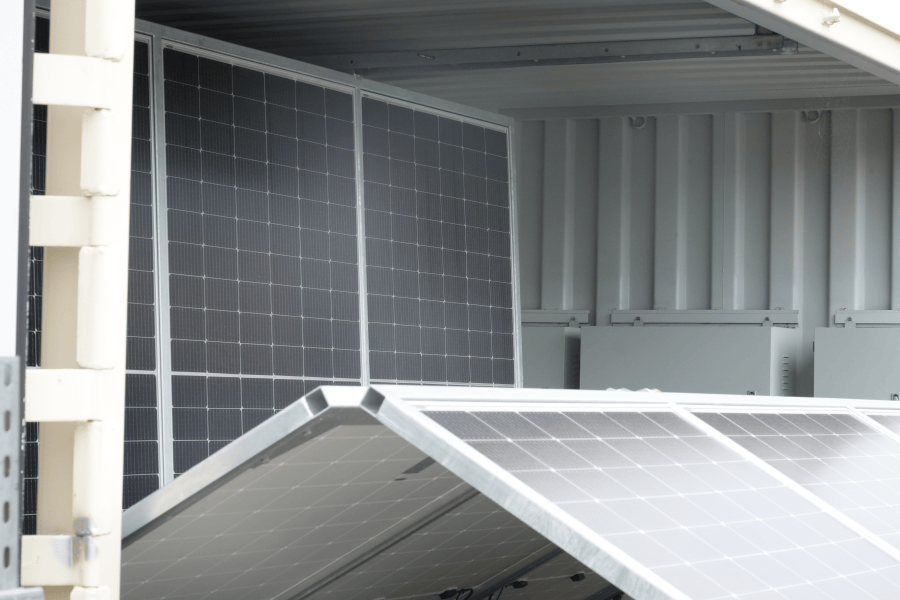
The Ultimate Guide to IP54 Outdoor Hybrid Solar-Diesel System for Remote Island Microgrids
Let's be honest. When you're responsible for powering a remote island community or a critical industrial outpost, "reliability" isn't just a KPI - it's the foundation of everything. For years, the default solution has been a diesel generator. It's loud, it's expensive to run, and honestly, the smell of diesel fumes is a constant reminder of the problem, not the solution. I've seen this firsthand on site: the logistical nightmare of fuel delivery, the sky-high levelized cost of energy (LCOE), and the constant anxiety of a single point of failure.
That's why the conversation has shifted to hybrid systems. But slapping some solar panels next to a genset and calling it a "microgrid" is a recipe for headaches. The real challenge? Building a system that can withstand salt spray, hurricane-force winds, and relentless humidity - all while seamlessly integrating disparate energy sources into a stable, safe, and cost-effective grid. That's where the concept of an IP54 Outdoor Hybrid Solar-Diesel System becomes not just interesting, but essential.
Quick Navigation
- The Real Problem: It's More Than Just Fuel Cost
- Why IP54 (and Beyond) is Your Non-Negotiable Starting Point
- System Architecture: Making Solar, Storage, and Diesel Play Nice
- The Financial Case: Calculating True ROI for Remote Power
- A Real-World Blueprint: Lessons from the Field
- Your Next Steps: Questions to Ask Any Vendor
The Real Problem: It's More Than Just Fuel Cost
Everyone talks about reducing diesel consumption. And it's a huge deal - according to the International Energy Agency (IEA), diesel-based power generation in remote areas can have an LCOE exceeding $0.30/kWh, sometimes even reaching $0.50/kWh or more when transport costs spike. But the pain runs deeper.
I was on a project in the Caribbean where the real issue wasn't the daily fuel burn; it was the operational fragility. A storm would delay the fuel barge by a week, forcing the community onto strict rationing. The constant cycling of undersized diesel gensets led to premature maintenance and unexpected failures. Adding solar alone created instability - clouds would roll in, causing voltage and frequency swings that would trip sensitive equipment. The system lacked a "shock absorber."
The core problem for island microgrids is threefold:
- Environmental Assault: Salt corrosion eats away at electrical components. High humidity and thermal cycling cause condensation inside enclosures, leading to shorts and failures.
- Grid Instability: Intermittent solar injection without proper control can destabilize a small, weak grid, damaging connected loads.
- Operational Complexity: Manually switching between sources is inefficient and risky. You need an automated, intelligent brain to manage the mix.
Why IP54 (and Beyond) is Your Non-Negotiable Starting Point
So you're looking at outdoor energy containers. The spec sheet says "IP54." What does that actually mean for your island project?
IP (Ingress Protection) rating is a standard defined by the International Electrotechnical Commission (IEC). IP54 breaks down as:
5: Protection against dust ingress (limited, not total).
4: Protection against water splashes from any direction.
Honestly, for most coastal and island environments, IP54 is the bare minimum. It tells you the enclosure can handle rain and wind-blown spray. But we often recommend and design for higher protection on critical components, especially for battery compartments and main power electronics. You need to think about:
- Corrosion Resistance: Are the cabinet materials and coatings (e.g., hot-dip galvanized steel, marine-grade aluminum) suited for a salt-laden atmosphere?
- Thermal Management: This is critical. Batteries are sensitive to temperature. An outdoor container in the tropics needs a robust cooling system (often liquid-cooled for high-density lithium-ion systems) that can maintain an optimal 20-25C internal temperature even when it's 40C outside. Poor thermal management slashes battery life and creates safety risks.
- Compliance Footprint: For the US market, UL 9540 (the standard for Energy Storage Systems and Equipment) is crucial for safety and insurance. In the EU and many other regions, IEC 62933 series is key. A system built to these standards from the ground up has undergone rigorous testing for electrical, mechanical, and fire safety.

System Architecture: Making Solar, Storage, and Diesel Play Nice
The magic isn't in the individual components, but in how you orchestrate them. A well-architected hybrid system acts like a seasoned conductor.
At Highjoule, when we design these systems, we focus on creating a hierarchy of control:
- Solar PV as the Primary Source: Meets base load whenever the sun is shining.
- Battery Storage as the Stabilizer & Buffer: This is the core. It soaks up excess solar, discharges to cover clouds or evening demand, and provides instantaneous grid services like frequency regulation. The battery's C-rate - basically, how fast it can charge or discharge relative to its capacity - is key. A higher C-rate (like 1C) means it can respond quickly to load changes, which is vital for smoothing out solar intermittency and reducing genset starts.
- Diesel Genset as the Controllable Backup: It's no longer the always-on workhorse. It's now a dispatchable asset, turned on only to recharge batteries during prolonged low-solar periods or to meet exceptional peak loads. This lets it run at its optimal, fuel-efficient load point.
The brain that ties this together is an advanced Energy Management System (EMS). A good EMS uses forecasting and real-time data to make decisions that minimize fuel use and wear-and-tear, while guaranteeing power availability.
The Financial Case: Calculating True ROI for Remote Power
The business case goes far beyond "saved liters of diesel." You need to model the Total Cost of Ownership (TCO).
| Cost Factor | Diesel-Only System | IP54 Hybrid Solar-Diesel System |
|---|---|---|
| Fuel Costs | Extremely High & Volatile | Reduced by 60-80%+ |
| Genset Maintenance | Frequent (due to constant running) | Greatly Reduced (fewer runtime hours) |
| Fuel Logistics & Spillage Risk | High | Minimal |
| System Lifespan | Shorter (genset wear) | Longer (optimized component use) |
| Environmental Compliance | Increasingly Costly | Future-Proofed |
The result is a dramatically lower Levelized Cost of Energy (LCOE). You're transforming a high-opex model into a balanced capex/opex model with predictable costs. For a typical island microgrid, we see payback periods in the 4-7 year range, depending on local fuel costs and solar resource.
A Real-World Blueprint: Lessons from the Field
Let me share a condensed version of a project we completed for a small island municipality in the Mediterranean. The goal was to reduce diesel dependency and provide 24/7 power to a critical water desalination plant and community center.
Challenge: Limited space, harsh coastal environment, and a grid that couldn't tolerate power fluctuations for the sensitive desalination equipment.
Our Solution: We deployed a turnkey, outdoor IP54-rated system integrating 500kWp solar, a 1MWh lithium-ion BESS (with UL 9540 certification), and the existing 800kW diesel gensets. The Highjoule EMS was programmed with a "genset-off" mode for most of the day, allowing solar and storage to carry the load. The battery's high C-rate capability handled rapid load changes from the desalination plant.
The Outcome: Diesel fuel consumption dropped by over 78% in the first year. The gensets now run only about 6 hours per week for scheduled battery top-up, cutting maintenance costs in half. The community has reliable, cleaner power, and the local utility is now looking at this as a model for other islands.

Your Next Steps: Questions to Ask Any Vendor
If you're evaluating a system for a remote location, move beyond the glossy brochures. Get specific. Here are the questions I'd be asking:
- "Can you show me the specific UL/IEC certifications for the entire outdoor enclosure, not just the internal components?"
- "What is the design ambient temperature range for your thermal management system, and what is the guaranteed internal battery temperature?"
- "How does your EMS specifically prioritize dispatch to minimize genset starts and fuel use? Can I see the logic?"
- "What is the projected degradation rate of the battery in my specific climate, and how does that affect the 10-year financial model?"
- "What is your local service and maintenance footprint? Do you have partners or technicians within a reasonable response time?"
The right system isn't just a collection of parts in a box. It's a resilient, intelligent, and financially sound energy asset designed for the real world. The goal is to make your diesel generator the least busy - and most reliable - employee on the island.
What's the single biggest operational headache you're facing with your current remote power setup?
Tags: UL Standard BESS LCOE Europe US Market Renewable Energy Microgrid Hybrid System IP54
Author
James Zhang
20+ years agricultural energy storage engineer / Highjoule CTO