
The Ultimate Guide to LFP (LiFePO4) Pre-integrated PV Container for Telecom Base Stations
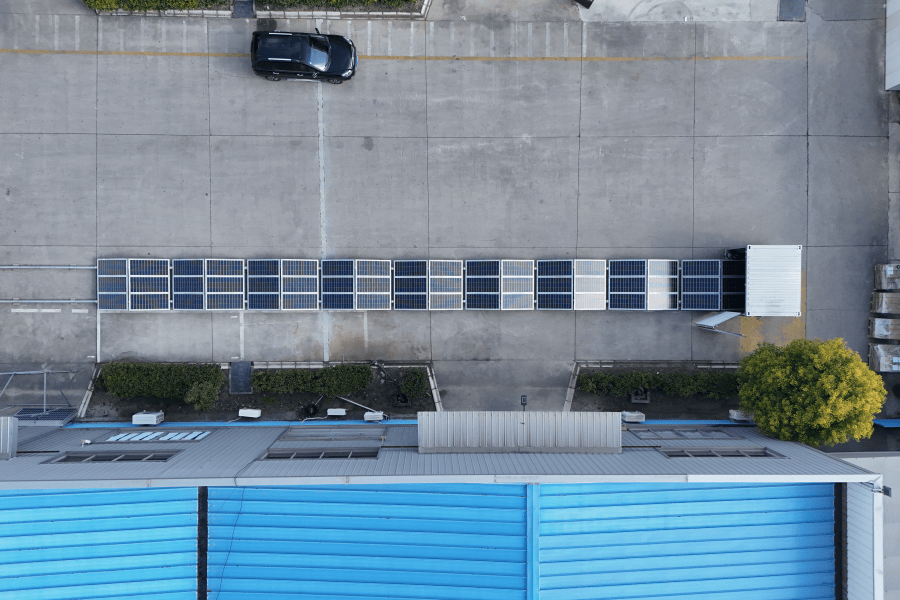
The Ultimate Guide to LFP (LiFePO4) Pre-integrated PV Container for Telecom Base Stations
Honestly, if you're managing telecom infrastructure in North America or Europe right now, you're dealing with a perfect storm. Grid reliability is... let's call it inconsistent. Energy costs are on a rollercoaster that only seems to go up. And the push for sustainability? It's moved from a nice-to-have to a board-level mandate. I've been on-site from Texas to North Rhine-Westphalia, and the scramble for a reliable, cost-effective power solution for remote or critical base stations is real. The traditional approach - piecing together generators, lead-acid batteries, and maybe some solar panels - is becoming a operational and financial nightmare.
Quick Navigation
- The Real Cost Problem: It's More Than Your Electricity Bill
- Safety & Grid Compliance: The Silent Project Killers
- Why LFP, Why Now? The Chemistry of Reliability
- The Pre-Integrated Container Advantage: Plug-and-Play Isn't Just Marketing
- A Case in Point: From Blueprint to Reality
- Key Specs Decoded: C-Rate, Thermal Management & LCOE
The Real Cost Problem: It's More Than Your Electricity Bill
The initial capex for a power system is just the entry fee. The real drain is the operational lifetime. I've seen sites where the maintenance and replacement cycle of legacy batteries, coupled with diesel fuel costs for backup gensets, erodes any potential savings. According to the National Renewable Energy Laboratory (NREL), optimizing energy storage for telecoms can reduce operational costs by up to 40% in off-grid and weak-grid scenarios. That's not a marginal gain; that's transformative. The problem is magnified for sites that are hard to access - think a mountain-top repeater station or a remote rural tower. Every service call is expensive.
Safety & Grid Compliance: The Silent Project Killers
Here's a hands-on truth: a solution isn't a solution if it can't get permitted. In the US, you're looking at UL 9540 for the energy storage system and UL 1973 for the batteries themselves. In Europe, it's the IEC 62619 standard. Navigating this isn't just paperwork; it's about fundamental design. I've witnessed projects get delayed by months because the battery enclosure or the thermal runaway propagation mitigation wasn't up to spec. For telecom operators, a delay in commissioning isn't just a schedule slip - it's lost revenue and reliability risk.

Why LFP, Why Now? The Chemistry of Reliability
This is where Lithium Iron Phosphate (LFP) chemistry changes the game. For a telecom base station that needs to cycle daily and last 15+ years, the classic metrics shift. Energy density (Wh/kg) takes a back seat to lifetime (cycle life), safety, and total cost of ownership. LFP batteries inherently have a more stable cathode material. In plain language, they're much more resistant to thermal runaway - the kind of cascading failure that leads to fires. They also typically offer 2-3 times more charge-discharge cycles than standard NMC chemistries before hitting 80% capacity. For a site you want to "install and forget" for a decade, that's the ticket.
The Pre-Integrated Container Advantage: Plug-and-Play Isn't Just Marketing
So, we've established LFP is the right chemistry. The next leap is in the deployment model. A pre-integrated PV container - like the systems we engineer at Highjoule - solves multiple headaches at once. Imagine a 20-foot or 40-foot ISO container that arrives on your site with the following already inside, tested, and certified as a single unit:
- LFP Battery Racks: With built-in Battery Management Systems (BMS).
- Power Conversion System (PCS): Inverters, rectifiers, all the AC/DC magic.
- PV Integration: DC combiner boxes and controllers ready for your solar array.
- Climate Control: A dedicated, efficient thermal management system.
- Fire Suppression & Safety: Fully integrated to meet local codes.
The beauty is in the "pre-integrated." It's assembled and factory-tested under one roof. This means when it gets to your site, you're not coordinating five different vendors. You're pouring a slab, making the grid and PV connections, and you're substantially complete. We've cut project timelines by over 60% using this approach. It directly attacks the "soft costs" - engineering, procurement, on-site labor - which the International Energy Agency (IEA) notes can be a major barrier to energy storage adoption.
A Case in Point: From Blueprint to Reality
Let me give you a real example, though I'll keep the client name generic. A major European telecom operator had a cluster of base stations in Southern Germany facing frequent grid dips and high demand charges. Their challenge: ensure 99.99% uptime, integrate existing rooftop solar, and do it within a strict municipal permitting framework.
The solution was a 100 kWh / 150 kW LFP pre-integrated container from Highjoule. Because the entire system was built to IEC 62619 and had all the necessary German electrical approvals (VDE), the permitting process was streamlined - the authorities were evaluating a single, certified unit, not a box of parts. On-site, the container was connected to the grid and the existing PV in under three days. The integrated energy management system now does this automatically: it uses solar power first, charges the batteries during low-cost off-peak hours, and discharges during peak times to slash demand charges. The thermal management system, which is a dedicated cooling unit separate from the battery compartment air, maintains optimal temperature year-round, maximizing lifespan. The client's site manager told me his "site visibility and control went from zero to hero" with the remote monitoring dashboard.
Key Specs Decoded: C-Rate, Thermal Management & LCOE
When you're evaluating a system, you'll see these terms. Let's break them down like we're having coffee:
- C-Rate: Think of this as the "speed" of the battery. A 1C rate means a 100 kWh battery can discharge 100 kW in one hour. A 0.5C rate means it can do 50 kW in one hour. For telecom backup, you often need high power (a high C-rate) quickly to support the load when the grid drops. A good pre-integrated system will match the PCS and battery C-rate perfectly so you're not overpaying for capacity you can't use.
- Thermal Management: This is the unsung hero. Batteries age faster if they're too hot or too cold. An effective system doesn't just blow air around; it has precise liquid cooling or direct-air cooling channels to keep every cell in its happy zone (usually 20-25C). This is non-negotiable for a 15-year design life.
- LCOE (Levelized Cost of Energy): This is the ultimate metric. It's the total cost (capex + 20 years of opex) divided by the total energy the system will deliver over its life. A high-quality LFP container might have a higher upfront price than a piecemeal system, but its longer life, lower maintenance, and higher efficiency give it a significantly lower LCOE. You're buying cheap energy for the next two decades.
At Highjoule, our design philosophy is to engineer around these metrics from day one. It's not about selling a container; it's about delivering the lowest possible LCOE with zero safety compromises. That means right-sizing every component, not over-engineering, and ensuring the entire system is compliant from the factory floor.

The transition for telecom power is happening. The question is whether you'll be piecing together solutions from yesterday or deploying the integrated, resilient, and financially smart assets of tomorrow. What's the one site on your network that keeps you up at night regarding power reliability? Maybe it's time to model the numbers for a different approach.
Tags: UL Standard LFP Battery Pre-integrated PV Container Telecom BESS BESS Deployment
Author
James Zhang
20+ years agricultural energy storage engineer / Highjoule CTO