
The Ultimate Guide to Liquid-cooled BESS for Mining Operations in Mauritania
Contents
- The Real Problem: It's Not Just About Power, It's About Control
- Why It Matters More in the Middle of Nowhere
- The Cool Solution: Why Liquids Beat Air in the Desert Heat
- Beyond the Hype: The Nuts and Bolts of a Liquid-Cooled BESS
- Making It Real: What Deployment Actually Looks Like
- Your Next Step: The Right Questions to Ask
The Real Problem: It's Not Just About Power, It's About Control
Honestly, when we talk about powering a remote mining site C whether it's in the Mauritanian desert, the Australian outback, or the Chilean mountains C the conversation immediately jumps to diesel generators. They're the familiar, loud, and expensive backbone. But the real pain point I've seen firsthand isn't just fuel cost or logistics; it's the lack of control and predictability. You're at the mercy of fuel prices, generator maintenance schedules, and the sheer inefficiency of running massive gensets at partial load. Integrating solar? That's the dream for cutting diesel use and hitting ESG goals. But the moment you add intermittent renewables to a delicate off-grid system, you introduce a new variable: instability. The battery system you choose becomes the brain of this operation, not just a backup. And if that brain overheats, the whole body shuts down.
Why It Matters More in the Middle of Nowhere
Let's agitate that pain point a bit. In a temperate, grid-connected industrial park in Europe, a battery tripping offline might mean a demand charge spike. Annoying, costly, but often manageable. At a remote mining operation, a BESS failure can mean a complete production shutdown. Safety systems go offline, processing halts, and the cost isn't measured in cents per kilowatt-hour, but in millions of dollars per day of lost output.
The core of this vulnerability? Heat. Traditional air-cooled battery racks struggle when ambient temperatures consistently hover above 40C (104F), like in Mauritania. To get the power needed for heavy mining equipment C think high C-rate discharges C the batteries work hard and generate significant internal heat. Air cooling simply can't pull that heat away fast or evenly enough. You get hot spots, accelerated degradation (cutting your system's lifespan in half, honestly), and a dramatically higher risk of thermal runaway. The National Renewable Energy Lab (NREL) has shown that improper thermal management can increase levelized cost of storage (LCOS) by over 30% due to reduced cycle life and increased maintenance. In mining, where every operational hour counts, that's a business model killer.
The Cool Solution: Why Liquids Beat Air in the Desert Heat
So, what's the answer? It's moving from cooling with air to cooling with a dedicated fluid. A liquid-cooled BESS, like the systems we engineer at Highjoule, tackles the thermal challenge head-on. Think of it like the difference between a fan and a car's radiator system. The liquid coolant circulates directly through channels in the battery modules, absorbing heat far more efficiently and uniformly than air ever could.
This isn't just a minor upgrade. For a mining operator, it translates directly to:
- Reliability Under Load: Maintaining optimal temperature even during simultaneous high-power charging (from solar midday) and discharging (for evening processing).
- Longer Asset Life: Keeping every cell within its ideal temperature window slows chemical degradation. We've seen field data where liquid-cooled systems retain over 95% of their nameplate capacity after 5 years in harsh environments, where air-cooled counterparts might be at 80% or less.
- Inherently Safer Design: Precise temperature control is the first and best defense against thermal runaway. Combined with our pack-level designs that meet the latest UL 9540A test methodology for fire safety, it gives you a system built for risk mitigation from the cell up.

Beyond the Hype: The Nuts and Bolts of a Liquid-Cooled BESS
Let's get practical. When evaluating a liquid-cooled system, don't just take the marketing brochure at face value. Ask about the engineering details. Here's what I look at on site:
- The Coolant Itself: Is it a dielectric fluid? This is non-negotiable for safety. It means if there's a leak, the fluid won't conduct electricity and cause a short circuit.
- Control Logic: How smart is the thermal management system? It should proactively adjust coolant flow based on real-time load (C-rate) and ambient conditions, not just react to high temperatures.
- Serviceability: This is crucial. I've been to sites where a complex cooling loop was a nightmare to maintain. Our approach at Highjoule uses modular, sealed coolant manifolds that can be serviced or replaced without draining the entire system. In a remote location, simplicity and redundancy in design are everything.
- Standards Compliance: This is your insurance. For any project targeting international finance or operating to global best practices, the system must be designed to IEC 62933 series standards for BESS and certified to relevant UL and IEEE standards. It's not just a sticker; it's a rigorous design and testing protocol.
Making It Real: What Deployment Actually Looks Like
Let me give you an example from a different, but equally demanding, environment: a large cold-storage logistics facility in Nevada, USA. The challenge was similar C reducing demand charges and providing backup for critical refrigeration, with ambient temperatures hitting 45C in summer. They needed a BESS that could discharge at a high C-rate twice daily without degrading.
The air-cooled systems they initially quoted were oversized to account for efficiency loss from heat. We proposed a liquid-cooled solution that was 20% smaller in footprint and capacity but delivered more consistent power. The key was the thermal stability. Two years in, their performance data shows near-perfect round-trip efficiency and zero thermal derating events, even on the hottest days. The operational savings from predictable performance paid back the incremental upfront cost of liquid cooling in under 18 months. Now, imagine that same principle of predictable, heat-resistant performance applied to a 24/7 mining load.
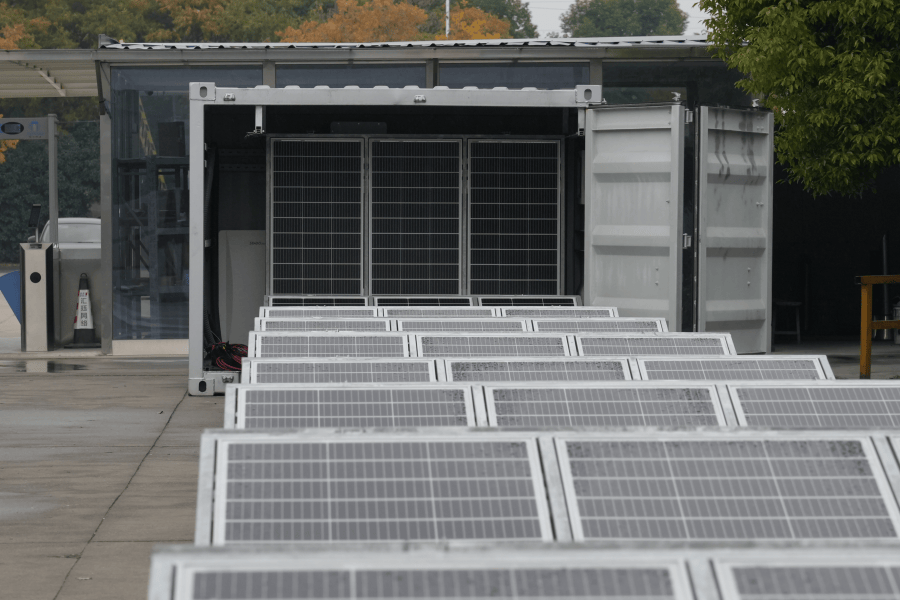
For a mining operation in Mauritania, our deployment focus shifts to extreme resilience. It means containerized, pre-tested systems that arrive site-ready. It means designing for dust ingress protection (IP65 minimum) and integrating seamlessly with your existing power house controls and new solar PV arrays. Our role isn't just to sell a box; it's to provide a predictable, lower-LCOE power asset that you can bank on.

Your Next Step: The Right Questions to Ask
So, where do you start? If you're evaluating BESS for a remote, demanding application like mining, move beyond the basic spec sheet. Bring these questions to your next vendor meeting:
- "Can you show me the third-party test data for thermal performance at my site's peak ambient temperature and required C-rate?"
- "Walk me through the maintenance procedure for the cooling system. What spares are critical, and what is the expected MTBF (Mean Time Between Failures) for the pumps and heat exchangers?"
- "How is the BESS control system integrated to manage my diesel gensets, solar PV, and critical mining loads as one cohesive system?"
The goal isn't to buy a battery. It's to buy years of reliable, cost-controlled, and safe energy. In an environment as punishing as a mine, the technology you choose must be more resilient than the challenges it faces. That, in my two decades of doing this, is where the real value is built.
Tags: UL Standard LCOE Thermal Management Off-grid Power Liquid-cooled BESS Mining Energy Mauritania
Author
James Zhang
20+ years agricultural energy storage engineer / Highjoule CTO