
The Ultimate Guide to Liquid-cooled Energy Storage Container for Data Center Backup Power
Contents
- The Silent Crisis in Your Server Hall
- When the Heat is On: The Real Cost of Compromise
- Liquid Cooling: Not Just a Trend, It's a Necessity
- From Theory to Reality: A California Case Study
- The Nuts and Bolts: What You Need to Know
The Silent Crisis in Your Server Hall
Let's be honest. When you think about data center resilience, your mind probably jumps to cybersecurity, network redundancy, or maybe even physical security. But there's a massive, humming elephant in the room that often gets overlooked until it's too late: the backup power system. Specifically, the battery energy storage system (BESS) that's supposed to keep the lights on when the grid flickers. I've been on-site for more emergency calls than I care to remember, and the pattern is unsettlingly common in both the US and Europe.
The problem isn't that facilities don't have backup power. They do. The problem is that the traditional approach to BESS for data centers is hitting a wall. You've got these incredibly dense, power-hungry server racks generating immense heat, and right next door, you have a battery container that's also trying to manage its own heat. The thermal management strategies are often at odds. Air-cooled systems, which are still prevalent, struggle to keep up. They're bulky, noisy, inefficient at high power draws, and frankly, they create hotspots that can accelerate battery degradation or, in worst-case scenarios, lead to thermal runaway. The International Energy Agency (IEA) highlights that data center electricity demand could double by 2026, putting unprecedented strain on these backup systems. Can your current BESS handle that future load without becoming a liability?
When the Heat is On: The Real Cost of Compromise
I want you to picture this. It's a peak summer day in Texas or during a heatwave in Spain. Grid demand is soaring, and your data center is operating at full capacity. Suddenly, the grid issues a warning. Your BESS needs to be ready to take over instantaneously. But if its cooling system is already fighting ambient temperatures of 40C (104F), its ability to perform is compromised. The battery cells heat up rapidly during a high C-rate discharge (that's the speed at which energy is pulled out).
Here's the agitation: this isn't just about a potential failure to switch over. It's about the slow, expensive bleed you don't see. Every degree Celsius above the optimal temperature range can halve the cycle life of a lithium-ion battery. Let that sink in. Poor thermal management doesn't just risk a single event; it systematically destroys your capital investment, ballooning your Levelized Cost of Storage (LCOS). You're replacing batteries years ahead of schedule. You're also dealing with massive floor space allocation for less efficient systems and higher operational costs from energy-hungry, loud air-conditioning units dedicated to cooling the batteries. It's a financial and operational sinkhole.
Liquid Cooling: Not Just a Trend, It's a Necessity
So, what's the way out? After two decades in this field, from deploying systems in German industrial parks to remote microgrids in Canada, the solution that consistently rises to the top for critical, high-density applications like data centers is liquid-cooled energy storage containers. This isn't a minor upgrade; it's a fundamental shift in design philosophy.
Instead of blowing air around battery racks, a liquid-cooled system uses a dielectric coolant that circulates directly to each battery module or even cell-level cold plates. Think of it like a precision, silent HVAC system for every individual battery cell. This approach solves the core thermal problem at its source. It allows for incredibly uniform temperature distribution, keeping every cell within its ideal 20-25C window even during aggressive, high C-rate discharges. The result? Maximum performance when you need it most, and dramatically extended battery life. For us at Highjoule, designing to this standard isn't optional; it's baked into our containerized solutions from the ground up, ensuring they meet the rigorous safety and performance benchmarks of UL 9540 and IEC 62933 right out of the gate.
From Theory to Reality: A California Case Study
Let me give you a real-world example. We recently partnered with a hyperscale data center operator in Northern California. Their challenge was classic: they needed to expand their backup power capacity to support a new AI compute cluster, but their existing substation and physical footprint were maxed out. They couldn't just add more air-cooled containers; they needed more power density in the same space.
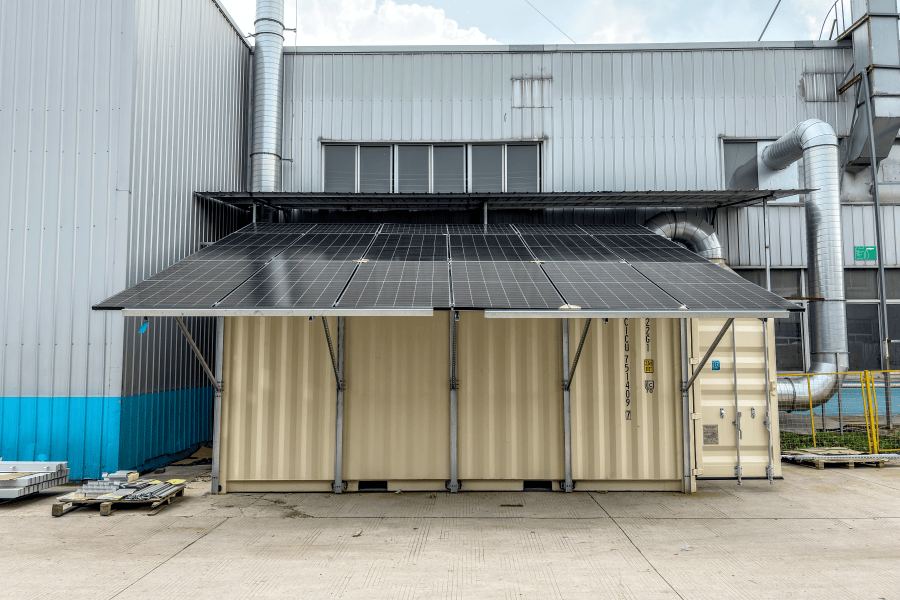
The solution was a custom, liquid-cooled BESS container from Highjoule. By eliminating the vast air-handling units and ductwork, we packed 40% more usable battery capacity into a standard ISO container footprint. But the real win was performance and safety. During the mandatory commissioning tests, we simulated a full grid dropout. The system discharged at its maximum C-rate for the required duration. With our liquid cooling, the peak cell temperature variance was less than 3C across the entire container. The facility manager's comment was telling: "It was the quietest and most uneventful stress test we've ever run." The system is now operational, providing not just backup but also participating in local grid services, thanks to its predictable thermal behavior and UL-certified grid-interconnection profile.

The Nuts and Bolts: What You Need to Know
If you're evaluating this technology, cut through the marketing speak. Focus on these three things from an engineering perspective:
- Thermal Management Efficiency: Ask for the Temperature Uniformity specification. In a well-designed liquid-cooled system, the difference between the hottest and coldest cell in a stack should be minimal (we aim for <5C). This is what truly extends life and ensures every kilowatt-hour of your investment is usable.
- Total Cost of Ownership (TCO), not just Capex: Yes, the initial unit cost might be higher. But do the math on the LCOS. Factor in 2-3x longer battery life, 30-40% less energy for cooling, and minimal maintenance. Over a 10-15 year lifespan, the liquid-cooled system almost always wins financially. That's the calculation our clients in Europe, with higher energy costs, are making every day.
- Safety by Design: Liquid cooling is inherently safer. It provides a faster thermal runaway propagation barrier than air. Combine that with cell-level monitoring and enclosures built to UL/IEC standards for fire containment, and you're not just buying a battery, you're buying risk mitigation. I've seen the difference in failure mode testing, and it's not subtle.
Honestly, the industry is moving this way for critical infrastructure. The question isn't really if you should consider a liquid-cooled energy storage container for your data center backup power, but how soon you can make the transition to a more resilient, efficient, and ultimately more economical system. What's the one thermal or space constraint in your current backup plan that keeps you up at night?
Tags: UL Standard BESS Thermal Management Liquid Cooling Data Center Backup
Author
James Zhang
20+ years agricultural energy storage engineer / Highjoule CTO