
Hybrid Solar-Diesel Systems with Novec 1230 Fire Suppression: The Secure Power Solution for Telecom
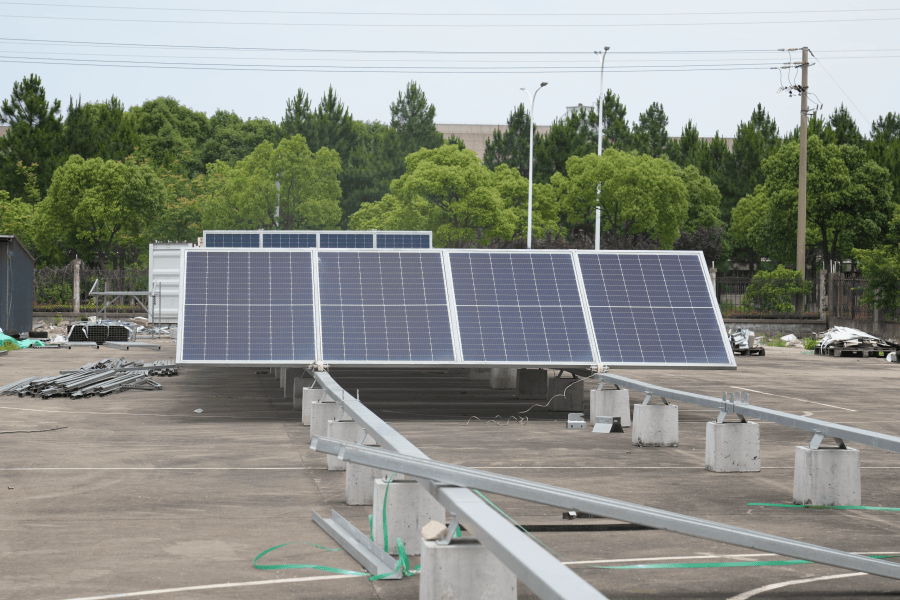
The Ultimate Guide to Novec 1230 Fire Suppression Hybrid Solar-Diesel System for Telecom Base Stations
Honestly, if you're managing telecom infrastructure in North America or Europe right now, you're probably juggling two massive pressures: the urgent need to cut operational costs and the non-negotiable demand for absolute, 24/7 reliability. I've been on-site from the deserts of Arizona to remote sites in Scandinavia, and the story is the same. The traditional diesel-guzzling base station is a cost monster, and simply slapping on solar panels without a smart, safe storage system just creates a new set of headaches. Let's talk about the real game-changer I'm seeing for forward-thinking operators: the intelligently integrated hybrid solar-diesel system, specifically one built with safety as its bedrock - featuring Novec 1230 fire suppression.
Quick Navigation
- The Silent Cost & Risk of "Business as Usual"
- Why Fire Safety Can't Be an Afterthought in Your BESS
- Novec 1230: The Clean Agent Changing the Safety Equation
- Building the Hybrid System: More Than Just Panels & a Battery
- Real-World Proof: A Case from the Field
- Making the Decision: What to Look For
The Silent Cost & Risk of "Business as Usual"
We all know diesel is expensive and volatile. But the real pain point I see is the Levelized Cost of Energy (LCOE) for a remote site. It's not just fuel; it's the logistics, the maintenance crews driving hours for service, and the environmental compliance costs piling up. According to the International Energy Agency (IEA), telecoms account for a significant portion of off-grid diesel consumption globally. Every liter you offset directly improves your bottom line.
But here's the agitation part: many first-gen "hybrid" systems fail to deliver promised savings. Why? Poor integration. An undersized or poorly managed battery bank cycles too deeply, degrading in 2-3 years instead of 10. Inefficient charging from the diesel genset wastes fuel. And worst of all - a topic we didn't talk about enough five years ago - is the thermal runaway risk in dense battery enclosures. A fire incident doesn't just mean equipment loss; it's a total site outage, regulatory hell, and a massive hit to your brand's reputation. I've seen a single site failure derail an entire regional rollout.
Why Fire Safety Can't Be an Afterthought in Your BESS
Let's get technical for a moment, but I'll keep it simple. High-density Lithium-Ion batteries store immense energy. C-rate (the speed of charge/discharge) and thermal management are inextricably linked. Push a battery hard in a hot climate without proper cooling, and you create heat. That heat, if not managed, can trigger a cascading cell failure - thermal runaway. Water or traditional sprinklers? They can electrocute first responders and ruin all your electronics. You need a system that detects the earliest signs of trouble (like off-gassing) and suppresses the fire chemically, without conduction or residue.
This is where standards like UL 9540A (test method for thermal runaway fire propagation) and NFPA 855 (standard for BESS installation) aren't just paperwork; they're your blueprint for risk mitigation. In Europe, IEC 62933 series plays a similar role. Designing to these standards from day one is critical.

Novec 1230: The Clean Agent Changing the Safety Equation
Enter Novec 1230 fluid. It's a clean agent fire suppressant that's become the gold standard for critical electronics protection. Here's why it's perfect for a telecom hybrid system enclosure:
- Fast & Clean Action: It extinguishes fire primarily by heat absorption, dropping the temperature below the combustion point almost instantly. It leaves no residue, meaning your sensitive power electronics and battery management systems aren't damaged by the suppressant itself.
- Safety for People & Planet: It has zero ozone depletion potential and a low global warming potential. It's safe for occupied spaces in the concentrations used for flooding an enclosure (that's important for maintenance crews).
- Space-Efficient: Compared to some other agents, it requires less cylinder storage space - a big plus for compact containerized solutions.
When we at Highjoule design a system, the Novec 1230 suppression system is integrated into the BESS container's design from the start, with dedicated smoke/heat detection and nozzle placement aligned with the battery rack layout. It's not a bolt-on; it's baked in.
Building the Hybrid System: More Than Just Panels & a Battery
A true, reliable hybrid system is an orchestra. The solar array and the diesel genset are the instruments, but the Battery Energy Storage System (BESS) and the Energy Management System (EMS) are the conductor. The EMS is the brain. It makes real-time decisions: "The sun is strong, let's run on solar and charge the battery." "Battery is at 80%, let's turn off the diesel." "Load is spiking, let's use battery + diesel for a moment to avoid overloading the genset."
This intelligence is what slashes fuel use by 60-80% in well-designed systems and extends generator life by thousands of hours. Our approach at Highjoule is to use high-cycle life, medium C-rate LiFePO4 (LFP) chemistry for these applications. They offer the best balance of safety (more stable chemistry), longevity, and cost for daily cycling. The BESS enclosure itself is a climate-controlled, secure unit with HVAC designed for its specific heat load, all monitored remotely.
Real-World Proof: A Case from the Field
Let me give you a concrete example. We deployed a system for a telecom operator in Northern Germany, in Lower Saxony. The challenge was a cluster of base stations in areas with decent solar but unreliable grid-tie points. They needed to reduce diesel reliance and ensure winter reliability.
The Solution: We installed containerized hybrid systems at three sites. Each container housed a 100 kWh LFP battery, a Novec 1230 suppression system with dual detection zones, a hybrid inverter, and the EMS. The existing diesel gensets were retained as backup and integrated under the EMS's control.
The Outcome: In the first year, diesel runtime was reduced by over 72%. The EMS's "genset exercise mode" actually improved generator health by running them under optimal load periodically. The local fire authority was thoroughly impressed with the integrated safety design, which smoothed the permitting process. The operator now has clear visibility into each site's performance and fuel savings through our remote monitoring platform.
Making the Decision: What to Look For
So, if you're evaluating a system, look beyond the kW and kWh specs. Ask these questions:
- Is the fire suppression system integrated and compliant (UL/IEC)? Get the test reports.
- How intelligent is the EMS? Can it be configured for your specific fuel cost, generator health, and priority loads?
- What's the real-world LCOE projection? A good provider will model this with you, including battery degradation.
- What does remote O&M look like? You need 24/7 system visibility and proactive alerts, not just a phone number to call.
The goal is a system that you install and then mostly forget about - it just works, saves you money, and sleeps soundly behind its layer of Novec 1230 protection. That's the peace of mind we engineer into every Highjoule system. It's what lets you focus on keeping the world connected, not on worrying about your power plant.
What's the biggest hurdle you're facing in your next site power upgrade - is it permitting, upfront cost justification, or finding a partner with real deployment experience?
Tags: UL Standard BESS Novec 1230 Fire Suppression Hybrid Solar-Diesel System Telecom Base Station IEEE
Author
James Zhang
20+ years agricultural energy storage engineer / Highjoule CTO