
Novec 1230 Fire Suppression in Mobile BESS for EV Charging: The Ultimate Safety Guide
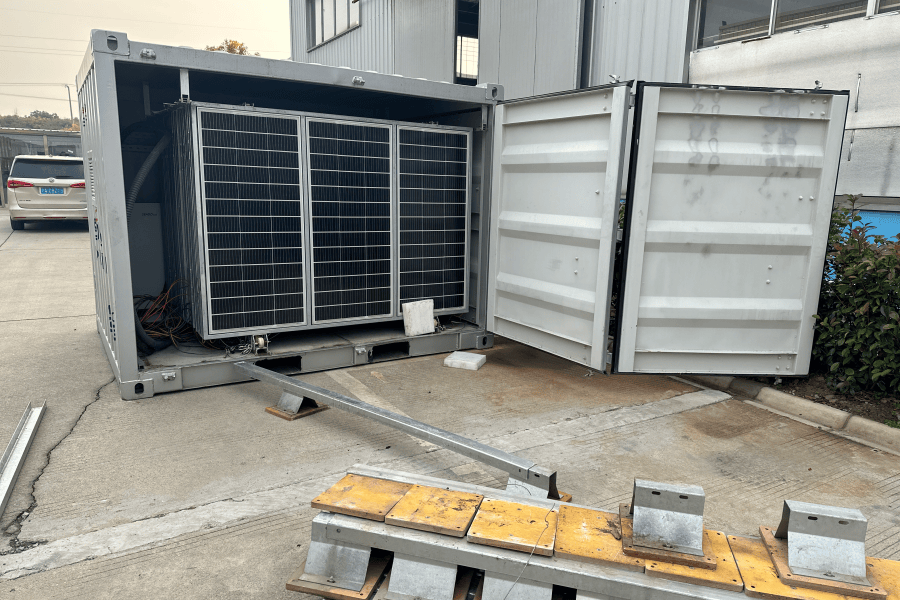
The Ultimate Guide to Novec 1230 Fire Suppression for Your Mobile Power Container at EV Charging Stations
Honestly, if you're looking at deploying mobile battery energy storage (BESS) to support fast EV charging, you're already tackling grid constraints and demand charges. But let me tell you, after 20+ years on site, the conversation that separates a smart project from a risky one always circles back to one thing: what's your fire suppression plan? It's not the most glamorous topic over coffee, but it's the one that keeps utility managers, site operators, and CFOs up at night. I've seen firsthand how a standard "containerized solution" can hit a wall during permitting because the safety specs were an afterthought.
Quick Navigation
- The Real Problem: It's More Than Just a "Box"
- Why This Matters: Cost, Downtime, and Reputational Risk
- Novec 1230: The Game-Changer for Mobile BESS Safety
- A Case in Point: The California Charging Hub Challenge
- Expert Breakdown: Thermal Runaway & Why Novec 1230 Works
- Making It Real: What Your Deployment Checklist Must Include
The Real Problem: It's More Than Just a "Box"
The market is booming. The IEA reports global EV sales surged past 10 million in 2022, pushing charging infrastructure demand to new heights. Mobile BESS containers are a brilliant, flexible answer - they can be deployed in a shopping center parking lot today and at a fleet depot next year. But here's the catch: many local fire marshals and permitting offices in the US and Europe view them not just as "equipment," but as occupiable structures or hazardous material storage units. That triggers a whole different set of codes, often NFPA 855, UL 9540A, and local amendments that are frankly, evolving faster than some product specs.
The generic "clean agent" system that might come with an off-the-shelf unit? It often doesn't cut it. You need a system designed for the specific chemistry and energy density of lithium-ion batteries, capable of addressing thermal runaway - a chain reaction that's tough to stop.
Why This Matters: Cost, Downtime, and Reputational Risk
Let's agitate this a bit. What happens if you skip the deep dive on suppression?
- Permitting Hell: Your project gets stuck in review for months. I've seen projects in Texas and Germany delayed over 6 months because the fire safety plan was deemed insufficient.
- Catastrophic Cost: A single significant incident isn't just about replacing a $500,000 BESS unit. It's about site evacuation, service disruption for dozens of chargers, potential environmental cleanup, and massive insurance premiums hikes. The reputational damage to the host site (a mall, a workplace) is immeasurable.
- Insurance Roadblocks: Underwriters are getting savvier. They want to see compliance with UL 9540A test data and a suppression agent that's proven effective, not just listed.

Novec 1230: The Game-Changer for Mobile BESS Safety
This is where Novec 1230 fluid moves from a technical spec to your project's insurance policy. It's a clean agent fire suppression gas that's become the de-facto standard for mission-critical electronics and, increasingly, for leading-edge BESS. Why? Because it checks the boxes that matter for mobile EV charging containers:
- Zero Residue: It evaporates. No messy powder or liquid to clean up, meaning your high-value battery racks and power electronics aren't ruined by the suppressant itself after a discharge.
- People-Safe: It's safe for occupied spaces (like near public chargers) when used in designed concentrations, which is a huge plus for deployment flexibility.
- Environmental Profile: It has a low global warming potential and zero ozone depletion potential, aligning with the sustainability goals of your EV project.
- Proven Performance: It's been validated in large-scale fire testing for lithium-ion battery hazards, which is the gold standard for authorities having jurisdiction (AHJs).
A Case in Point: The California Charging Hub Challenge
Let me share a scenario from last year. A developer was deploying a mobile 2 MWh container to support a 6-stall DC fast-charging plaza in a California coastal city. The local fire department, citing recent state guidelines, demanded evidence that the suppression system could inert the container and prevent re-ignition for a full 60 minutes - a tall order.
The initial vendor's standard system couldn't provide the test data. Our team at Highjoule stepped in. We configured a container with a high-density Novec 1230 flood system, designed to achieve extinguishment and maintain a protective atmosphere well beyond that threshold. The key was providing the fire marshal with the UL 9540A test reports for the specific battery modules coupled with the Novec system performance data. That documentation bundle turned a "no" into a permitted "yes" in three weeks. The system's clean agent nature also meant the container could be placed closer to the public access area, optimizing cable runs and efficiency.
Expert Breakdown: Thermal Runaway & Why Novec 1230 Works
Okay, let's get technical for a minute, but I'll keep it simple. Thermal runaway is like a battery cell having a meltdown and throwing a "hot party" that invites all its neighboring cells. The goal of suppression isn't just to put out a flame you can see; it's to absorb heat and break the chain reaction.
Water can work, but it's incredibly messy, conductive, and can spread contamination. Traditional inert gases like argon need huge storage tanks - not ideal for a mobile unit where space is premium.
Novec 1230 works through cooling. It's a liquid that flashes to a gas when released, absorbing a massive amount of heat from the battery rack and the flaming electrolytes. This rapid cooling can stop the propagation. For us at Highjoule, integrating this means designing the container's airflow and sensor network to detect off-gassing (an early warning) and trigger the Novec flood before the runaway gets a full hold, which is critical for life safety.

Making It Real: What Your Deployment Checklist Must Include
So, how do you make sure your mobile power container is truly ready? Don't just accept "it has fire suppression." Ask these questions:
- Agent Specificity: Is it Novec 1230 or an equivalent clean agent with third-party test data for Li-ion batteries?
- System Design: Is it a flood system designed for the exact cubic volume and rack layout of your container? Nozzle placement is critical.
- Detection & Control: Does it have early warning (VOC/thermal) sensors and a control panel that integrates with the BESS management system for automatic shutdown?
- Documentation: Can the provider supply the full UL 9540A report for the battery and the suppression system's performance assessment? This is your permit passport.
- Serviceability: How is the system inspected, tested, and recharged? You need a local service partner who knows the tech.
At Highjoule, this isn't an add-on. It's engineered into our mobile PowerCubes from day one. We factor the cylinder space, the plumbing, and the control logic into our LCOE (Levelized Cost of Energy) models, because we know upfront safety design avoids catastrophic cost later. Our deployments in Europe and North America are built to meet IEC 62933 and UL 9540 codes, but we go further by engaging with local AHJs early, using our field experience to smooth the path.
Ultimately, your mobile BESS should be an asset that de-risks your EV charging operation, not adds a new worry. The right fire suppression choice is what lets you sleep soundly, knowing you've built resilience into the heart of your project. What's the one safety specification you're double-checking on your next deployment?
Tags: UL Standard BESS US Market Europe Market Novec 1230 Fire Suppression Energy Storage Safety EV Charging Mobile Power Container
Author
James Zhang
20+ years agricultural energy storage engineer / Highjoule CTO