
Pre-Integrated PV Container Solutions for Coastal & Salt-Spray BESS Deployment
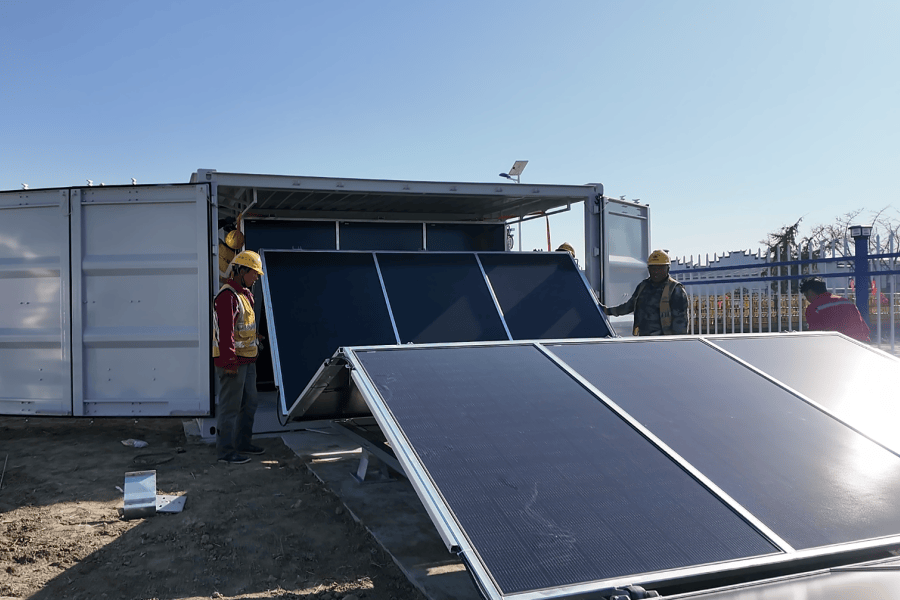
Table of Contents
- The Hidden Cost of Salt: Why Coastal BESS Projects Are Uniquely Challenging
- Beyond Corrosion: The Real-World Domino Effect on Your Project
- The Pre-Integrated Answer: More Than Just a Box
- A Case in Point: How We Solved a Texas Gulf Coast Headache
- Key Considerations for Your Coastal Container Project
- Making the Right Choice for Your Site
The Hidden Cost of Salt: Why Coastal BESS Projects Are Uniquely Challenging
If you're looking at deploying a Battery Energy Storage System (BESS) near a coast, you already know the benefits: pairing with offshore wind, stabilizing grids in high-demand coastal cities, or supporting island microgrids. But honestly, from my 20+ years on sites from the North Sea to the Gulf of Mexico, the single biggest underestimated factor is the air itself. It's not just about humidity; it's about salt.
Salt-spray environments, classified under standards like IEC 60068-2-52 and ISO 9223, create a perfect storm for electrical equipment. That fine, airborne salt mist is highly conductive and relentlessly corrosive. I've seen firsthand on site how it accelerates the degradation of standard electrical enclosures, busbars, and even battery module casings. The initial quote for a "standard" container might look attractive, but the total cost of ownership tells a different story.
A study by the National Renewable Energy Laboratory (NREL) on renewable infrastructure in marine environments highlights that corrosion-related failures are a leading cause of increased operational expenditures (OpEx) and unplanned downtime. This isn't a theoretical risk; it's a daily operational challenge.
Beyond Corrosion: The Real-World Domino Effect on Your Project
Let's agitate that problem a bit. What does salt-induced corrosion actually mean for your project's bottom line and safety?
- Safety & Compliance Risks: Corroded electrical connections increase resistance, which generates excess heat. This is a direct fire risk. For projects targeting UL 9540 or IEC 62933 standards, maintaining the integrity of safety systems in a corrosive atmosphere is non-negotiable but incredibly difficult with off-the-shelf components.
- Skyrocketing Maintenance: Imagine scheduling quarterly inspections and cleanings instead of annual ones. You're paying for specialized crews to use deionized water for cleaning, replacing connectors, and repainting surfaces. The labor and downtime costs are immense.
- Performance Degradation & LCOE Impact: This is the big one. The Levelized Cost of Energy Storage (LCOE) is your true metric. If your system's availability drops due to unplanned maintenance, or its lifespan is cut from 15 years to 10 because of component failure, your LCOE spikes. You're not getting the financial return you modeled.
The traditional approach - buying a container, then sourcing and integrating climate control, fire suppression, and electrical systems separately - multiplies these risks. Every seam, every non-certified component, is a potential failure point.
The Pre-Integrated Answer: More Than Just a Box
So, what's the solution? It's a shift in philosophy from a containerized system to a pre-integrated, engineered solution designed for the environment from day one. This is the core of what a rapid-deployment, salt-spray-rated PV container should be.
Think of it not as a box you put stuff in, but as a unified machine where every component speaks the same language of durability and control. At Highjoule, when we engineer for coastal sites, we start with the air. The entire thermal management system is designed to maintain a positive pressure inside the container with filtered, dehumidified air. This keeps the salt-laden external atmosphere out. We use marine-grade alloys, stainless-steel fasteners, and specialized coating systems that far exceed standard industrial paint.
More importantly, the integration is done for you in a controlled factory environment. The battery racks, HVAC, fire suppression (like FM-200), power conversion systems (PCS), and controls are mounted, wired, and tested as a single unit. This means when it arrives on your site - whether in California, Florida, or the UK coast - it's truly a "plug-and-play" scenario. The rapid deployment isn't just about speed; it's about reducing the window of time where your components are exposed to the elements during complex on-site assembly.
A Case in Point: How We Solved a Texas Gulf Coast Headache
Let me give you a real example. We worked with an independent power producer on the Texas Gulf Coast. Their challenge was to add a 5 MW/10 MWh BESS to a solar farm, literally two miles from the shoreline. Their initial plan involved a conventional container. After our first site visit, we showed them the corrosion on a nearby substation that was only 3 years old - it was a convincing visual.
We proposed our pre-integrated, salt-spray certified container solution. Here's what made the difference:
- Guaranteed Compliance: The entire unit was designed to meet UL 9540 and the specific corrosion requirements of IEEE C37.24 for coastal zones from the outset. No last-minute retrofits.
- Thermal Management Precision: We oversized the HVAC with a specific anti-corrosion coil and used a multi-stage filtration system. This ensured the internal environment remained within a tight 2C band, which is critical for both battery longevity and preventing internal condensation - a hidden corrosion driver.
- Outcome: The system was commissioned in 8 weeks from delivery. Two years in, their preventive maintenance reports show zero corrosion-related issues, while a neighboring asset using standard enclosures has already undergone one major component replacement cycle.

Key Considerations for Your Coastal Container Project
When evaluating a pre-integrated container, don't just look at the spec sheet. Ask these questions, the ones we get from our most experienced clients:
- C-Rate & Thermal Design: "Is the thermal management system designed for my specific duty cycle?" A system discharging at a 1C rate generates different heat than one at 0.5C. The HVAC must be dynamically matched to the battery's heat rejection profile to maintain efficiency and prevent stress.
- The LCOE Equation: Ask the vendor to model the impact of their design on your LCOE. How does their corrosion protection extend asset life? How does their integrated monitoring predict maintenance, avoiding costly downtime? A slightly higher CapEx that lowers OpEx and boosts availability almost always wins on LCOE.
- True "Pre-Integration": Does the supplier just bolt third-party systems together, or do they have a unified control system? A single control platform that manages HVAC, fire suppression, and battery management in harmony is vital for safety and performance. At Highjoule, our platform treats the container as one organism, not a collection of parts.
Making the Right Choice for Your Site
Choosing the right solution for a coastal environment boils down to a simple question: Are you buying a component, or are you buying a guaranteed outcome? The rapid deployment of a pre-integrated container is worthless if it isn't built to survive - and thrive - in the harsh reality of salt spray.
Your project's financial success and safety compliance depend on this choice. What's the one corrosion-related risk that keeps you up at night for your upcoming project?
Tags: UL Standard BESS LCOE Europe US Market Renewable Energy Salt-Spray Corrosion Pre-integrated Container
Author
James Zhang
20+ years agricultural energy storage engineer / Highjoule CTO