
Scalable 5MWh Modular BESS for Rural Electrification: A Guide for Global Developers
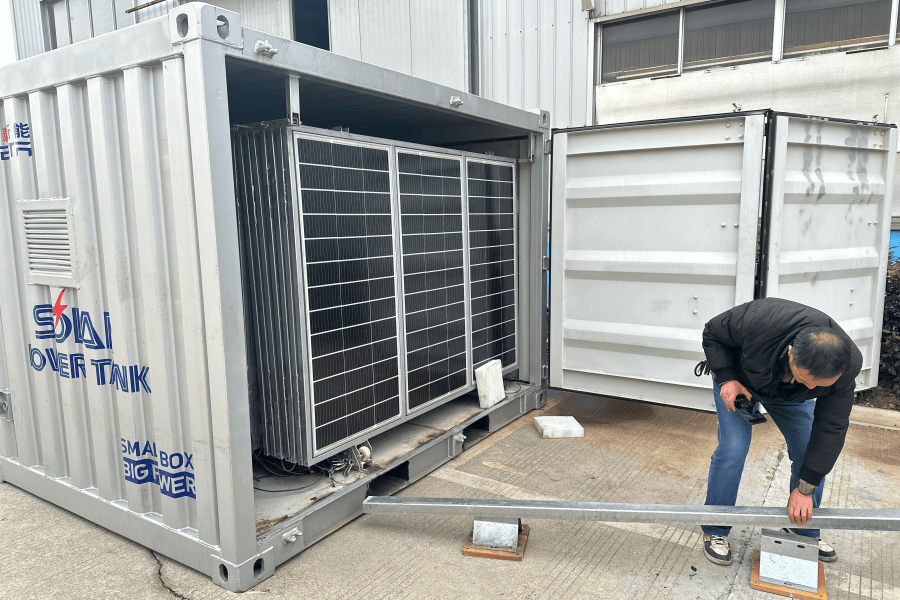
Table of Contents
- The Real Grid Problem Isn't Just Capacity, It's Predictability
- The Scalability and Cost Puzzle in Western Markets
- Why a Modular, 5MWh Building Block is the Answer
- Beyond the Box: Thermal Management & System Intelligence
- A Case in Point: Learning from Remote Deployment
- Your Next Step: Thinking in Modules
The Real Grid Problem Isn't Just Capacity, It's Predictability
Let's be honest. If you're developing utility-scale storage in North America or Europe today, your primary headache has shifted. It's no longer just about adding megawatt-hours to the grid. The real challenge, the one that keeps utility managers and asset owners up at night, is managing the wild unpredictability that comes with a high penetration of renewables. I've seen this firsthand on sites from California to Bavaria. You have a solar farm pumping out energy, and suddenly, a cloud bank rolls in. The grid frequency dips, and your BESS needs to respond - not in minutes, but in milliseconds - to keep the system stable. This isn't a future scenario; it's Tuesday afternoon.
Now, take that challenge and amplify it for rural or islanded grids, like those in many parts of the Philippines or remote communities. There's no robust transmission network to lean on. The BESS is the grid's backbone. The principles for making that work - reliability, rapid response, and ruthless simplicity in deployment - are exactly what we need to solve increasingly complex grid problems in mature markets. According to the National Renewable Energy Laboratory (NREL), frequency regulation and renewable smoothing are among the highest-value grid services a BESS can provide, but they demand a system built for both power and endurance.
The Scalability and Cost Puzzle in Western Markets
Here's where the agitation really sets in. You have a perfect site for a 20MWh system. The interconnection study is done, the offtake agreement is promising. But the CAPEX for a monolithic, one-off 20MWh container? It's daunting. Worse, if demand grows and you need to expand to 30MWh in three years, you're often looking at a completely new, parallel system - more land, more complex interconnection, and a nightmare for balancing and control. The Levelized Cost of Storage (LCOS) over the project's lifetime gets bloated by this inflexibility.
I've sat across the table from CFOs who love the ROI model but get cold feet at the upfront capital and the "unknowns" of future expansion. They're right to be cautious. A traditional, large-scale BESS can feel like buying a massive, custom-built engine when what you might need is the ability to add cylinders as you go.
The 5MWh Modular Unit: A Financial and Engineering Sweet Spot
This is why the industry is converging on modularity, and why a pre-engineered, scalable 5MWh unit has become such a compelling standard. Think of it as a high-density, self-contained building block. A 5MWh block is large enough to be economically efficient in manufacturing and shipping (fitting neatly on standard logistics frameworks), yet small enough to be combined flexibly. Need 15MWh? You deploy three identical units. Need 25MWh later? You add two more. The scalability isn't just physical; it's financial and logistical.

Why a Modular, 5MWh Building Block is the Answer
The solution, then, is to think in Lego blocks, not sculptures. A well-designed modular BESS for challenging environments directly addresses the core pains of developed markets:
- Predictable Deployment & Cost: Each 5MWh module is a repeatable, pre-certified (think UL 9540, IEC 62933) unit. This slashes commissioning time and de-risks permitting. Your budget for a 10MWh system is essentially 2x the cost of a single, proven module, plus balance-of-system costs. There are fewer surprises.
- Inherent Redundancy & Uptime: In a multi-module system, if one unit needs maintenance, the others can often remain online. This is a game-changer for grid-critical applications. You're not putting all your eggs in one container.
- Technology Agnosticism: A smart modular design separates power conversion (the inverter) from the battery rack itself. This means you can, in theory, update battery chemistry in future modules without overhauling the entire system's electronics - a huge hedge against technology obsolescence.
At Highjoule, our work on remote and island grids forced us to perfect this approach. Systems had to arrive site-ready, with minimal local trades required. That same "plug-and-play" ethos is what we build into our modular solutions for the European and US markets, ensuring every unit meets the stringent local safety and grid codes you require.
Beyond the Box: Thermal Management & System Intelligence
Anyone just talking about module size is missing the point. The magic is what's inside and how it's controlled. Let's break down two critical aspects in plain language:
1. Thermal Management (The "C-rate" Enabler): C-rate is essentially how fast you can charge or discharge the battery. A 1C rate means you can empty a full battery in one hour. For grid services, you often need high C-rates (like 1C or more) for fast response. But high power generates heat. If the heat isn't managed perfectly, the battery degrades fast, or worse, risks thermal runaway. In a modular design, each unit has its own, dedicated liquid cooling or advanced air management system. This is non-negotiable. It ensures each module performs at its peak power rating reliably, day in and day out, whether it's in the Texas sun or a German winter.
2. The Master Controller - The Real Brain: Having five 5MWh modules isn't useful if they don't act as one cohesive plant. The system-level energy management system (EMS) is the unsung hero. It doesn't just dispatch power; it balances the load between modules, manages state-of-charge health across all units, and ensures the entire asset responds to grid signals as a single, harmonious entity. This intelligence is what turns a bunch of battery boxes into a true grid asset.
A Case in Point: Learning from Remote Deployment
Let me give you a concrete example that mirrors the scalability challenge. We deployed a phased BESS project for a microgrid serving a remote industrial mining operation - similar in its isolation challenges to a rural Philippine grid. The initial phase was a 5MWh modular unit to provide black start capability and smooth the output of their on-site gas gensets.
The Challenge: Their energy demand was projected to grow 50% over 5 years. They needed a solution that could scale without a complete re-engineering of the power plant.
The Solution: We started with one 5MWh containerized module, fully integrated with their legacy controls. Two years later, when expansion was needed, we added a second, identical 5MWh module. The interconnection was simplified because we were replicating a known design. The master controller seamlessly integrated the new unit, and the system's available power and capacity doubled without any downtime to the original service.
The Insight: The client didn't buy a 10MWh system upfront. They bought a 5MWh system with a guaranteed path to 10MWh. This radically changed their CAPEX profile and improved their project's internal rate of return. This model is directly applicable to a US community solar-plus-storage project or a European wind farm looking to add firming capacity in stages.

Your Next Step: Thinking in Modules
The conversation about utility-scale storage is moving beyond "how big?" to "how smart and how flexible?" The lessons learned from deploying resilient systems in the world's most demanding environments have crystallized into a clear best practice: scalable, modular architecture.
When you evaluate your next BESS project, ask your provider not just for the specs of a 20MWh system, but for the specs of their core 5MWh (or similar) module. Ask about the cooling system, the C-rate durability, and most importantly, ask to see the master controller software and how it orchestrates multiple units. Ask how they would add capacity in three years. The answers will tell you everything you need to know about the system's long-term value and intelligence.
Honestly, the future isn't in building bigger single boxes. It's in building smarter, interconnected blocks. What does your grid's next growth phase look like, and how can your storage strategy be as adaptable as the renewables it supports?
Tags: UL Standard BESS LCOE Rural Electrification Utility-Scale Energy Storage Grid Stability IEC Standard Modular Design
Author
James Zhang
20+ years agricultural energy storage engineer / Highjoule CTO