
Step-by-step Installation of Smart BMS Monitored 5MWh Utility-scale BESS for Rural Electrification in Philippines: A Blueprint for Global Projects
Table of Contents
- The Real Challenge Isn't the Battery, It's the Deployment
- Why a Smart BMS is Your Project's Nervous System
- A Step-by-Step Walkthrough: The Philippines 5MWh Rural Electrification Project
- Key Takeaways for Your Next Project in the US or Europe
- Looking Beyond Installation: The Long-Term Game
The Real Challenge Isn't the Battery, It's the Deployment
Let's be honest. When you're planning a multi-megawatt-hour battery energy storage system (BESS) project, whether it's for a California ISO grid service or a German industrial park, the datasheet specs are the easy part. The real test, the part that keeps project managers up at night, happens between the "financial close" and the "commercial operation date." It's the on-the-ground, step-by-step installation and commissioning under real-world constraints. I've seen firsthand on sites from Texas to Thailand how a theoretically perfect system can get bogged down by logistics, local codes, thermal management surprises, and integration headaches.
The core pain point for developers in mature markets like the US and EU isn't access to technology - it's de-risking the deployment process to protect ROI. According to the National Renewable Energy Laboratory (NREL), balance-of-system (BOS) and soft costs can represent up to 50% of the total capital expenditure for a BESS project. Every day of delay, every unforeseen site modification, chips away at your project's financial viability. This is where a meticulously planned, field-proven installation methodology isn't just good practice - it's a financial imperative.
Why a Smart BMS is Your Project's Nervous System
Before we dive into the steps, let's talk about the brain: the Smart Battery Management System (BMS). In a utility-scale project, it's the difference between a collection of cells and a resilient, grid-responsive asset. A truly "smart" BMS goes beyond basic voltage and temperature monitoring. It provides granular, cell-level data in real-time, enabling predictive analytics for health and performance.
For you, the operator or asset owner, this means two things: safety and Levelized Cost of Storage (LCOS). A smart BMS with advanced algorithms can detect subtle inconsistencies that precede thermal runaway, acting as your first and most critical line of defense - a non-negotiable for meeting UL 9540 and IEC 62619 standards. Secondly, by optimizing charge/discharge cycles (C-rate) based on actual cell condition and temperature, it minimizes degradation. Think of it this way: managing a 5MWh system at the rack level is like managing a city's water supply by only looking at the reservoir. Managing it at the cell level with a smart BMS is like having a sensor and control valve on every pipe and tap in every house. The efficiency gains directly lower your LCOS over the asset's 15-20 year life.

A Step-by-Step Walkthrough: The Philippines 5MWh Rural Electrification Project
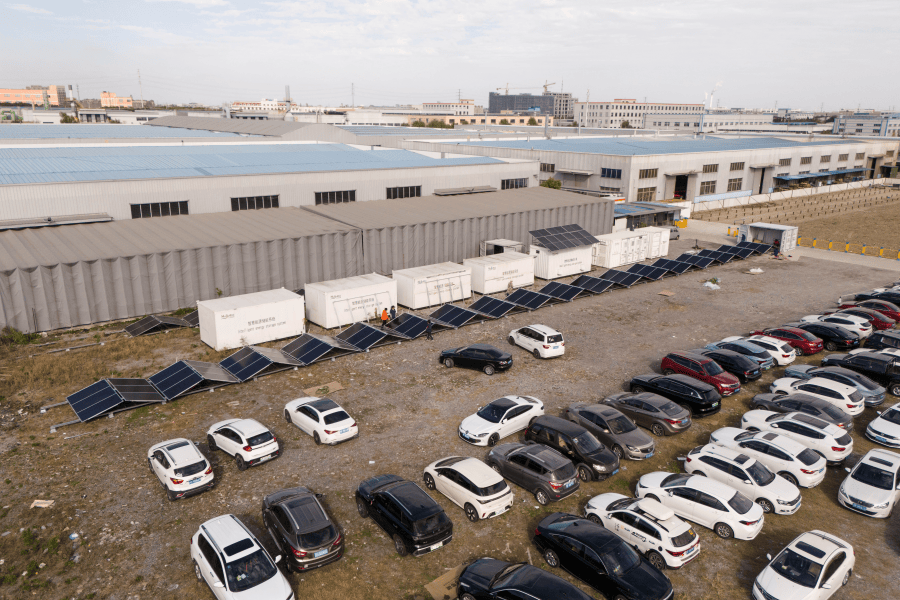
This brings me to a project that perfectly encapsulates these challenges and solutions: a 5MWh, Smart BMS-monitored BESS we deployed for a rural mini-grid in the Philippines. The environment was tough - high ambient temperature, humidity, and a remote location with limited skilled labor. Sound familiar? While the geography differs, the core challenges of environmental rigor, logistical complexity, and need for future-proof reliability mirror what we see in demanding deployments everywhere.
Here was our phased approach:
Phase 1: Site Prep & Foundation - More Than Just a Slab
We didn't just pour concrete. We designed a foundation with integrated cable trenches and conduit pathways pre-laid according to the container's exact footprint. This is a lesson from a project in Nevada: retrofitting cable runs after the container is placed is costly and time-consuming. We also installed a robust grounding grid meeting IEEE 80 standards - critical for both safety and system performance in areas with high lightning incidence.
Phase 2: Container Placement & Mechanical Integration
The 40-foot Highjoule container, pre-fabricated and tested at our facility to UL 9540, arrived on site. The key here was coordination. We used laser leveling to ensure perfect alignment with the pre-laid conduits. The thermal management system - a N+1 redundant, liquid-cooling design - was then connected. Honestly, this is where many projects hit a snag. Ensuring the external coolant lines are leak-free and properly insulated before power-up is crucial. We performed a 24-hour pressure and flow test independently of the electrical systems.
Phase 3: Electrical Wiring & Smart BMS Integration
This is the heart of the "smart" installation. Each battery rack was connected to the DC bus, but the real work was in the daisy-chained communication network from the Smart BMS master controller down to each individual module's monitoring unit. We meticulously labeled every cable (power, comms, sensor) at both ends. A single mis-wired communication cable can take days to troubleshoot in a 5MWh system. The BMS was then powered on independently to verify it could "see" every cell in the system before any high-voltage connection was made.
Phase 4: Commissioning & Grid Synchronization
Commissioning was data-driven. The Smart BMS provided a live dashboard of every cell's voltage, temperature, and internal resistance. We ran diagnostic cycles, checking for any outliers. Only when the BMS reported all systems "green" did we proceed to energize the PCS and perform low-power grid synchronization tests. The final step was a full-capacity charge/discharge cycle, with the BMS data logging performance against the model. This baseline data is gold for future O&M.
Key Takeaways for Your Next Project in the US or Europe
So, what does a remote Philippine project teach us about deploying in Ohio or Italy? Plenty.
- Standardization is Your Friend: Using a pre-certified (UL/IEC) containerized solution wasn't just about speed; it eliminated thousands of hours of on-site assembly and inspection risk. This directly addresses the BOS cost challenge highlighted by NREL.
- Thermal Management is Non-Negotiable: Whether it's 40C in the Philippines or a heatwave in Spain, consistent cell temperature is the #1 factor for longevity. A robust, fault-tolerant cooling system designed for the worst-case local climate, not the average, is essential.
- Data Before Power: The philosophy of commissioning the Smart BMS network first creates a layer of safety and diagnostics that guides the rest of the process. It turns a black box into a transparent, manageable asset from day one.
Looking Beyond Installation: The Long-Term Game
The project in the Philippines isn't just online; it's providing stable, clean power to a remote community. But our job, and yours as an asset owner, doesn't end at commissioning. The Smart BMS continues to be the workhorse. Its continuous data stream allows for condition-based maintenance, not just calendar-based. We can spot a slight temperature delta in one rack and schedule a proactive check, avoiding downtime.
This approach to installation - meticulous, data-centric, and built on integrated, certified components - is how we translate the promise of storage into a reliable, bankable grid asset. It's not the most glamorous part of the energy transition, but in my twenty years, it's the part that separates successful, profitable projects from the ones that struggle. The question isn't just what battery you choose, but how you plan to put it in the ground and keep it running for the next two decades. What's the biggest deployment risk you're facing in your current pipeline?
Tags: UL Standard BESS LCOE Renewable Energy Smart BMS Utility-Scale Energy Storage Grid Stability Project Deployment
Author
James Zhang
20+ years agricultural energy storage engineer / Highjoule CTO