
ROI Analysis of Tier 1 Battery Cell BESS for Agricultural Irrigation Savings
Contents
- The Hidden Cost of Keeping the Pumps On
- Beyond the Bill: Agitating the Real Pain Points
- The Tier 1 BESS Advantage: Your Financial Shock Absorber
- Crunching the Numbers: An Honest ROI Breakdown
- Case in Point: A Winery in California's Central Valley
- The Highjoule Difference: Built for the Real World
The Hidden Cost of Keeping the Pumps On
Let's be honest. If you're managing a large-scale farm or agricultural operation in the US or Europe, you don't need me to tell you that energy is one of your biggest and most volatile line items. Especially when it comes to irrigation. That pivot or drip system isn't just watering crops; it's drinking from the grid, often at the worst possible times. I've been on sites from the plains of Nebraska to the groves of Andalusia, and the story is the same: a growing sense that there must be a smarter way to handle this essential cost.
The phenomenon is clear. As renewable energy penetration grows, grid dynamics are shifting. In many regions, we're seeing more pronounced peak demand charges and time-of-use rates that heavily penalize daytime energy use. According to the National Renewable Energy Laboratory (NREL), optimizing agricultural load with storage can reduce energy costs by 20-40% in many cases. That's not just a saving; that's a matter of staying competitive.
Beyond the Bill: Agitating the Real Pain Points
But the problem is deeper than just a high bill. It's about predictability. How do you plan your season when a spike in a critical peak pricing window can wipe out your margin? It's about reliability. I've seen a farm in Texas face crippling operational delays because of a grid congestion event during a crucial irrigation cycle. And let's not forget sustainability goals. Many agribusinesses have them, but powering massive pumps with grid mix, which can still be carbon-intensive, works against that narrative.
The agitation comes from feeling stuck. You want control, you want stability, and you want to be a good steward of both your land and your finances. The traditional answer - running diesel gensets - is a step backwards in every sense: noisy, polluting, and with its own volatile fuel cost. There's a palpable need for a modern solution that acts as a financial and operational buffer.

The Tier 1 BESS Advantage: Your Financial Shock Absorber
This is where a strategic ROI Analysis of a Tier 1 Battery Cell BESS (Battery Energy Storage System) for Agricultural Irrigation becomes more than just a spreadsheet exercise. It's the blueprint for taking back control. The solution is elegantly simple in concept: install a battery system that charges when energy is cheap (or from your own solar/wind), and discharges to power your pumps when energy is expensive.
Why "Tier 1" battery cells? Honestly, in an agricultural setting, this isn't a place to cut corners. Tier 1 cells from major, bankable manufacturers offer the longevity, safety, and performance consistency that this 24/7, high-cycle application demands. They're the foundation of a lower Levelized Cost of Storage (LCOS) - a fancy term for the total lifetime cost per unit of energy you get out of the system. A cheaper, no-name cell might look good on day one, but its faster degradation kills your ROI by year five. I've seen it firsthand.
Crunching the Numbers: An Honest ROI Breakdown
So, what does the ROI actually look like? Let's talk in practical terms. The analysis hinges on a few key levers:
- Demand Charge Reduction: This is often the biggest win. By flattening your peak grid draw, you can slash these fixed charges, which can constitute up to 50% of a commercial electricity bill.
- Arbitrage: Buying low (off-peak, often at night) and using high (during peak irrigation hours).
- Resilience Value: Avoiding the cost of a halted operation during a short grid outage. What's an hour of stopped irrigation during a heatwave worth to your crop yield?
- Incentives: The US IRA and various EU farm modernization grants can significantly improve the upfront economics.
A critical technical factor here is the C-rate - basically, how fast the battery can charge and discharge. For irrigation, you need a system capable of high power output (a high discharge C-rate) to start and run large pumps, not just long, slow trickles of energy. A proper thermal management system is non-negotiable to sustain this performance in a dusty farm environment or a hot Spanish summer, ensuring safety and hitting that 10+ year lifespan the ROI model depends on.
Case in Point: A Winery in California's Central Valley
Let me give you a real example. We worked with a 500-acre winery in California. Their challenge was brutal peak demand charges during the summer irrigation months and a desire to use their existing solar more effectively. The grid was also unreliable during fire season.
We deployed a 750 kWh / 375 kW BESS using Tier 1 Li-ion phosphate (LFP) cells, chosen for their safety and long cycle life. The system was programmed to aggressively shave peak demand and store excess solar. The result? A 32% reduction in their annual energy costs. The system paid for itself in under 6 years, and that's before factoring in the value of keeping their vines watered during two brief public safety power shutoffs. That's ROI you can measure in dollars and in peace of mind.

The Highjoule Difference: Built for the Real World
At Highjoule Technologies, our approach to your ROI Analysis of a Tier 1 Battery Cell BESS for Agricultural Irrigation is grounded in two decades of field deployment. We don't just sell a box; we model your specific load profile, your local utility tariffs (be it in Ohio or Ostfriesland), and the unique rhythms of your growing season.
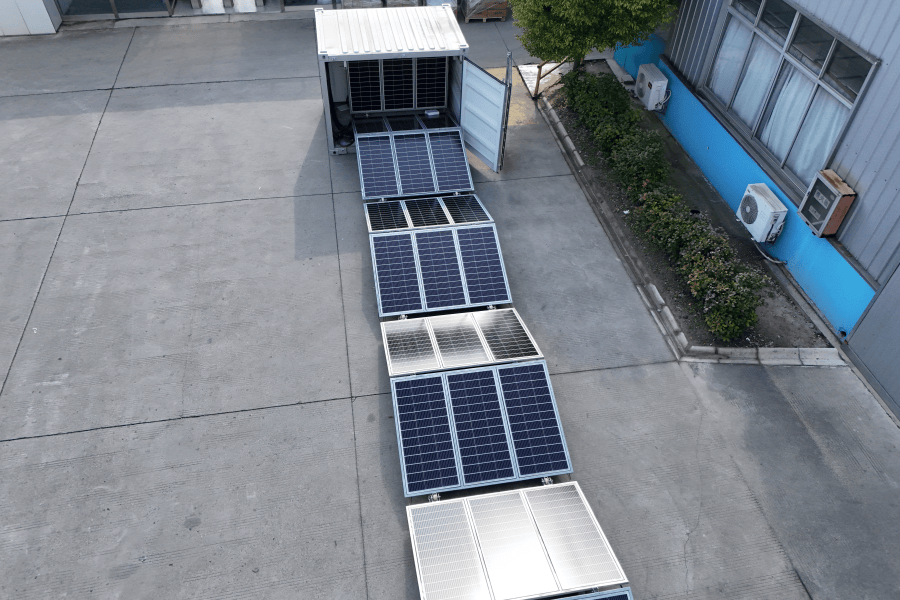
Our containers are built with the ruggedness farm infrastructure requires. More importantly, every system is designed and tested to the highest UL 9540 and IEC 62485 safety standards - because putting a high-energy system near your livelihood demands nothing less. Our service model includes remote monitoring and local technical support, because if something does need attention during harvest, you need a partner who responds, not a call center.
The question isn't really if battery storage makes sense for modern agriculture. The data and the case studies are there. The real question is: what does your specific path to energy independence and cost predictability look like? What's the first energy bill line item you'd like to tackle?
Tags: UL Standard BESS Energy Storage Agricultural Irrigation Tier 1 Battery Cells Microgrid ROI Analysis
Author
James Zhang
20+ years agricultural energy storage engineer / Highjoule CTO