
5MWh BESS for EV Charging: Solving Grid Stability & High Costs
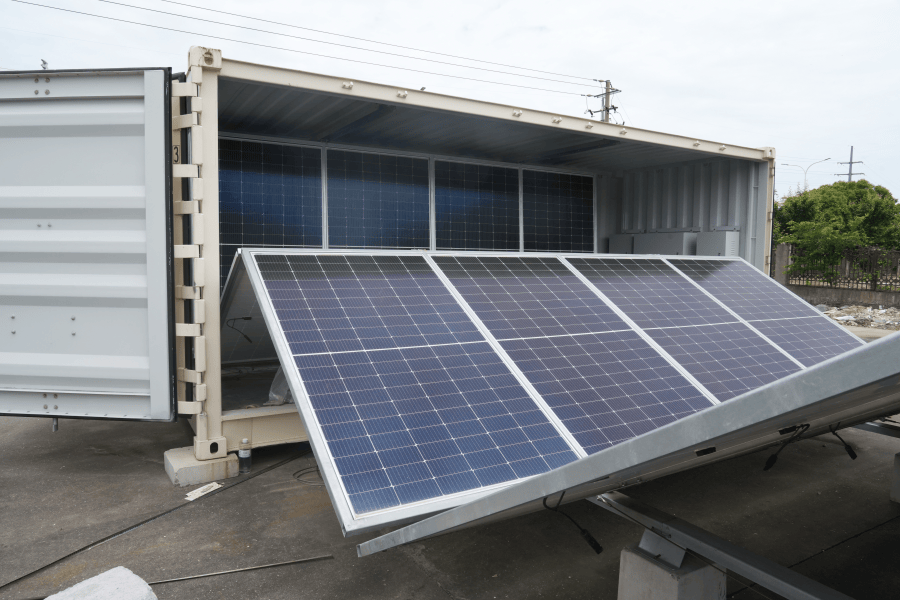
Table of Contents
- The Real Grid Problem Behind the EV Rush
- Why "Simple" Batteries Fail in Heavy-Duty EV Scenarios
- A Blueprint for Resilience: Decoding the 5MWh, Tier 1 Cell Spec
- Case in Point: A German Autobahn Charging Hub
- Thinking Beyond the Battery Box: The Full Deployment Picture
The Real Grid Problem Behind the EV Rush
Let's be honest. If you're planning an EV fast-charging station, especially a large hub off a major highway or in an industrial park, you've already run the grid impact study. And the results, more often than not, are sobering. The local transformer is near capacity, the demand charges from simultaneous 350kW charger use are terrifying, and the utility's timeline for a grid upgrade is measured in years, not months. This isn't a hypothetical; I've seen this firsthand on site from California to North Rhine-Westphalia.
The problem isn't just peak demand; it's the violent volatility of it. The grid was built for predictable, relatively smooth loads. A row of EVs hitting 10-80% charge in 20 minutes is the exact opposite. According to a National Renewable Energy Laboratory (NREL) analysis, uncontrolled high-power EV charging can accelerate transformer aging by up to a factor of ten. You're not just paying high fees; you're actively degrading the local infrastructure.
Why "Simple" Batteries Fail in Heavy-Duty EV Scenarios
So, the obvious answer is: add a battery. But here's where the aggravation deepens. Not all Battery Energy Storage Systems (BESS) are built for this specific, brutal duty cycle. Deploying a commodity-grade system designed for slower, more predictable solar shifting into a high-power EV charging scenario is a recipe for premature failure and safety concerns.
The core pain points amplify quickly:
- Thermal Runaway Risk: Sustained high C-rate (charge/discharge rate) cycling generates immense heat. If the thermal management system is undersized or poorly engineered, you risk cell degradation or, in worst-case scenarios, thermal events.
- Rapid Economic Degradation: A battery that loses 20% of its capacity in 3 years instead of 10 destroys your Levelized Cost of Storage (LCOS) model. The financials fall apart.
- Standards & Insurance Hurdles: In the US and EU, insurers and authorities having jurisdiction (AHJs) are increasingly demanding clear compliance with standards like UL 9540 (system level) and IEC 62933 (safety). A system with ambiguous certification becomes a deployment blocker.
Honestly, I've walked onto sites where the client's "cost-saving" BESS was already derating its output on a warm day because it couldn't handle the heat. The promised demand charge savings vanished.
A Blueprint for Resilience: Decoding the 5MWh, Tier 1 Cell Spec
This is where the specific technical specification of a 5MWh utility-scale BESS built with Tier 1 battery cells transitions from a datasheet to a strategic asset. Let's translate the key specs into real-world benefits for your EV charging project.
Tier 1 Cells Aren't Just a Marketing Term: For us, it means cells from manufacturers with a proven, auditable track record of quality, consistency, and massive-scale production. This is your single biggest lever for long-term reliability and predictable performance. It's the foundation.
The 5MWh Scalability Sweet Spot: For a large charging hub, this size is often the pragmatic pivot point. It's large enough to materially flatten the peak demand from multiple chargers over a critical period (e.g., 2-4 hours of peak traffic), but it's also modular and manageable from a footprint and interconnection standpoint. It's the workhorse scale.
Technical Pillars That Matter:
- High C-Rate Capability (Sustained): The system must be designed to deliver 1C or higher discharge rates continuously during the charging rush, not just in bursts. This comes down to cell selection, busbar design, and power conversion system (PCS) integration.
- Military-Grade Thermal Management: This is non-negotiable. We're talking about a liquid cooling system that maintains cell temperature within a 3C window across the entire pack, even during back-to-back cycles. This is what gives you consistent power output in Arizona summers and maximizes cycle life. At Highjoule, our thermal design philosophy is "over-engineered for calm," because a calm battery is a safe, long-lived battery.
- UL & IEC Compliance by Design: The system shouldn't be tested for compliance; it should be built for it from the first CAD drawing. This includes cell-to-pack propagation resistance, environmental hardening, and cybersecurity for grid communication (IEEE 2030.5). It's what gets the permit signed off.

Case in Point: A German Autobahn Charging Hub
Let me give you a concrete example. We deployed a 5MWh system at a new charging park near the A3 autobahn in Germany. The challenge was classic: limited grid connection (only 1 MW), but the operator needed to support eight 300kW chargers. The grid couldn't handle the simultaneous load.
The Solution: Our 5MWh BESS, with its Tier 1 NMC cells and sustained high C-rate capability, acts as a buffer. It charges slowly from the grid overnight and during low-tariff periods. During the day, it discharges in tandem with the grid connection to meet the ultra-fast charging demand. The result? The site can now deliver the full promised charging speed to all bays without exceeding its grid contract. The demand charges were reduced by over 60%, making the site's economics viable. The local DSO (Distribution System Operator) was happy because we eliminated the need for a costly grid upgrade.
Thinking Beyond the Battery Box: The Full Deployment Picture
Finally, the spec sheet is one thing; getting the system humming in the field is another. A truly optimized Technical Specification of Tier 1 Battery Cell 5MWh Utility-scale BESS for EV Charging Stations must consider the whole lifecycle.
This is where our 20 years of field deployment bites into the problem. We think about:
- LCOE (Levelized Cost of Energy) Optimization: The right cell chemistry (energy density vs. power density), cycle life expectancy, and degradation warranties directly feed into your long-term cost per kWh stored and delivered. We model this for your specific duty cycle.
- Containerization & Localization: Our 5MWh units are pre-assembled and tested in factory-standard 20ft or 40ft containers. This isn't just for shipping; it's for rapid, predictable deployment on your prepared slab. We adapt switchgear and communication protocols to meet local utility requirements, be it in Ohio or Spain.
- Active Performance Management: The system includes 24/7 monitoring with predictive analytics. We can often spot a underperforming cooling pump or a voltage imbalance before it impacts operation, and dispatch local service crews under our maintenance agreements.
The goal isn't just to sell you a battery. It's to provide a grid-resilient power asset that makes your EV charging business model robust, safe, and profitable for the next 15+ years. So, what's the biggest grid constraint you're facing on your next site?
Tags: UL Standard BESS LCOE Thermal Management Utility-Scale Energy Storage Grid Stability EV Charging
Author
James Zhang
20+ years agricultural energy storage engineer / Highjoule CTO