
The Ultimate Guide to Scalable Modular Off-grid Solar Generator for Eco-resorts
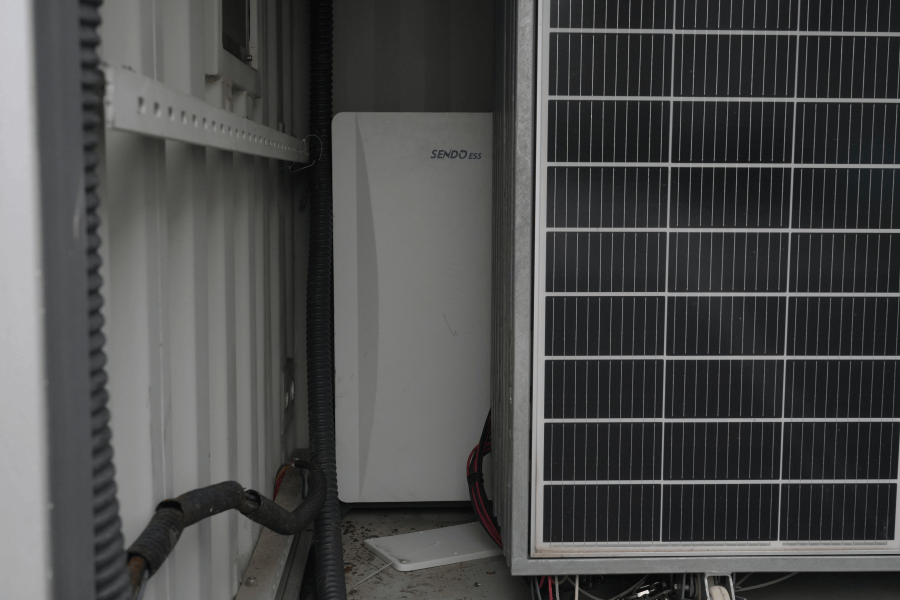
The Ultimate Guide to Scalable Modular Off-grid Solar Generator for Eco-resorts: A View from the Field
Table of Contents
- The Dream of Energy Independence vs. The Harsh Reality
- Why "Bigger is Better" is a Costly Mistake for Off-Grid Resorts
- The Modular Mindset: Your Blueprint for Scalable Resilience
- From Blueprint to Reality: A Case Study in the Mediterranean
- Key Technical Considerations (Made Simple)
- Your Path to a Truly Sustainable Resort
The Dream of Energy Independence vs. The Harsh Reality
Let's be honest, if you're developing or managing an eco-resort, you're not just in the hospitality business. You're selling an experience C one built on pristine nature, tranquility, and a genuine commitment to sustainability. A diesel generator roaring in the background? That shatters the illusion faster than a dropped champagne glass. So, you look to solar. The sun is abundant, clean, and perfectly aligns with your brand.
But here's the rub I've seen firsthand on site: going off-grid with solar is rarely as simple as slapping panels on a roof and calling it a day. The real challenge isn't generating power when the sun shines; it's providing reliable, 24/7 power for your guests' comfort, your kitchen's cold storage, and your water pumps C especially during peak season or a string of cloudy days. Many resort owners I've spoken to initially think of a battery system as a single, massive unit. They face sticker shock upfront, worry about single points of failure (if that one big battery fails, you're in the dark), and struggle to plan for future expansion when the resort adds ten more villas.
Why "Bigger is Better" is a Costly Mistake for Off-Grid Resorts
This traditional approach amplifies every pain point. First, cost. Oversizing a system "just to be safe" ties up enormous capital in capacity you might not need for years. According to the National Renewable Energy Laboratory (NREL), system design and sizing errors can inflate initial project costs by 20-30%. That's capital that could've built another guest suite.
Then there's operational risk. A monolithic battery system is harder to maintain. If a thermal management issue arises in one cell bank, the entire system might need to be taken offline. I've been called to sites where a single fault cascaded, leaving the property on backup diesel for weeks waiting for a specialized technician and a custom part. The noise and fumes were the least of the owner's worries - the damage to their "eco" reputation was far worse.
Finally, inflexibility. Eco-resorts evolve. Phase 2 construction starts, you add a spa that needs heated pools, or demand simply grows. With a non-modular system, expansion often means a complex, expensive retrofit, or worse, a parallel, entirely separate system that creates a operational nightmare.
The Modular Mindset: Your Blueprint for Scalable Resilience
This is where the concept of a scalable, modular off-grid solar generator transitions from a nice-to-have to a non-negotiable for smart business planning. Think of it like building with LEGO blocks, but for your energy independence.
The solution isn't a single product; it's a design philosophy and a technical architecture. It means your energy storage is built from pre-engineered, self-contained modules (each with its own battery management, cooling, and safety systems) that plug together. You start with what you need for Phase 1. When you're ready to grow, you simply add more identical modules. No complete system redesign. No massive, disruptive construction.
At Highjoule, this philosophy is baked into our Modulus BESS platform. Each module is a UL 9540-certified unit, meaning it's been rigorously tested as a complete safety system. This modularity isn't just about physical expansion; it dramatically simplifies maintenance. If a module needs attention, we can isolate and service it while the rest of the system powers your resort uninterrupted. Honestly, it turns capex from a daunting lump sum into a manageable, phased investment aligned with your business growth.

From Blueprint to Reality: A Case Study in the Mediterranean
Let me give you a real example from the Greek islands. A boutique resort was expanding from 15 to 30 villas. Their old lead-acid battery bank was at end-of-life, and the new villas were up a hill, requiring additional water pumping. Their challenges were classic: limited flat space for equipment, a tight construction timeline for the new villas, and a zero-tolerance policy for guest power outages.
We deployed a modular system anchored by our containerized Modulus units. For Phase 1, we installed enough battery capacity and inverter power to handle the existing villas and the critical new water infrastructure. The system was designed from day one for Phase 2. When the new villas were ready a year later, we didn't need to pore over new engineering drawings. We simply delivered two additional pre-configured modules, connected them to the existing system in a matter of days, and updated the system software. The resort never experienced a disruption. Their energy costs became predictable, and they finally retired their diesel genset to strict emergency-only duty.
Key Technical Considerations (Made Simple)
As you evaluate solutions, you'll hear technical terms. Let's demystify two critical ones:
- C-rate (Charge/Discharge Rate): Simply put, this is how fast a battery can absorb or deliver power. A high C-rate is like a sports car - great for short, intense bursts (like starting a large water pump). A low C-rate is like a long-haul truck - optimized for steady, slow discharge over many hours. For resorts, you typically need the truck, not the sports car. Modular systems let you right-size the power (inverter) and energy (battery) components independently, so you're not overpaying for power capability you don't need.
- Thermal Management: This is the unsung hero. Batteries degrade fast if they get too hot or too cold. A good modular system has independent, redundant cooling in each module. I've seen systems in the Arizona desert and the Norwegian fjords. The principle is the same: keep the cells in their happy, narrow temperature range. Our modules use a liquid cooling system that's far more effective and quieter than basic fans, which is crucial near guest areas.
The ultimate metric is Levelized Cost of Energy (LCOE) - the total lifetime cost of your power. A cheaper, non-modular system might have a lower upfront cost but a higher LCOE due to earlier replacement, higher maintenance, and inefficient scaling. A modular system, with its longer life, easier service, and scalable capex, almost always wins on LCOE over a 15-year horizon.

Your Path to a Truly Sustainable Resort
The journey to full energy independence is a marathon, not a sprint. The scalable, modular approach is your training plan. It de-risks the financial investment, future-proofs your asset, and most importantly, protects the guest experience that is the heart of your business.
The best first step? Don't just think about your energy needs today. Sketch out your vision for the resort in 5 or 10 years. Then, have a conversation with a provider who thinks in modules and phases, not just in megawatt-hours. What's the one expansion project you've been dreaming about that a smarter energy strategy could help unlock?
Tags: UL Standard BESS Modular Energy Storage Off-grid Solar Eco-Resort
Author
James Zhang
20+ years agricultural energy storage engineer / Highjoule CTO