
Smart 1MWh BESS for Mining: Guide to Solar Storage in Remote Sites
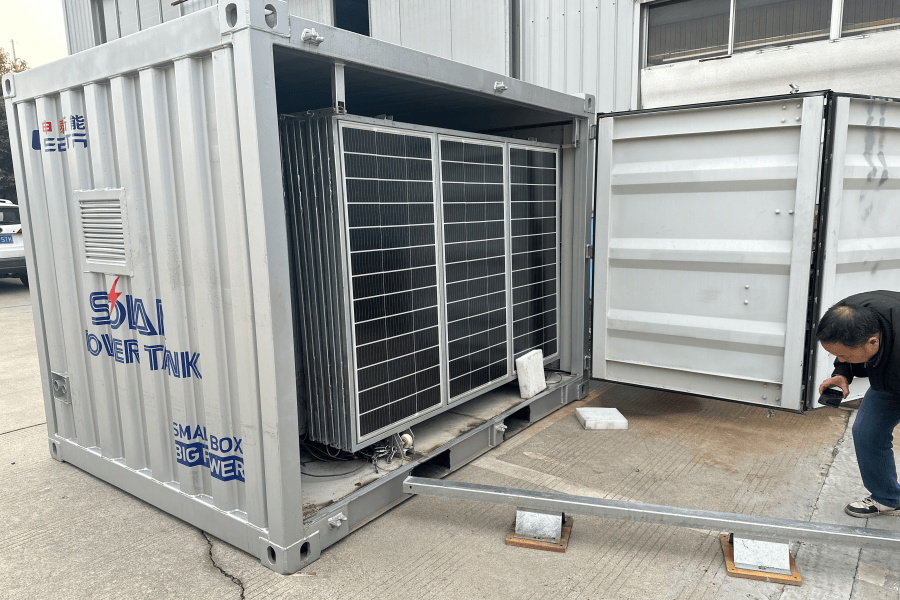
Table of Contents
- The Remote Power Dilemma: It's More Than Just Diesel
- Why "Standard" Solutions Fail in the Desert (And Other Tough Spots)
- The Smart BMS Difference: It's Your On-Site Power Plant Manager
- A Real-World Stress Test: Mining Storage in the American Southwest
- Key Specs Decoded: C-Rate, Thermal Runaway, and Real LCOE
- Your Deployment Checklist: From Spec Sheet to Site Commissioning
The Remote Power Dilemma: It's More Than Just Diesel
Honestly, when we talk about powering remote mining operations - whether it's in Mauritania, the Australian Outback, or Nevada - the conversation always starts with diesel. It's the familiar devil we know. But after 20 years on sites, I've seen the real cost. It's not just the fuel bill, which is staggering. The International Energy Agency (IEA) points out that in some off-grid industrial operations, fuel can represent over 60% of the total operating costs. It's the logistics: the convoys, the spill risks, the theft, the noise, and the constant maintenance of those gensets. You're running a mine, not a trucking company for fuel.
The promise of solar is obvious. But the pitfall I've seen firsthand is treating the battery storage system like a simple battery. Plug it in and forget it. In a harsh, remote environment, that's a recipe for a very expensive paperweight - or worse, a safety incident. The real challenge isn't just generating solar power; it's storing it intelligently, reliably, and safely for when your heavy machinery needs it most, at 2 AM or during a dust storm.
Why "Standard" Solutions Fail in the Desert (And Other Tough Spots)
Let's agitate that pain point a bit. A standard, off-the-shelf battery system might work for a smooth-grid-connected warehouse. But a mining site? The thermal stress from 50C+ days, the abrasive dust, the voltage spikes from large equipment cycling on and off - it's a brutal environment. I've been called to sites where a poorly managed battery bank had such severe cell imbalance that its actual capacity degraded by 30% in under 18 months. The financial model for the entire solar hybrid project fell apart.
The core problem is a lack of true visibility and control. A basic BMS might tell you state-of-charge. A Smart BMS, the kind we're talking about for a 1MWh+ system, needs to be your 24/7 digital engineer. It must predict cell-level thermal behavior, manage uneven aging across thousands of cells, and seamlessly switch between grid-assist, full off-grid, and backup modes without dropping the load on your critical processes. Without this, you're flying blind.
The Smart BMS Difference: It's Your On-Site Power Plant Manager
This is where the guide to a Smart BMS Monitored 1MWh Solar Storage system becomes your operational blueprint. The solution isn't a bigger battery; it's a smarter brain for the battery.
Think of it this way: a standard BMS is a thermometer. A Smart BMS is a full diagnostic MRI machine coupled with a predictive analytics engine. It moves from simple monitoring to active, adaptive management. For a mining operation in a place like Mauritania, this means:
- Proactive Safety: Continuously tracking cell-level voltage, temperature, and impedance to detect potential thermal runaway events hours before they become critical, allowing for controlled shutdowns or alerts.
- Capacity Assurance: Actively balancing cells not just for daily operation, but to optimize long-term health, ensuring your 1MWh system delivers close to 1MWh throughout its warranty life.
- Grid Intelligence: Managing charge/discharge cycles based on real-time load demand from your crushers or processing plants, not just a simple time schedule, maximizing diesel offset.
At Highjoule, we've built our systems around this philosophy. Our containerized BESS solutions are designed with this granular, cell-level intelligence as standard, because we know that in remote deployments, you can't send an engineer out for a "quick look" every week. The system has to manage and report on itself.
A Real-World Stress Test: Mining Storage in the American Southwest
Let me give you a concrete example from a copper mining site in Arizona, not unlike the challenges you'd face in Mauritania. The goal was to reduce diesel consumption for a remote camp and water pumping stations. They deployed a 1.2MWh solar-plus-storage system.
The Challenge: Extreme diurnal temperature swings (from freezing to 40C+), silica dust, and highly variable pumping loads that could trip lesser systems.
The Smart BMS in Action: The system's BMS was integrated with the thermal management system not as a separate component, but as the master controller. During peak heat, it would pre-emptively slow the charge rate (C-rate) based on internal temperature sensors, even if solar input was high. It also created "load profiles" for the pumps, anticipating large draws and pre-charging the battery to a specific set-point to avoid voltage dips. The NREL has excellent case studies showing how this level of control is key to success in grid-resilient critical infrastructure.
The result was a 72% reduction in diesel use for those loads in the first year, with the battery system performing within 98% of its expected capacity. The mine managers weren't battery experts, but the dashboard gave them the simple, actionable insights they needed: "Diesel saved today: X gallons. System Health: Optimal."

Key Specs Decoded: C-Rate, Thermal Runaway, and Real LCOE
When you're evaluating a 1MWh system, you'll get a datasheet. Let's translate the three most critical specs into plain English.
- C-Rate (1C, 0.5C): This is basically the "speed" of charging/discharging. A 1MWh system with a 1C rate can deliver 1MW of power for one hour. A 0.5C rate means it can deliver 500kW for two hours. For mining, you need a high C-rate to handle the sudden, large load of starting big motors. But honestly, a consistently high C-rate generates more heat and stress. A smart system dynamically adjusts the C-rate based on cell temperature and health, giving you the punch when you need it without the long-term damage.
- Thermal Management: This isn't just a fan. It's a liquid-cooled or advanced forced-air system that's proactively controlled by the Smart BMS. The BMS uses cell data to cool (or even heat, in cold climates) the battery uniformly, preventing hot spots that lead to premature aging. This is non-negotiable for UL 9540 and IEC 62619 certification, standards we design to from the ground up.
- Levelized Cost of Energy (LCOE): This is your true total cost. A cheaper battery with poor thermal management and a dumb BMS will have a high LCOE because it degrades fast and needs replacing sooner. The Smart BMS directly lowers LCOE by extending the system's useful life and ensuring every kilowatt-hour stored is actually usable. It turns a capex item into a high-ROI asset.
Your Deployment Checklist: From Spec Sheet to Site Commissioning
So, how do you move forward? Based on dozens of deployments, here's what matters beyond the brochure.
| Phase | Critical Question to Ask Your Vendor |
|---|---|
| Design | Can your Smart BMS provide historical, cell-level data logs for trend analysis, not just real-time alerts? |
| Compliance | Can you provide the full UL 9540 / IEC 62619 certification report for the entire assembled unit, not just the cells? |
| Deployment | What is your protocol for commissioning and system "learning" in the first 30 days to establish healthy baselines? |
| Operations | What remote diagnostics and support capability do you have? Can you visualize state-of-health trends for me? |
For us at Highjoule, this isn't just a sales process; it's a commissioning partnership. We've seen that the success of a project in Mauritania or Montana hinges on these details. The right 1MWh Smart BESS isn't a commodity. It's a resilient, intelligent power asset. What's the one operational load on your site that, if it had cleaner, more reliable power, would change your cost equation tomorrow?
Tags: UL Standard BESS Smart BMS Remote Power Systems Energy Storage for Mining
Author
James Zhang
20+ years agricultural energy storage engineer / Highjoule CTO