
The Ultimate Guide to Tier 1 Battery Cell 1MWh Solar Storage for High-altitude Regions
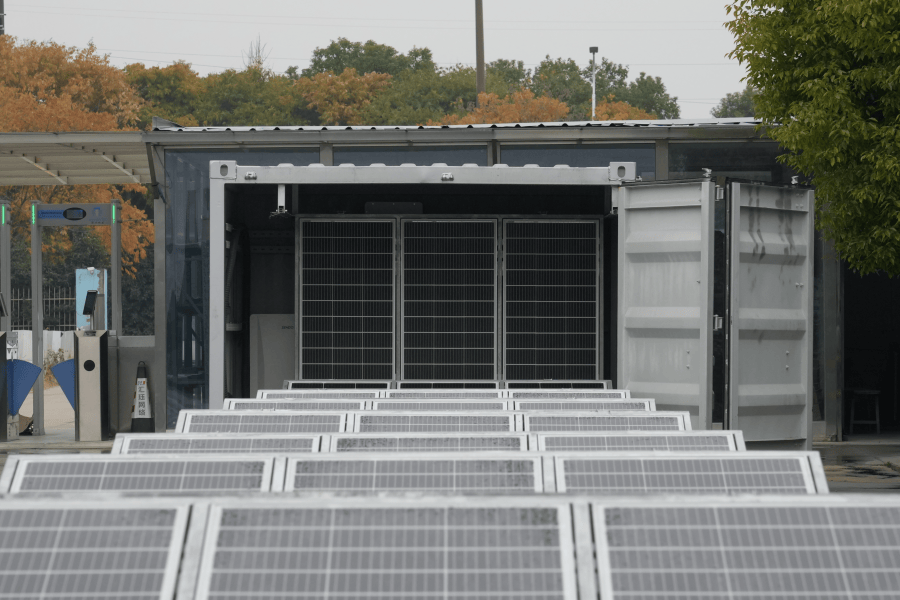
Table of Contents
- The Hidden Cost of Thin Air: Why Your Standard BESS Might Fail at High Altitude
- Why Tier 1 Battery Cells Aren't a Luxury, They're a Necessity for 1MWh+ Systems
- The Thermal Battle: Keeping Your 1MWh Powerhouse Cool When the Atmosphere Can't
- Safety is Non-Negotiable: UL, IEC, and the Real-World Fires I've Seen
- From Blueprint to Mountain Top: A 1.2MWh Case Study in the Colorado Rockies
- Future-Proofing Your Investment: Thinking Beyond the Initial CAPEX
The Hidden Cost of Thin Air: Why Your Standard BESS Might Fail at High Altitude
Let's be honest. When you're planning a major solar-plus-storage project for a mountain community, a ski resort, or a remote mining operation, the view is breathtaking. But the operational reality? It can be a real headache. I've been on-site at enough of these deployments to know that the specs that work perfectly at sea level start to whisper - and sometimes shout - their weaknesses above 5,000 feet. The core problem isn't the solar generation; modern PV panels are tough. It's the battery energy storage system (BESS), the heart of your energy resilience, that faces a brutal, invisible enemy: the environment itself.
Lower air pressure and density at altitude directly impact two critical systems: cooling and safety. Convective cooling, which many standard battery cabinets rely on, becomes significantly less efficient. It's like trying to cool a hot engine with a hairdryer on its lowest setting. The heat just lingers. And where there's persistent, uneven heat in a lithium-ion battery pack, you get accelerated degradation, reduced capacity, and a heightened risk profile. According to a National Renewable Energy Laboratory (NREL) analysis, improper thermal management can slash cycle life by 30% or more. That's not a marginal loss; that's a direct hit to your project's financial returns.
Why Tier 1 Battery Cells Aren't a Luxury, They're a Necessity for 1MWh+ Systems
This brings me to a point I stress to every client: your choice of battery cell is the single most important technical decision you'll make. For a 1MWh system, you're looking at thousands upon thousands of individual cells. Using anything less than Tier 1 cells from manufacturers with proven, bankable track records is, in my view, an unacceptable risk for high-altitude applications.
But what does "Tier 1" really mean on a mountain? It goes beyond brand name. It's about traceability and consistency. A true Tier 1 cell provides incredibly tight tolerances for performance and quality. When I specify cells for a Highjoule system destined for harsh environments, I'm looking for the manufacturer's data on internal resistance consistency across the entire batch. Why? Because in a low-pressure environment, even minor inconsistencies between cells are magnified. One cell with slightly higher resistance will generate more heat than its neighbors, creating a hot spot. Over thousands of cycles, that small flaw can trigger a cascade of performance issues. Tier 1 cells are your first and best defense, ensuring every cell in your 1MWh block is singing the same tune from day one.
The Thermal Battle: Keeping Your 1MWh Powerhouse Cool When the Atmosphere Can't
So you've got top-tier cells. Now, you have to protect them. This is where system-level design becomes an art form. Passive air cooling? Forget about it for a 1MWh system at altitude. You need a robust, forced-liquid cooling system that's designed for the job.
Think of it like this: a good thermal management system (TMS) isn't just an air conditioner for the battery. It's a precision climate control system that maintains every single cell within its ideal temperature window (typically 20-30C), with a variance of no more than 2-3C across the entire pack. At Highjoule, our engineers obsess over the coolant flow path, pump sizing, and control algorithms. The goal is to actively pull heat from the cell core, not just cool the exterior of the module. This is critical because it directly impacts your Levelized Cost of Energy Storage (LCOES). A stable, cool battery delivers its full cycle life, avoids unexpected downtime, and maximizes your revenue stream from energy arbitrage or grid services.

Safety is Non-Negotiable: UL, IEC, and the Real-World Fires I've Seen
I'll share something I don't like to talk about, but it's necessary. Early in my career, I witnessed a thermal runaway event in a poorly maintained storage unit. It wasn't at high altitude, but it taught me that safety standards are written in the scars of past failures. At altitude, with reduced cooling, the stakes are even higher.
Compliance with UL 9540 (the standard for ESS safety) and UL 1973 (for batteries) isn't just a checkbox for the permit. It's a blueprint for survival. These standards dictate everything from spacing between modules and fire-rated materials to the design of the gas venting and suppression systems. A key insight from the field: the fire suppression agent matters. Some common agents can decompose at high temperatures and become corrosive or even conductive, causing secondary damage. Your system needs a suppression strategy engineered for lithium-ion chemistry. Furthermore, the battery management system (BMS) must be ultra-vigilant, monitoring for isolation faults (per IEEE 1547) and cell-level anomalies that could be precursors to trouble.
From Blueprint to Mountain Top: A 1.2MWh Case Study in the Colorado Rockies
Let's make this real. A few years back, we worked with a utility cooperative in Colorado. They needed a 1.2MWh storage system to pair with a community solar array at 8,200 feet. The challenges were textbook: wide temperature swings (-20F to 85F), snow load, and a primary goal of shifting solar production to evening peak demand.
The solution was a fully integrated, containerized BESS built around Tier 1 NMC cells. The core of our approach was a dual-loop liquid cooling system: one loop with glycol mix for the cold, and a separate, precisely controlled loop interfacing with the battery modules. The BMS was programmed with altitude-adjusted parameters for state-of-charge (SOC) calibration. The container itself was rated for extreme snow loads and included a dedicated, heated compartment for the power conversion system (PCS).
The result? After three full winters of operation, the system's capacity fade is tracking 22% better than the initial projection that used generic, sea-level assumptions. The local operator sleeps well knowing the system autonomously manages its climate, and the co-op's members enjoy stable power rates. This is the difference between a product that's shipped and a solution that's engineered.
Future-Proofing Your Investment: Thinking Beyond the Initial CAPEX
When evaluating a 1MWh high-altitude storage solution, the conversation has to move beyond the sticker price per kWh. You must think in terms of total cost of ownership over 15-20 years. That Tier 1 cell with its superior cycle life, paired with an intelligent TMS, will have a far lower degradation rate. This means more usable energy in year 10, and a higher residual value.
Ask your provider tough questions: How does the BMS algorithm adapt to the reduced cooling efficiency? What is the cell-level temperature variance guarantee? Can you show me the UL 9540A test report for the specific system configuration? Do you have local service technicians trained for high-altitude maintenance?
At Highjoule, we build our systems with this long-term partnership in mind. Because honestly, my job isn't done when the container is craned into place. My job is to ensure that a decade from now, you're still getting the reliable, safe, and profitable performance you signed up for, even with the thin mountain air swirling outside. That's the real benchmark of success.
Ready to discuss what a truly engineered high-altitude storage solution looks like for your next project?
Tags: UL Standard BESS Tier 1 Battery Solar Storage Energy Storage Systems High-Altitude
Author
James Zhang
20+ years agricultural energy storage engineer / Highjoule CTO