
Top 10 Manufacturers of Air-cooled Pre-integrated PV Container for EV Charging Stations
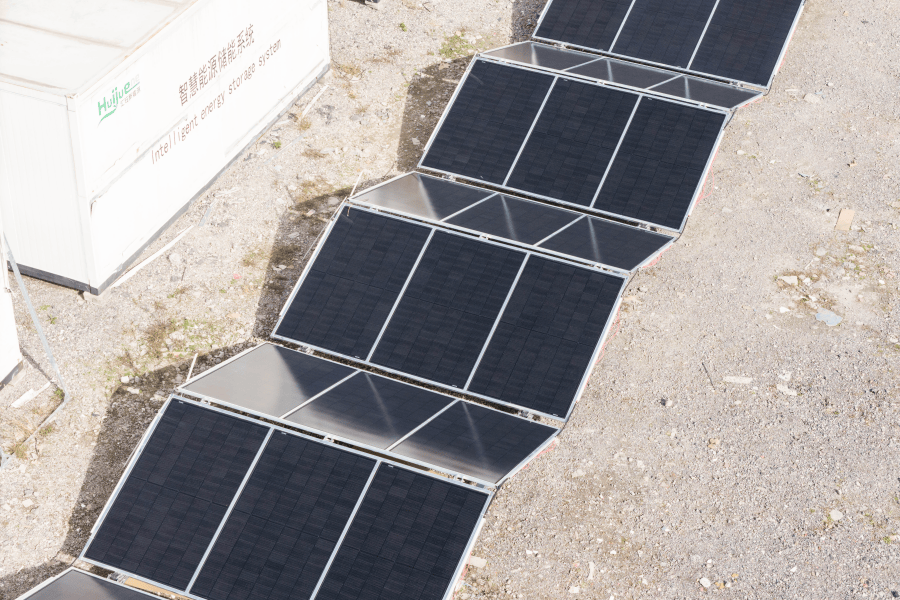
Table of Contents
- The Quiet Grid Challenge at Your EV Charger
- Why This Hurts Your Bottom Line and Your Grid
- The All-in-One Answer: Air-Cooled, Pre-Integrated PV Containers
- Choosing Your Partner: What to Look for in the Top 10 Manufacturers
- Real-World Proof: It's Not Just a Concept
- Expert Corner: The Tech You Can't Afford to Ignore
- Your Next Step: Beyond the List
The Quiet Grid Challenge at Your EV Charger
Let's be honest. If you're building an EV charging hub, whether it's for a fleet depot, a retail center, or a public highway corridor, your main focus is on the chargers themselves - getting those units in the ground and operational. But I've been on enough sites across California and Germany to see the same story play out. The real bottleneck isn't the charger installation; it's the grid connection. You're suddenly asking the local utility for a massive power upgrade, facing months of delays, six-figure demand charges, and a ton of paperwork. Honestly, it can kill a project's viability before it even starts.
Why This Hurts Your Bottom Line and Your Grid
This isn't just an inconvenience. It's a direct hit to your project's economics and operational stability. That sudden, high-power draw from multiple DC fast chargers - what we call a high C-rate demand - is like slamming the grid's accelerator. It strains local transformers, leading to potential brownouts and definitely triggering those punitive peak demand tariffs from your utility. The National Renewable Energy Lab (NREL) has highlighted how uncontrolled EV charging can significantly amplify peak loads, forcing costly infrastructure upgrades. You're left paying for capacity you only use for a few hours a day. It's inefficient, expensive, and frankly, it's holding back the EV transition we all want to see.
The All-in-One Answer: Air-Cooled, Pre-Integrated PV Containers
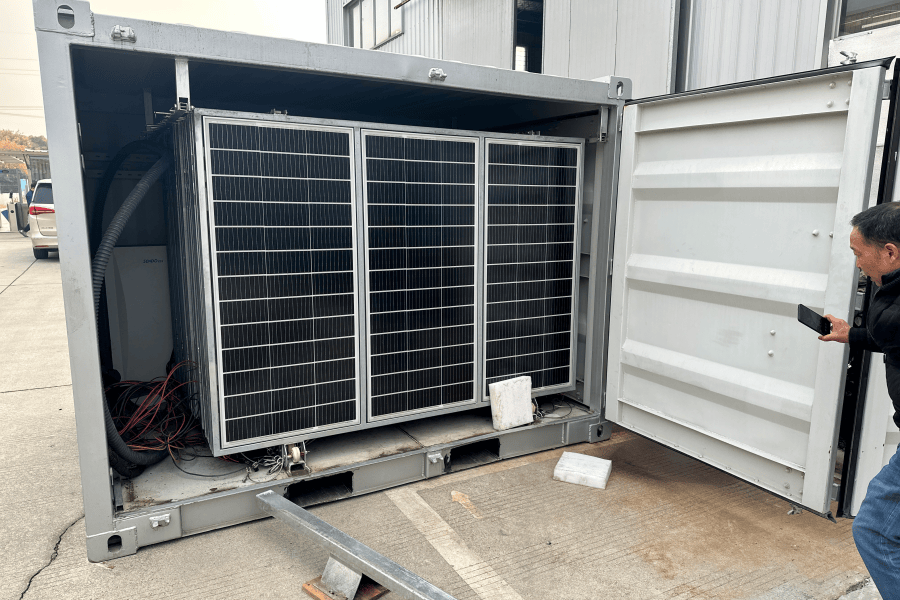
This is where the conversation gets interesting. The solution isn't just adding batteries. It's about a smart, packaged system. Enter the air-cooled pre-integrated PV container. Think of it as a power plant in a box, delivered to your site. It combines solar generation (PV), battery storage (BESS), and all the power conversion and management systems into a single, factory-tested unit. The "air-cooled" part is crucial - it uses ambient air for thermal management, which is simpler, has fewer failure points than liquid-cooled systems, and is perfect for most temperate climates in the US and Europe. The "pre-integrated" part means it's plug-and-play, cutting months off your deployment timeline.
For us at Highjoule, this philosophy is core. We've spent years refining our own containerized systems because we see firsthand on site how critical speed, safety, and simplicity are. Our focus is on designs that meet UL 9540 and IEC 62933 standards out of the gate, because navigating local AHJ (Authority Having Jurisdiction) approvals is hard enough without worrying about your core system's compliance.
Choosing Your Partner: What to Look for in the Top 10 Manufacturers
When you're evaluating the Top 10 Manufacturers of Air-cooled Pre-integrated PV Container for EV Charging Stations, the list is less important than the criteria. Anyone can slap components in a box. You need a partner who understands the full lifecycle. Here's what I tell clients over coffee:
- Certification First: Don't just ask if it's "UL listed." Ask for the specific certification numbers (UL 9540 for the energy storage system, UL 1741 for inverters). This is non-negotiable for insurance and fire marshal sign-off in North America.
- Thermal Management Design: Ask about their cell-to-container airflow design. How do they ensure even cooling on a 100F day when batteries are cycling hard? A good air-cooled system has sophisticated ducting and sensor networks, not just fans.
- Grid Interaction Capability: Can the system do more than just charge EVs? Look for advanced grid-support functions like frequency regulation or peak shaving, which can create additional revenue streams.
- Local Support & Warranty: Where are their service engineers based? If a container in Ohio has a fault, does someone need to fly in from Shanghai? Localized technical support and warehousing for critical parts dramatically reduce downtime.

Real-World Proof: It's Not Just a Concept
Let me give you a concrete example from a project we supported in Northern Germany. A logistics company wanted to electrify its 50-vehicle depot but was quoted an 18-month wait and ?500,000 for a grid upgrade. Instead, they deployed two pre-integrated PV containers on-site. The containers harvest solar from the warehouse roof, store it, and directly power the depot's 150kW chargers. The grid connection only needed to be sized for the depot's base load, not the charging spikes. The project was online in under four months. The key? The manufacturer provided a fully certified, pre-approved system package that sped up the permitting process immensely.
Expert Corner: The Tech You Can't Afford to Ignore
Digging a bit deeper, two concepts will define your project's success: Thermal Management and LCOE (Levelized Cost of Energy).
On Thermal Management: In an air-cooled container, consistency is king. You want a system that keeps all battery cells within a tight temperature range. Excessive heat degrades cells fast, while cold spots reduce available power. I've seen systems where poor airflow design led to a 20% capacity loss in two years. Ask manufacturers for their thermal simulation reports and cell temperature differential data.
On LCOE: This is your true cost of power over the system's life. A cheaper container might have a lower upfront cost but higher LCOE if its batteries degrade quickly or its inverters are inefficient. A well-designed, pre-integrated system optimizes the entire chain - solar capture, battery cycling efficiency, inverter loss - to deliver the lowest possible LCOE. That's where the real ROI is.
Your Next Step: Beyond the List
So, a list of manufacturers is a starting point. But your real job is to find a solution partner whose technology aligns with your specific site conditions, regulatory environment, and financial model. At Highjoule, we often step in not just as a technology provider, but as a consultant in these early stages, helping clients build the right RFQ based on actual site data and local utility rules.
The future of EV charging is off-grid resilient, grid-friendly, and powered by the sun. The right containerized system makes that future buildable today. What's the single biggest grid constraint you're facing on your next EV project?
Tags: UL Standard BESS Energy Storage Renewable Energy EV Charging Pre-integrated Container Solar PV
Author
James Zhang
20+ years agricultural energy storage engineer / Highjoule CTO