
Top 10 Scalable Modular Mobile Power Container Manufacturers for Eco-Resorts
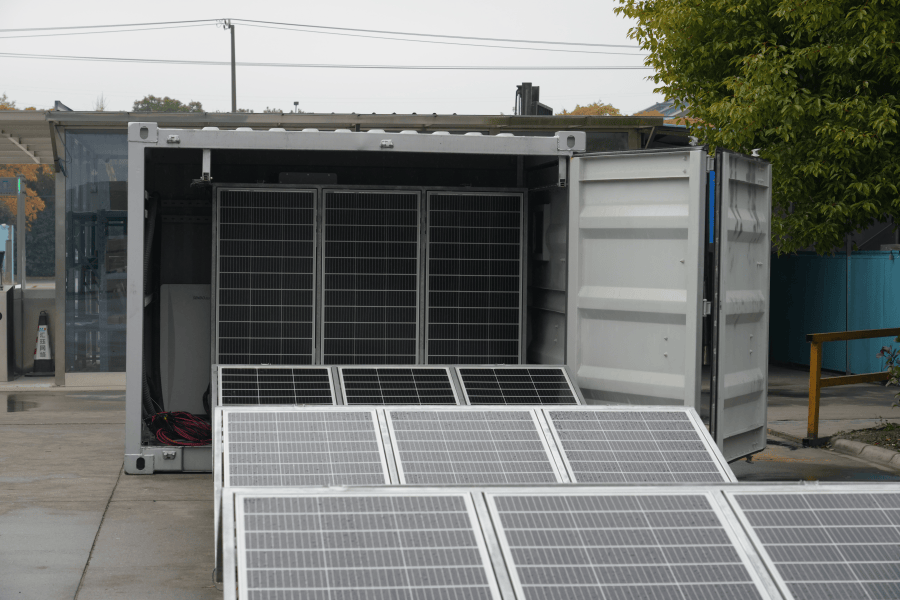
Table of Contents
- The Quiet Problem Every Eco-Resort Developer Faces
- Why Scalable, Modular, and Mobile Isn't Just Buzzwords
- Navigating the Top 10 Manufacturers Landscape
- The Real Cost: Looking Beyond the Price Tag
- A View from the Field: What Really Matters On-Site
The Quiet Problem Every Eco-Resort Developer Faces
Let's be honest. You're building or operating an eco-resort not just to be profitable, but to make a statement. Sustainability is your brand. But here's the quiet problem I've seen firsthand from California to the Greek islands: your energy backbone is often the weakest link. You've got solar panels soaking up the sun, maybe a small wind turbine, but when the sun sets, the grid is unreliable, or you need to power that new desalination unit, what happens? You fire up the diesel genset. The smell, the noise, the emissions - it completely undermines the "eco" promise. It's a constant, expensive compromise.
The International Energy Agency (IEA) notes that reliable, clean power for remote tourism is a major hurdle for sustainable development. And it's not just about being green; it's about economics and resilience. A power outage during peak season? That's lost revenue and a hit to your reputation you can't afford.
Why Scalable, Modular, and Mobile Isn't Just Buzzwords
This is where the concept of a scalable, modular, mobile power container becomes your game-changer. Think of it as a "power plant in a box" that solves the core dilemma. Scalable means you can start with what you need today - say, covering your nightly base load - and add more capacity as your resort expands, without a complete system overhaul. Modular refers to the internal architecture; standardized battery racks and power conversion systems that can be serviced or replaced individually. If one module has an issue, the rest keep running. Mobile is the clincher for eco-resorts. These are not permanent concrete foundations. They can be shipped, positioned with minimal site disruption, and even relocated if your master plan changes. This flexibility is priceless.
I remember a project in a protected coastal area in Florida. Permits for permanent structures were a nightmare. We deployed a mobile BESS container on a prepared pad. It was operational in weeks, not months, and the environmental impact assessment was vastly simpler. The resort met its clean energy goals, and the container is out of sight, quietly doing its job.
The Core Tech You Need to Understand (In Plain English)
When evaluating these Top 10 Manufacturers of Scalable Modular Mobile Power Container for Eco-resorts, you'll hear technical terms. Let me break down two critical ones:
- C-rate: Simply put, it's how fast you can charge or discharge the battery. A 1C rate means you can use the full capacity in one hour. For an eco-resort, you might need a high C-rate if you have sudden, large loads (like all AC units kicking on at once). Most containerized solutions are designed for these commercial demands.
- Thermal Management: This is the unsung hero. Batteries generate heat. Poor thermal management leads to rapid degradation and, in worst cases, safety issues. The best systems have liquid cooling or advanced air conditioning inside the container, keeping every battery cell at its optimal temperature. This directly translates to a longer system life and lower LCOE (Levelized Cost of Energy) - your true cost per kWh over the system's entire life.

Navigating the Top 10 Manufacturers Landscape
The market for these solutions is growing, and the "top 10" list isn't static. You'll find established giants and agile innovators. The key isn't just to pick a name; it's to match their strengths to your specific needs. Some excel in ultra-high-density energy storage (great for space-constrained sites), while others lead in software integration for complex microgrids. The common thread among the true leaders? An unwavering commitment to safety standards like UL 9540 (energy storage system standard) and IEC 62619 (safety for large format batteries). These aren't optional; they're your insurance policy.
For instance, at Highjoule, our approach has always been to engineer safety in from the cell level up. Our mobile containers aren't just boxes with batteries thrown in. They're designed with segregated fire compartments, early detection gas sensors, and passive venting systems - all to meet and exceed those rigorous UL and IEC benchmarks. It's the kind of thing you hope never gets used, but it fundamentally changes the risk profile for your insurers and local authorities.
The Real Cost: Looking Beyond the Price Tag
Let's talk money. The upfront capital expenditure (CapEx) for a quality system is significant. But the business case is made on total cost of ownership. A cheaper system with poor thermal management might lose 30% of its capacity in 5 years. A well-designed, standards-compliant system will still be delivering 80%+ after a decade. That difference in longevity and performance crushes your LCOE.
Consider this real-world math from a microgrid project we supported in Nevada: The system reduced diesel consumption by over 90%. The payback period, factoring in diesel savings, grid demand charge avoidance, and maintenance, was under 4 years. For the remaining 15+ years of the system's life, that energy is nearly free. That's financial and environmental sustainability working together.
| Cost Factor | Cheaper, Non-Modular System | Scalable Modular Mobile Container |
|---|---|---|
| Initial Deployment | Lower | Higher |
| Site Prep & Permitting | Higher (complex) | Lower (simpler) |
| Future Expansion | Very High (new system) | Low (add modules) |
| Long-term LCOE | High (degradation, inefficiency) | Low (optimized performance) |
A View from the Field: What Really Matters On-Site
After 20 years, the glamour isn't in the specs sheet; it's in the muddy boots moments. Here's my blunt, field-tested advice when you talk to any manufacturer:
- Ask about serviceability. Can a local technician safely replace a faulty inverter module in under an hour with basic tools? Or does it require a factory specialist flying in? Modularity means nothing if you can't fix it easily.
- Demand project references in a similar climate. A system tested in mild Germany might struggle in the humid heat of Costa Rica or the dry cold of Colorado mountains. Thermal management is everything.
- Look at the software. The hardware stores energy; the software makes you money. Can it seamlessly shift between solar soaking, peak shaving, and backup modes without manual intervention? The control system is the brain.
Our team's philosophy has always been to provide not just a container, but a localized power asset. That means pre-configuring systems to local grid codes (like IEEE 1547 in the US), providing clear commissioning support, and ensuring remote monitoring is so intuitive your facilities manager can understand the system's health at a glance.

Your Next Move: Smarter Questions to Ask
So, you're looking at this Top 10 Manufacturers of Scalable Modular Mobile Power Container for Eco-resorts list. Great start. Now, move beyond it. The right partner isn't just a supplier; they're an extension of your team, understanding that an eco-resort's power needs are as unique as its location.
My final thought? The goal isn't just to buy a battery container. It's to achieve energy independence that's clean, quiet, and reliable - a system that becomes so seamless, your guests never have to think about it, and your accountants smile at the quarterly reports. That's the real return on investment.
What's the one operational headache in your resort's power system that keeps you up at night? Honestly, that's where this conversation should start.
Tags: UL Standard BESS LCOE Modular Energy Storage Mobile Power Container Eco-Resort Power
Author
James Zhang
20+ years agricultural energy storage engineer / Highjoule CTO