
Wholesale Price of Grid-forming Off-grid Solar Generators for Remote Island Microgrids
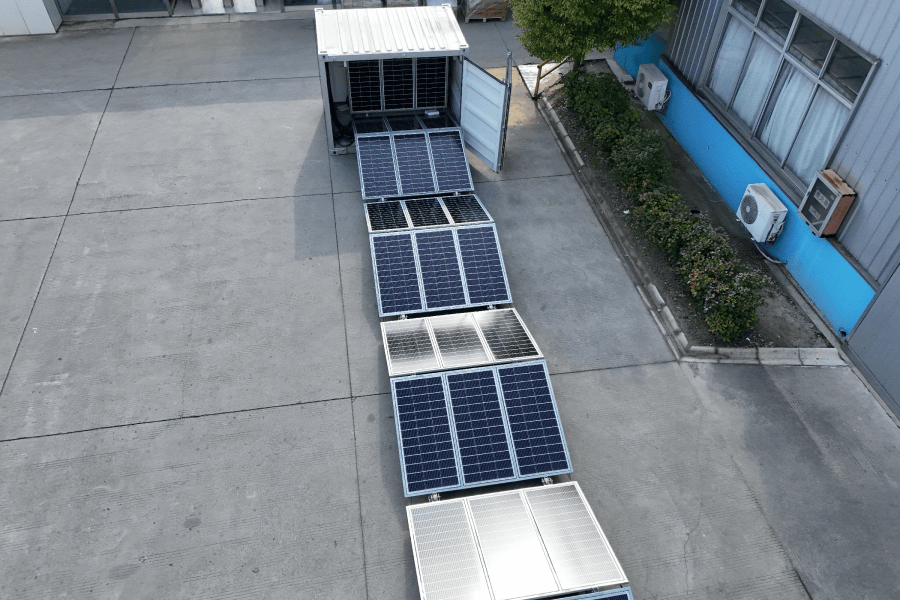
Table of Contents
- The "Real" Price Tag: More Than Just Hardware
- The Silent Cost of Getting It Wrong
- Building Resilience: The Grid-Forming Imperative
- A Real-World Glimpse: Lessons from a Pacific Island
- Decoding the Wholesale Cost: A Technologist's Breakdown
- Asking the Right Questions for Your Project
The "Real" Price Tag: More Than Just Hardware
Honestly, when a project manager or a community leader for a remote island first asks about the wholesale price of a grid-forming off-grid solar generator, I get it. The budget sheet is staring right at you. But over two decades of deploying systems from the Scottish isles to the Caribbean, I've learned that focusing solely on that initial hardware quote is the single biggest mistake you can make. The real cost - and the real value - is buried in the system's DNA: its ability to be the robust, beating heart of your microgrid for the next 15+ years.
You're not just buying a container of batteries and inverters. You're buying energy independence. You're buying grid resilience. And you're buying freedom from the volatile, eye-watering cost of diesel. According to the International Renewable Energy Agency (IRENA), islands often pay up to 10 times more for electricity than mainland grids, primarily due to diesel dependence. The conversation needs to shift from "What's the cheapest box?" to "What gives us the lowest lifetime cost and the highest reliability?"
The Silent Cost of Getting It Wrong
Let me share something I've seen firsthand on site. A few years back, I was called to assess a struggling microgrid on a small island. They had gone with a low-bid, grid-following system. On paper, it saved them 20% upfront. In reality? The system couldn't handle the sudden loss of their legacy diesel genset - it would just trip offline. Every major load switch caused frequency wobbles. The lack of proper thermal management in the battery enclosure led to accelerated degradation. Within three years, they were facing a major, unplanned CapEx refresh and still burning diesel for stability.
That's the silent cost. It's the cost of downtime for local businesses and clinics. It's the cost of premature battery replacement. It's the continued OpEx of fuel that your solar-storage system was supposed to eliminate. When we talk about wholesale price for remote island microgrids, we must anchor it to the Levelized Cost of Energy (LCOE) - the total lifetime cost divided by the total energy produced. A higher-quality, grid-forming system often has a lower LCOE, even if its initial price point is higher.
Building Resilience: The Grid-Forming Imperative
This is the technical heart of the matter. A traditional, grid-following inverter needs a strong grid signal to sync to. It's a follower. But on an island, your BESS is the grid. A grid-forming inverter is the leader. It creates its own stable voltage and frequency waveform, essentially mimicking the inertia of a traditional power plant. It can start cold, black-start the microgrid, and seamlessly integrate fluctuating solar and wind while keeping the lights on.
This capability isn't a luxury; for remote communities, it's a necessity. It's what allows you to maximize renewable penetration, sometimes to 90% or more, and truly minimize diesel use. The "wholesale price" must account for this sophisticated piece of technology. It's the brain of your entire energy system.

A Real-World Glimpse: Lessons from a Pacific Island
I want to tell you about a project we completed for a community in the Pacific. The goal was to reduce diesel consumption by over 80%. The challenges were classic: high humidity, salt spray, limited space, and a need for zero-hassle operation.
The core of our solution was a containerized, grid-forming off-grid solar generator system. Here's what we prioritized that directly impacted the project's value, not just its cost:
- UL 9540 & IEC 62619 Certified Enclosure: Non-negotiable for insurance and safety. This wasn't an area to cut corners.
- Advanced Liquid Cooling (Thermal Management): Tropical heat kills batteries. We maintained a tight temperature band, which is crucial for hitting the projected 6000+ cycle life and protecting the warranty.
- Right-Sized C-rate: We didn't overspec the battery's power output (C-rate). A 1C cell might be cheaper than a 0.5C cell, but for this application's duty cycle, the 0.5C cell runs cooler and lasts longer. We optimized for longevity, not just peak power.
- Localized Control Logic: The system was programmed to prioritize solar charging based on weather forecasts and community load patterns, a small software tweak with massive fuel-saving results.
The "wholesale price" here was a package deal: premium hardware, intelligent engineering, and remote monitoring support. Two years in, they're hitting their fuel reduction targets, and the system's availability is at 99.8%.
Decoding the Wholesale Cost: A Technologist's Breakdown
So, what are you actually paying for in a robust system? Let's break it down in a way I would over a coffee.
At Highjoule, when we look at the wholesale price for a remote island microgrid, we're optimizing this entire stack. Maybe we can use a slightly lower C-rate battery if the duty cycle allows, and invest those savings into a more robust cooling system. It's a holistic engineering puzzle, not a commodity purchase.

Asking the Right Questions for Your Project
Instead of just asking for a price per kWh, start a different conversation with your potential suppliers. Your due diligence list should include:
- "Can you provide a projected LCOE analysis for a 20-year period, including assumed degradation?"
- "Is the grid-forming inverter certified to relevant IEEE standards for island operation (like IEEE 1547-2018)?"
- "What is the guaranteed end-of-life capacity of the battery (e.g., 70% after 10 years), and what does the warranty specifically cover?"
- "Can you show me a thermal simulation of the battery enclosure for my specific climate?"
- "What is your remote monitoring and response protocol? Do you have local service partners in my region?"
The answers to these questions will tell you infinitely more about the true value and long-term cost of your system than a single-line quote ever could. Your energy future is too important to base on the lowest initial bid. So, what's the first operational challenge on your island that keeps you up at night?
Tags: Remote Island Microgrid UL IEC Standards Off-grid Solar Generator Grid-Forming Inverter BESS Wholesale Price
Author
James Zhang
20+ years agricultural energy storage engineer / Highjoule CTO