
Wholesale Price of LFP (LiFePO4) Mobile Power Containers for Coastal Salt-spray: A Real-World Cost Analysis
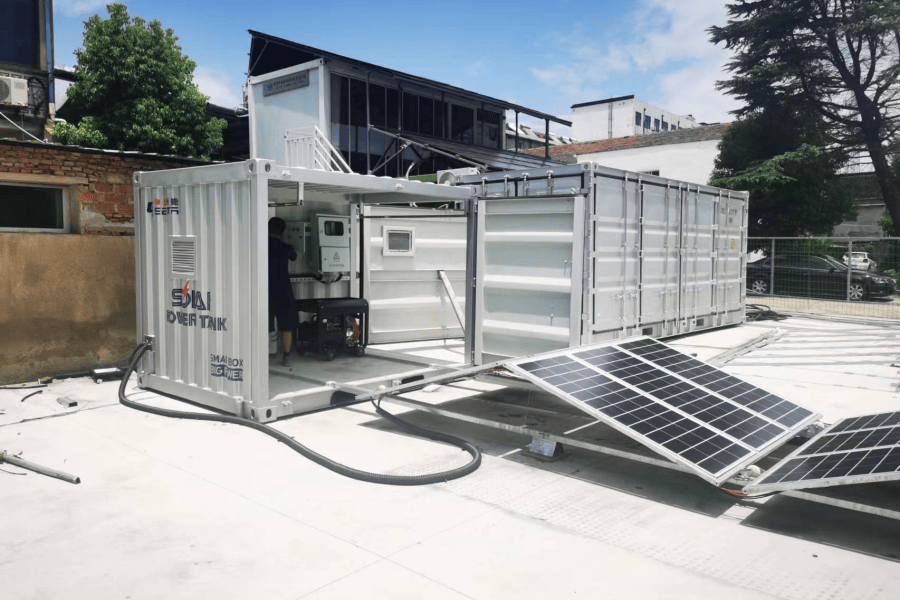
Let's Talk About the Real Cost of Powering Coastal Projects
Honestly, if you're looking at deploying energy storage near the coast C whether it's for a seaside data center, a port microgrid, or supporting offshore wind integration C you've already hit the first major headache. The salt in the air isn't just bad for your car's paint job; it's a silent, creeping killer for standard electrical equipment. I've seen this firsthand on site: corroded terminals, compromised insulation, and thermal management systems clogged with salt deposits. It's not a matter of if it will fail, but when. And when we talk about the Wholesale Price of LFP (LiFePO4) Mobile Power Container for Coastal Salt-spray Environments, we're not just talking about a sticker price. We're talking about the total cost of ownership, and more importantly, the cost of not getting the right protection.
What We'll Cover
- The Hidden Cost of "Standard" Equipment by the Sea
- Beyond Sticker Price: What "Coastal-Ready" Really Means
- LCOE: The Real Game-Changer for Your Budget
- A Case in Point: The North Sea Microgrid Project
- Making the Investment Work for You
The Hidden Cost of "Standard" Equipment by the Sea
Here's the industry phenomenon we all quietly acknowledge: many projects, especially in the early rush to deploy, try to save on upfront capital expenditure (CapEx) by using standard, off-the-shelf BESS units even in harsh environments. The logic seems sound C get the project online faster, for less. But the data tells a different story. According to a National Renewable Energy Laboratory (NREL) report on BESS performance, systems in coastal regions can see maintenance costs spike by 40-60% within the first 5 years compared to inland installations. The primary culprits? Corrosion-related failures and the increased downtime for cleaning and component replacement.
This is where the initial "good deal" on a standard container falls apart. You're not just buying a battery; you're buying years of reliable, predictable operation. A corroded busbar isn't a simple fix; it's a safety hazard that can lead to thermal runaway. Salt-clogged air filters for your thermal management system force the cooling to work harder, slashing efficiency and driving up your operational expenditure (OpEx) through higher energy use. Suddenly, that attractive wholesale price gets buried under a mountain of unexpected bills.
Beyond Sticker Price: What "Coastal-Ready" Really Means
So, when we at Highjoule Technologies quote a Wholesale Price of LFP (LiFePO4) Mobile Power Container for Coastal Salt-spray Environments, what's baked into that number? It's the engineering that prevents those 60% maintenance hikes. Let me break it down in non-technical terms.
First, the container itself. It's not just a painted steel box. We use marine-grade alloys and specialized coatings that meet specific salt-spray test standards like IEC 60068-2-52. Think of it as the difference between a standard sedan and a rugged 4x4 C both are cars, but one is built for the tough terrain.
Second, the thermal management. This is critical. LFP batteries are inherently safer, but they still need precise temperature control. Our system is a closed-loop, liquid-cooled design. This means the air inside the container never directly exchanges with the salty, humid outside air. No salt gets in to gunk up the works. This protects the battery cells and keeps the system running at its optimal C-rate (basically, how hard you can safely charge and discharge it) without derating due to overheating.
Third, the electrical components. Every connector, every circuit board, gets a conformal coating C a protective resin layer that seals out moisture and salt. It's a detail, but in my 20+ years, it's the details that separate a 15-year asset from a 5-year liability.

LCOE: The Real Game-Changer for Your Budget
This brings us to the most important metric for any financial decision-maker: the Levelized Cost of Energy Storage (LCOE). The International Energy Agency (IEA) consistently highlights LCOE as the key metric for comparing energy assets. It's the total cost of owning and operating the system over its lifetime, divided by the total energy it dispatches.
A standard unit might have a lower upfront wholesale price, but its effective lifetime near the coast may be halved. Its efficiency degrades faster due to poor thermal management, meaning it stores less energy for the same footprint. Its operational costs are higher. All of this makes its real LCOE much higher.
Our coastal-ready LFP container has a higher initial price point, yes. But its 20-year design life is actually achievable in that environment. Its efficiency remains stable. Its maintenance is predictable and minimal. When you run the LCOE model over a 15-20 year horizon, the numbers consistently flip in favor of the purpose-built solution. You're buying certainty.
A Case in Point: The North Sea Microgrid Project
Let me give you a real example from Northern Germany. A port operator needed a resilient microgrid to power critical loading cranes and cold storage, but the salt-spray and constant wind were a nightmare. They initially priced out standard units. The challenge? The manufacturer's warranty explicitly voided coverage for "extreme coastal corrosion."
They came to us. We deployed a 2 MWh LFP Mobile Power Container built for salt-spray environments. The key?? details were in the execution: the foundation was designed for higher clearance to avoid splash zone water, all external cable trays were stainless steel, and we implemented a remote monitoring system that tracks internal humidity and corrosion sensors C giving them and our support team a real-time health dashboard.
Three years in, the comparison is stark. Another standard BESS unit installed nearby for a different application has already undergone two major service calls for corrosion-related issues, with weeks of downtime. Our container's performance data? Zero corrosion-related faults, maintained 98% round-trip efficiency, and it's seamlessly provided backup power during several grid disturbances. The upfront investment secured their operational continuity.
Making the Investment Work for You
So, when you're evaluating suppliers and that Wholesale Price of LFP (LiFePO4) Mobile Power Container for Coastal Salt-spray Environments lands on your desk, look beyond the number. Ask these questions:
- What specific UL or IEC standards does the container meet for corrosion protection? (Look for UL 9540 and specific mention of salt-spray testing).
- Is the thermal management system truly sealed from the external environment?
- What does the warranty actually cover regarding environmental damage?
- Can the supplier provide LCOE modeling that compares a standard vs. a hardened unit in your specific location?
At Highjoule, our value isn't just in selling a box. It's in partnering from day one to ensure the asset we deliver performs for its entire design life, even in the toughest conditions. We provide the localized deployment support and the long-term O&M planning that turns a capital expenditure into a reliable, revenue-generating or cost-saving asset. The right price isn't the lowest one; it's the one that eliminates costly surprises.
What's the single biggest operational risk your coastal energy project is facing? Is it worth a short-term saving?
Tags: UL Standard BESS LCOE Europe US Market Renewable Energy Salt-Spray Protection LiFePO4 Battery
Author
James Zhang
20+ years agricultural energy storage engineer / Highjoule CTO