
Wholesale Price of 5MWh Liquid-cooled BESS for Industrial Parks: A Real-World Breakdown
Beyond the Sticker Price: What Really Drives the Cost of a 5MWh BESS for Your Industrial Park
Hey there. If you're managing energy for an industrial park or a large manufacturing facility, you've probably been getting quotes and hearing a lot about the wholesale price of liquid-cooled 5MWh utility-scale BESS. Honestly, in my 20+ years on site, from Texas to North Rhine-Westphalia, I've seen that number cause as much confusion as clarity. Everyone wants to know the bottom line, but focusing solely on that initial capital expenditure (CAPEX) is like buying a car based only on the showroom price, ignoring fuel efficiency, maintenance costs, and long-term reliability. Let's have a coffee-chat about what you're really buying.
Quick Navigation
- The Real Problem: It's Not Just About the Price Tag
- The Hidden Cost of Doing Nothing (Or Getting It Wrong)
- Why Liquid-Cooled 5MWh Systems Are Becoming the Go-To Solution
- Breaking Down Total Cost of Ownership (TCO)
- A Case in Point: A German Manufacturing Park
- Key Considerations Before You Commit
The Real Problem: It's Not Just About the Price Tag
The market is buzzing. According to the International Energy Agency (IEA), global grid-scale battery storage capacity is set to multiply by almost 20 times this decade. For you, the industrial decision-maker, this means more options, more vendors, and a wide range of prices for what seems like the same product: a containerized battery system. The core problem I see is that the conversation starts and ends with the wholesale price per megawatt-hour, without digging into the operational economics and site-specific risks that determine your actual return on investment.
The Hidden Cost of Doing Nothing (Or Getting It Wrong)
Let's agitate that pain point a bit. A lower upfront quote might look attractive, but what if it comes from cutting corners on thermal management? I've seen this firsthand on site: a passively air-cooled system in a dusty Arizona industrial park. The batteries degraded 30% faster than projected because they couldn't handle the peak thermal loads during daily demand-charge management cycles. The "savings" were wiped out in two years by lost capacity and premature replacement needs.
Then there's safety and standards. The U.S. (UL 9540, IEEE 1547) and EU (IEC 62933) have rigorous standards for a reason. A system that isn't fully certified might be cheaper, but it becomes a liability - delaying interconnection approval, increasing insurance premiums, or worse, creating a safety hazard. The financial risk here isn't just the unit cost; it's project delays, potential fines, and operational downtime.

Why Liquid-Cooled 5MWh Systems Are Becoming the Go-To Solution
This is where the shift to liquid-cooled, utility-scale systems like the 5MWh class makes sense. It's the industry's answer to those hidden costs. Think of liquid cooling as a precision climate control system for each battery cell. Compared to air, it's far more efficient at pulling heat away, which directly tackles the two biggest cost drivers after the initial purchase: degradation and space.
- Lower Degradation: Consistent, lower operating temperatures slow the chemical aging of the cells. This means your system holds its capacity longer, directly improving your Levelized Cost of Storage (LCOS) - the real metric that matters.
- Higher Power Density (C-rate): Because cooling is so efficient, the batteries can safely discharge at higher C-rates (like 1C or more) without overheating. This is crucial for industrial applications like demand charge reduction or backup power, where you need to dispatch a lot of energy quickly.
- Smaller Footprint: You can pack more energy into a smaller container. For land-constrained industrial parks, this means preserving valuable real estate for production, not for battery yards.
Breaking Down Total Cost of Ownership (TCO)
So, when we at Highjoule discuss the wholesale price of a liquid-cooled 5MWh BESS, we're framing it within the TCO. Here's a simplified breakdown of what influences that final number for a U.S. or European project:
Our approach has always been to engineer for the lowest TCO, not the lowest bid. That means using cells with proven long-cycle life, designing cooling systems with redundancy, and ensuring every component meets or exceeds UL and IEC standards from the get-go. It might reflect slightly differently in the initial quote, but it pays back tenfold in predictable, safe, and high-performing operation.
A Case in Point: A German Manufacturing Park
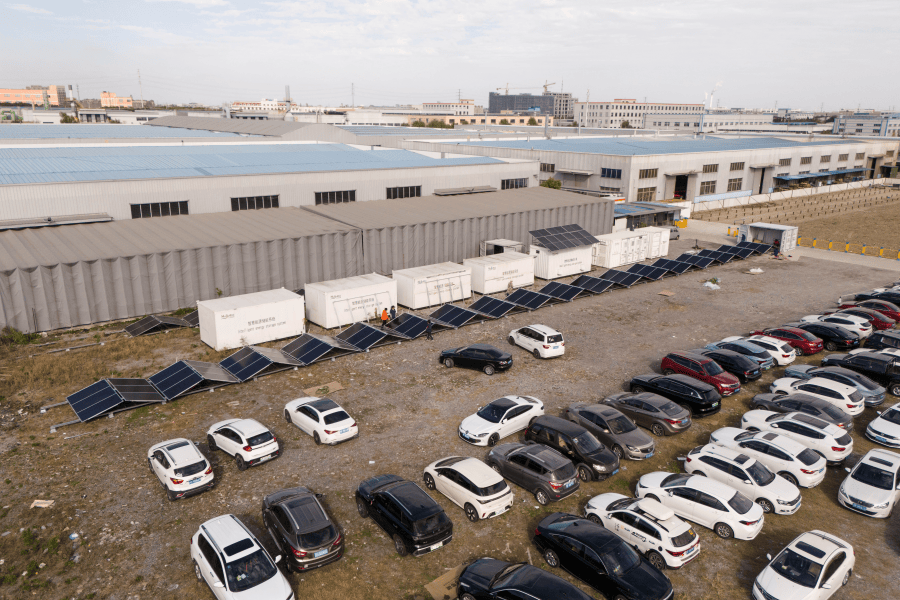
Let me share a relevant example. We deployed a 10 MWh (effectively two of our 5MWh liquid-cooled units) at a mid-sized automotive parts manufacturing park in Germany. Their challenges were classic: volatile energy prices, strict grid capacity limits, and a corporate mandate for carbon reduction.
The "cheaper" alternative was an air-cooled system. But our analysis showed that given their need for two full discharge cycles per day (to capture intraday price arbitrage and provide grid services), the thermal stress would lead to higher degradation. Over a 10-year period, the liquid-cooled system's higher efficiency and stability resulted in a ~18% lower LCOS, despite a higher initial investment. The system seamlessly integrates with their onsite solar and is certified under all relevant IEC standards, simplifying the approval process with the local network operator.
Key Considerations Before You Commit
Based on countless site deployments, here's my practical advice when evaluating quotes:
- Ask for the LCOS/LCoE Model: Demand a transparent financial model that projects costs over the system's life, not just the invoice.
- Audit the Safety Certifications: Don't just take "designed to meet" for an answer. Ask for the actual UL 9540A test report or IEC certificate for the assembled unit.
- Understand the Cooling Design: Ask about coolant distribution, pump redundancy, and what happens if a cooling loop fails. Your system should be fault-tolerant.
- Scope the Warranty & Support: A 10-year performance warranty is standard for quality systems. But also understand the local service and support structure. Can you get a technician on site within 24-48 hours if needed?
Ultimately, the right wholesale price for a liquid-cooled 5MWh utility-scale BESS is the one that delivers the lowest risk and highest lifetime value for your specific industrial operation. It's an infrastructure investment, not a commodity purchase. What's the one operational headache in your park's energy profile that a truly reliable battery system could solve?
Tags: UL Standard BESS LCOE Europe US Market Liquid Cooling Industrial Energy Storage Renewable Energy Utility-Scale
Author
James Zhang
20+ years agricultural energy storage engineer / Highjoule CTO