
Wholesale Price of Scalable Modular 5MWh BESS for Construction Site Power
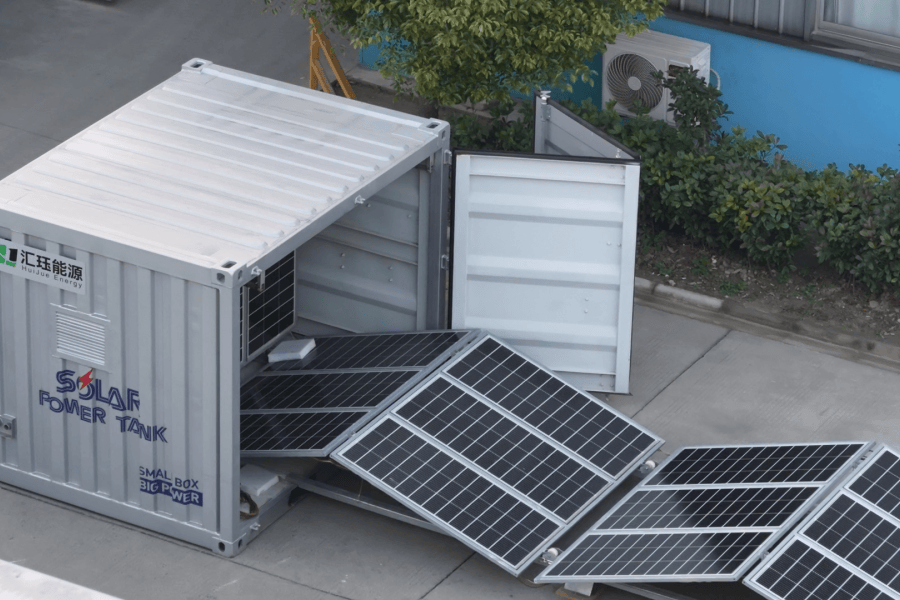
Table of Contents
- The Real Problem Isn't Just the Price Tag
- The Staggering Cost of "Doing Nothing"
- Enter the Scalable, Modular 5MWh Unit: A Different Way to Think
- From the Field: A Texas Logistics Hub Case Study
- Under the Hood: What Really Drives Value in a 5MWh BESS
- Making the Numbers Work for Your Site
The Real Problem Isn't Just the Price Tag
Let's be honest. When you're managing a large-scale construction project in the US or Europe, and you first hear "utility-scale BESS," your mind probably jumps straight to a massive capital outlay. You're thinking about diesel generators, temporary grid connections, peak demand charges, and the sheer logistical headache of keeping the lights on and the tools running. The initial wholesale price of a scalable modular 5MWh utility-scale BESS for construction site power feels like just another big, complicated line item.
But here's what I've seen firsthand on site, from California solar farms to German industrial parks: The core pain point isn't the upfront cost of the equipment itself. It's the total cost of uncertainty. It's the budget blown by volatile fuel prices. It's the project delay because a temporary transformer connection took six weeks instead of four. It's the noise complaints from neighbors about your 24/7 diesel gensets. You're not just buying a battery; you're buying predictability, silence, and schedule certainty.
The Staggering Cost of "Doing Nothing"
Sticking with traditional methods has become a brutal financial equation. The International Energy Agency (IEA) has highlighted the volatility in global energy markets, which directly impacts diesel and natural gas prices. On a 12-month project, that volatility can easily swing your energy budget by 20-30%. And that's just fuel.
Then there's grid dependency. In many regions, getting a temporary construction-grade grid connection is not only slow but comes with punishing demand charges. Utilities charge you for the peak power you might draw, not just the energy you use. So, if you need a big surge for crane operations, you're paying a premium for that capacity all month. I've reviewed utility bills where these demand charges made up over 40% of the total cost. It's inefficient, and honestly, it feels like you have no control.
And let's not forget the carbon footprint. More and more project owners, especially in Europe, have strict ESG (Environmental, Social, and Governance) mandates. Running megawatts of diesel generation is a fast track to missing those targets.
The Hidden Multipliers:
- Fuel Logistics & Security: Storing and handling thousands of liters of diesel is a safety and security risk.
- Noise & Emissions Permitting: Increasingly restrictive local ordinances can limit generator run-hours, stalling work.
- Maintenance Downtime: Gensets need servicing; a failed unit at a critical phase can halt an entire site.
Enter the Scalable, Modular 5MWh Unit: A Different Way to Think
This is where the logic shifts. A scalable modular 5MWh utility-scale BESS isn't a one-for-one replacement for a generator. It's a smarter foundational power asset. Think of it like building with LEGO blocks. You start with a 5MWh base unit - that's a substantial chunk of energy, enough to power a large site's base load through a shift. The "scalable modular" part means you can add more 5MWh blocks as your project phases grow, or you can pair it with a smaller, efficient backup generator for peak shaving.
The key value is in the Levelized Cost of Energy (LCOE) over your project's life. LCOE is the total cost to own and operate the asset per unit of energy it delivers. While the diesel genset's LCOE is tied to wildly unpredictable fuel costs, a BESS's "fuel" is electricity, which you can source strategically - from a weak grid connection overnight at low rates, or directly from on-site renewables like solar panels. You're locking in your energy cost.
At Highjoule, our containers are designed with this site-based reality. They're built to UL 9540 and IEC 62933 standards from the ground up, which isn't just a sticker - it means every busbar, every thermal management duct, and every safety cutoff is engineered for predictable, safe operation in harsh conditions. This reduces risk, which in turn, reduces the soft costs your finance team worries about.
From the Field: A Texas Logistics Hub Case Study
Let me give you a real example. We deployed a system for a massive new logistics hub construction outside Austin, Texas. The challenge was classic: a remote site with a long lead time for a permanent grid connection. The initial plan was a bank of 2MW diesel generators.
We proposed a hybrid solution: One 5MWh Highjoule modular BESS container coupled with a single, smaller 1MW generator. Here's how it worked:
- The BESS was charged nightly using a temporary medium-voltage connection, taking advantage of ultra-low overnight electricity rates.
- During the day, the BESS supplied 90% of the site's base load (lighting, offices, small tools).
- The 1MW generator only kicked in for the two daily peaks (crane and heavy equipment operation), essentially "peak shaving."
The result? A 70% reduction in diesel fuel consumption and costs. The noise levels dropped so much that the site manager joked he could "actually hear himself think." Most importantly, they removed the risk of fuel price spikes from their critical path. The wholesale price of the scalable modular 5MWh BESS was offset within the first 8 months by fuel and demand charge savings alone, and the asset was then redeployed to their next project.

Under the Hood: What Really Drives Value in a 5MWh BESS
When evaluating a BESS, don't just look at the megawatt-hour rating. For construction power, these technical details make all the difference:
- C-rate (Charge/Discharge Rate): This is how fast the battery can absorb or release energy. A 5MWh system with a 1C rate can deliver 5MW of power. For construction, you might need bursts of high power. A well-designed system will have a C-rate that matches your peak equipment loads, allowing you to right-size your generator backup.
- Thermal Management: This is the unsung hero. Batteries generate heat, and heat degrades life and performance. A system with a robust, liquid-cooled thermal management loop (like ours) will maintain optimal temperature in a Texas summer or a Norwegian winter. This ensures you get the full 5MWh, cycle after cycle, and extends the system's usable life across multiple projects.
- Grid-Forming Capability: Advanced inverters can "form" a stable grid from nothing. This means if you have no grid connection at all, the BESS can start up and create a clean, stable voltage and frequency for your sensitive site equipment to run on - something a traditional generator struggles with.
These features are why a quality, standards-compliant system delivers a lower LCOE. It performs consistently, lasts longer, and requires less babysitting from your already-stretched site crew.
Making the Numbers Work for Your Site
So, how do you translate the wholesale price of a scalable modular 5MWh utility-scale BESS for construction site power into a winning business case? You shift the conversation from Capex to TCO (Total Cost of Ownership).
Here's a simplified framework we use with clients:
| Cost Factor | Traditional Generator-Only | Hybrid BESS + Generator Solution |
|---|---|---|
| Fuel Cost | High & Volatile | Reduced by 50-80% (predictable) |
| Demand Charges | Very High | Minimal or Eliminated |
| Maintenance | High (engine upkeep) | Low (solid-state system) |
| Noise/Emissions Penalties | Risk | Negligible |
| Asset Resale/Redeployment | Low Value | High (modular BESS has 10-15yr life) |
The modularity is your financial friend. You're not overbuying capacity for Day 1. You start with what you need, and scale as the project scales. And after this project? The entire system, or individual 5MWh modules, can be transported to your next site, amortizing that initial cost over multiple projects.
Honestly, the biggest hurdle I see isn't technology or even price anymore. It's changing the mindset from viewing power as a consumable expense to viewing it as a manageable, strategic asset. The right BESS isn't a cost; it's an insurance policy against volatility and a tool for schedule certainty.
What's the one unpredictable cost on your current site that, if eliminated, would let your team sleep easier at night?
Tags: UL Standard BESS LCOE Europe US Market Construction Power Renewable Energy Utility-Scale Energy Storage
Author
James Zhang
20+ years agricultural energy storage engineer / Highjoule CTO