
20ft High Cube BESS Container for Rural Electrification: Benefits & Drawbacks
Table of Contents
- The Modern Power Dilemma: It's Not Just About the Philippines
- Why 20ft High-Cube Containers Are Winning the Global Storage Game
- The Flip Side: What They Don't Tell You in the Brochure
- A Case in Point: Learning from the Field
- Making the Right Call for Your Project
The Modern Power Dilemma: It's Not Just About the Philippines
Honestly, when we talk about "rural electrification in the Philippines," my mind immediately jumps to projects in Texas, or remote communities in Canada, or even industrial microgrids in Germany. The core challenge is universal: how do you deliver reliable, clean power to places where the grid is weak, non-existent, or prohibitively expensive to extend? I've seen this firsthand on site - whether it's a mining operation in Australia or a farm cooperative in California. The pain points are the same: high diesel costs, logistical nightmares of transporting fuel, and the sheer complexity of building permanent power infrastructure from scratch.
This is where the conversation gets interesting for decision-makers in the US and Europe. According to the International Energy Agency (IEA), achieving national climate and energy security goals will require a massive expansion of grid infrastructure, but bottlenecks and permitting delays are real. Sometimes, waiting for the grid isn't an option. You need a power plant you can drop on a concrete pad and connect. That's the fundamental appeal of the pre-fabricated, containerized Battery Energy Storage System (BESS).
Why 20ft High-Cube Containers Are Winning the Global Storage Game
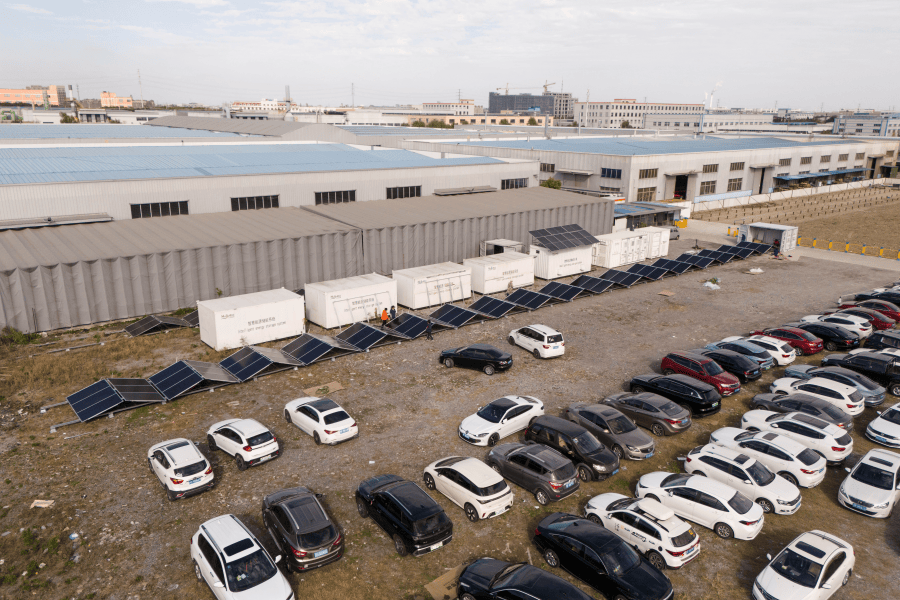
Let's break down why this form factor has become a go-to solution. A 20ft High-Cube shipping container is a global standard. It's designed for intermodal transport - ship, rail, truck. This isn't a theoretical benefit; it's a massive practical one. For a project in, say, a rural part of Nevada, it means your core energy asset can be manufactured and tested in a controlled factory environment (crucial for quality and safety), shipped directly, and craned into position. The "High-Cube" (9.5ft tall) part gives you that extra internal volume, which is a game-changer for thermal management and serviceability.
The benefits stack up fast:
- Plug-and-Play (Mostly): These units arrive pre-integrated with batteries, thermal management (HVAC or liquid cooling), fire suppression (like Novec 1230 or aerosol systems), power conversion systems (PCS), and controls. It dramatically reduces on-site construction time and "integration risk."
- Scalability: Need more power? Think Lego blocks. You can parallel multiple containers. This modularity allows for phased capital expenditure, which is a huge plus for CFOs.
- Standardized Compliance: This is critical for our markets. A reputable provider like Highjoule designs these containers from the ground up to meet UL 9540, IEC 62933, and IEEE 1547 standards. You're not buying a science project; you're buying a certified power apparatus. Our own HC-20 series, for instance, undergoes the same rigorous certification for a project in Ohio as it would for one in the Philippines - safety and performance are non-negotiable.
- Optimized Levelized Cost of Storage (LCOS): By packing more energy density into a standardized footprint and streamlining deployment, you directly attack the soft costs - installation, engineering, commissioning. A lower LCOS makes renewable microgrids competitive with diesel gensets faster.

The Flip Side: What They Don't Tell You in the Brochure
Now, let's have that coffee-chat honesty. A containerized solution isn't a magic wand. The drawbacks are less about the technology itself and more about application engineering and lifecycle thinking.
- The Site Work Doesn't Vanish: You still need a solid, level foundation (often a reinforced concrete pad). You need trenching for AC/DC and communication cables. You need a proper security fence. The "plug-and-play" is at the system level, not the site level.
- Thermal Management is Everything: That High-Cube space is precious for airflow and cooling. In Arizona heat or Canadian cold, the HVAC system is working overtime. Its energy consumption ("parasitic load") comes directly off the top of your system's efficiency. I always advise clients to look closely at the C-rate of the batteries and the cooling design. A system designed for a mild climate will struggle - and degrade faster - in extreme environments if not properly specified.
- Service Access & Future-Proofing: Can technicians safely and easily access every battery module, every fuse, every busbar inside? Cramming more kWh into the box can sometimes compromise serviceability. Also, what happens in 10-15 years when these batteries reach end-of-life? Designing for easy decommissioning and replacement is an often-overlooked but critical part of the spec.
- Logistics Surprises: That standard container can travel globally, but getting it the last mile to a remote site might require special permits, escorts, or even road upgrades. The logistics tail is part of the total cost equation.
A Case in Point: Learning from the Field
Let me give you a relevant example from a project we supported in Eastern Europe - a region not unlike some rural US areas in terms of grid constraints. A food processing plant needed to ensure uninterrupted power for its refrigeration loads and integrate a new rooftop solar array. The challenge was space constraint and a need for extreme reliability in a location with harsh winters.
The client initially looked at building a bespoke BESS in a room. The timeline and cost were prohibitive. They opted for two 20ft High-Cube containers placed side-by-side. The benefits were immediate: faster permitting (due to pre-certified units), deployment within 8 weeks of arrival, and a seamless integration with their existing switchgear. The drawback they had to manage? Ensuring the container heating systems were robust enough for -20C conditions, which meant specifying a different HVAC package than our standard offering. It added a bit to the upfront cost but saved immense headache and risk down the line. This is where working with a partner with deep field experience matters - anticipating these site-specific nuances.
Making the Right Call for Your Project
So, is a 20ft High-Cube PV Storage System the right choice for your off-grid or microgrid project? The answer, as always, is "it depends."
It's an excellent solution when you prioritize speed to market, scalability, and certified safety. It's less ideal if your site has extreme access limitations or if you have a very specific, irregular space that a standard container can't fit.
The key is to look beyond the brochure kWh number. Ask about the real-world round-trip efficiency at your site's ambient temperature range. Discuss the thermal management strategy in detail. Review the service manuals and layout - is it designed for a technician? And most importantly, partner with a provider like Highjoule that doesn't just sell you a box, but brings 20 years of deployment scars and triumphs to the table, ensuring the system is optimized not just for day one, but for the next 15 years of operation. The right container isn't just a product; it's the foundation of your energy resilience.
What's the single biggest site constraint you're facing in your next project?
Tags: UL Standard BESS LCOE Europe US Market Off-grid Power Renewable Energy Containerized Energy Storage
Author
James Zhang
20+ years agricultural energy storage engineer / Highjoule CTO