
Modular BESS Environmental Impact: Scalable Solutions for Rural Electrification
Beyond the Grid: Rethinking Environmental Impact with Scalable Modular BESS
Honestly, after two decades on sites from Texas to Thailand, I've learned one thing: when we talk about environmental impact, it's never just about carbon. It's about the total footprint - land use, local ecosystems, long-term waste, and the real economics of keeping the lights on sustainably. I want to share some perspective, especially as we see a growing push for rural electrification in regions like the Philippines, and what it means for us in markets with strict UL and IEC standards.
Table of Contents
- The Real Problem: It's Not Just About Kilowatts
- The Agitation: The Hidden Cost of Getting It Wrong
- The Solution: Why Scalable Modular Containers Change the Game
- A Case in Point: Learning from the Field
- The Tech That Makes It Work (Without the Jargon)
- Looking Ahead: Your Next Step
The Real Problem: It's Not Just About Kilowatts
Here's the scene I've seen too often. A remote community needs reliable power. The classic approach? A massive, one-size-fits-all system plopped on a cleared piece of land. It works, but at what cost? You're looking at significant site disruption, long construction times, and a system that's either underutilized (a waste of resources) or overwhelmed from day one. The environmental impact starts before the first electron is stored.
For decision-makers in the US and Europe, this isn't just a developing-world issue. It's a fundamental design flaw. The IEA highlights that global energy storage capacity needs to expand dramatically to meet net-zero goals, but how we scale matters. Deploying oversized, rigid systems in sensitive or space-constrained areas creates unnecessary friction and cost.
The Agitation: The Hidden Cost of Getting It Wrong
Let's amplify that pain point. When a BESS project isn't modular and scalable, you face three big headaches:
- Capital Lock-up: You tie up capital in capacity you might not need for years. Your Levelized Cost of Energy (LCOE) - the true measure of lifetime cost - skyrockets.
- Site Permanence: The system is hard to relocate. If land use needs change or the community grows unevenly, you're stuck.
- Safety & Compliance Risks: A monolithic system makes thermal management - keeping the batteries at optimal temperature - a complex, all-or-nothing challenge. This is where safety risks creep in, and compliance with standards like UL 9540A becomes a tougher, more expensive battle.
I've seen firsthand on site how these factors can turn a well-intentioned project into a logistical and financial anchor.
The Solution: Why Scalable Modular Containers Change the Game
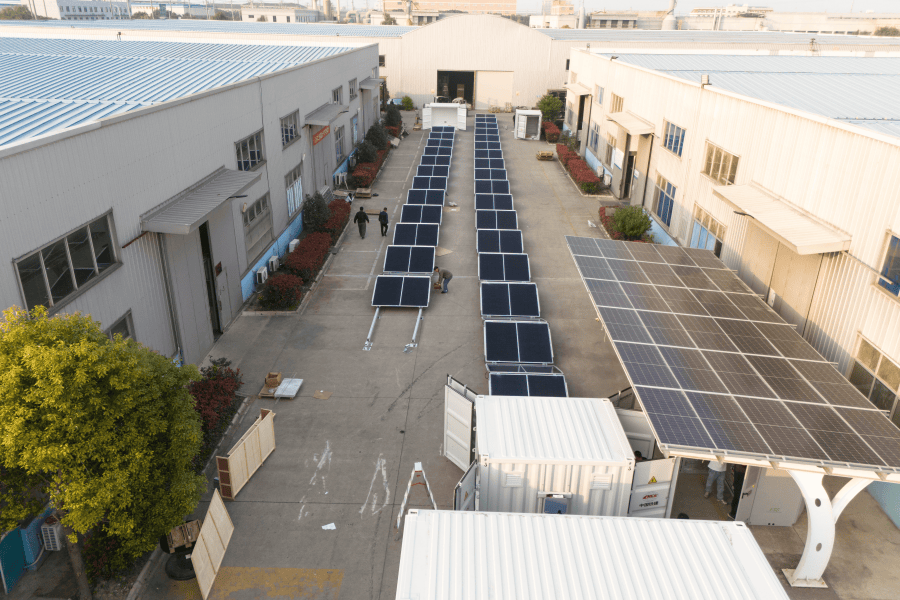
This is where the philosophy behind scalable, modular industrial ESS containers - like those being evaluated for rural electrification in the Philippines - offers a blueprint for smarter global deployment. The core idea is simple: build like LEGO.
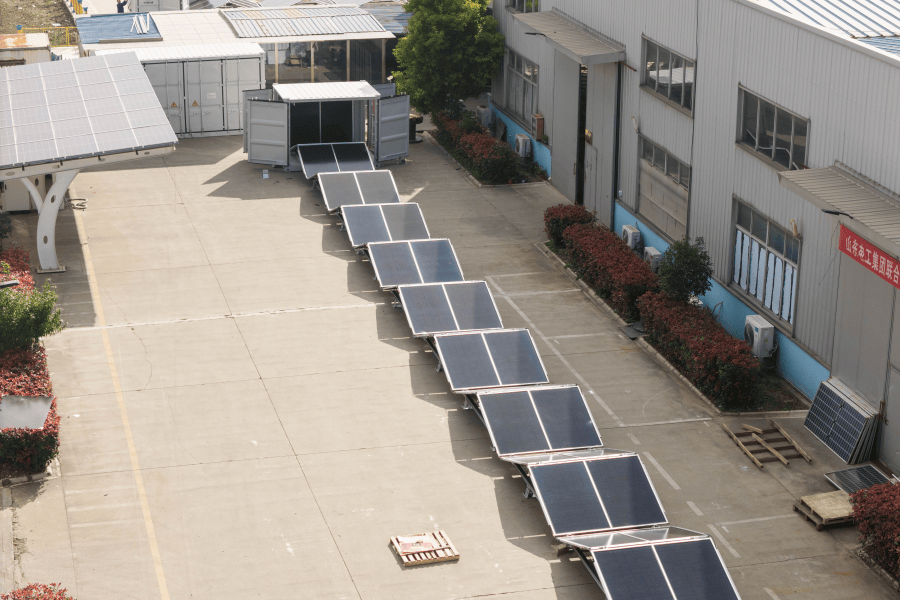
Instead of one giant unit, you deploy standardized, self-contained containerized modules. Need 2 MWh now but might need 5 MWh in three years? You add modules as demand grows. This "pay-as-you-grow" model is a game-changer for minimizing initial environmental and financial impact.

Key Environmental & Operational Benefits:
- Reduced Site Disturbance: Smaller footprint per initial phase, less land clearing.
- Optimized LCOE: You match capital expenditure to actual revenue-generating need, improving your long-term economics.
- Inherently Safer Design: Modular units allow for compartmentalized thermal management and fire suppression. If an issue arises in one module, it's isolated. This isn't just good engineering; it's what UL and IEC standards are increasingly designed for.
- Redeployability: Entire modules can be relocated if project needs change, reducing long-term waste.
A Case in Point: Learning from the Field
Let me give you a non-Philippines example that hits close to home. We worked on a microgrid project for an industrial park in Northern Germany. The challenge was providing buffer storage for wind energy, but the available space was limited and permitting for a large, permanent structure was a nightmare.
Our solution was a modular containerized BESS. We started with two 40-foot containers (about 1.5 MWh). Because they were pre-certified to IEC 62933 standards, permitting was faster. When the park expanded, we simply added two more containers alongside, with minimal new construction. The client avoided a huge upfront cost, the local community appreciated the reduced permanent footprint, and the system's performance data helped optimize the C-rate (the speed of charge/discharge) for maximum battery life. It was a win on cost, environment, and efficiency.
The Tech That Makes It Work (Without the Jargon)
So, what's inside these boxes that makes this possible? Let's break down two critical pieces:
1. Thermal Management (The Climate Control): Think of this as the HVAC system for your batteries. In a modular design, each container has its own, finely tuned system. This is crucial because batteries degrade faster if they're too hot or too cold. By managing temperature at the module level, we ensure efficiency and a longer lifespan - directly lowering your LCOE. It's like having individual thermostats in each room instead of one for the whole house.
2. C-Rate Optimization (The Pace Car): C-rate essentially tells you how fast you can "fill" or "empty" the battery safely. For rural grids with variable solar or wind input, you don't always need a super-fast charge. A modular system allows us to tailor the power conversion systems to operate at the most efficient, battery-friendly C-rate for the specific duty cycle. This reduces stress on the cells, again extending life and cutting long-term cost. It's about smooth, sustained power, not just raw speed.
At Highjoule, this is where our product philosophy is built. Our modular containers are designed from the ground up with these principles. They're not just boxes with batteries inside; they're integrated, self-regulating power nodes. And because they're built to comply with UL 9540A and IEC 62619 from the start, the path from our factory floor to your site is smoother, safer, and more predictable.
Looking Ahead: Your Next Step
The conversation around projects like rural electrification in the Philippines isn't just about charity or development. It's a live lab for the technologies and deployment strategies that will define our industry. The scalable modular approach isn't a niche solution; it's the logical evolution of BESS for a world that needs flexible, resilient, and truly sustainable power infrastructure.
What's the one constraint in your next project that a modular approach could solve? Is it a tricky permitting landscape, uncertain load growth, or a sensitive site? The tools to build smarter are already here.
Tags: UL Standard BESS LCOE Rural Electrification IEC Standard Environmental Impact Modular ESS
Author
James Zhang
20+ years agricultural energy storage engineer / Highjoule CTO