
Benefits and Drawbacks of 215kWh Cabinet Energy Storage Container for Military Bases
The 215kWh Cabinet: A Field Engineer's Honest Take on Military Base Energy Storage
Hey there. Let's grab a virtual coffee. Over my years on site, from dusty desert outposts to high-security installations, I've had a front-row seat to the energy challenges military bases face. The conversation often turns to containerized storage, specifically the popular 215kWh cabinet-sized units. They're everywhere in proposals. But are they the right fit? Honestly, it's not a simple yes or no. It's about matching the tool to the mission. Today, I want to walk you through the real, on-the-ground benefits and drawbacks of the 215kWh cabinet energy storage container for military applications, stripping away the sales gloss.
Quick Navigation
- The Core Problem: More Than Just Backup Power
- Why This Hurts: Cost, Security, and Missed Opportunities
- Enter the 215kWh Cabinet: A Modular Solution
- The Real Benefits (Beyond the Brochure)
- The Honest Drawbacks (What They Don't Always Tell You)
- A Case from the Field: Germany's Hybrid Microgrid
- Making the Call: Is It Right for Your Base?
The Core Problem: More Than Just Backup Power
The problem isn't just about blackouts. Modern military operations are energy-hungry. We're talking about data centers, communications arrays, surveillance systems, and advanced weaponry C all requiring pristine power quality and ultra-reliable uptime. The grid, frankly, is a single point of failure and a vulnerability. According to a National Renewable Energy Laboratory (NREL) analysis, cyber-physical threats to energy infrastructure are a top concern for DOD planners. The mission has evolved from having a backup diesel generator to building a resilient, efficient, and sometimes silent energy ecosystem.
Why This Hurts: Cost, Security, and Missed Opportunities
I've seen this firsthand. Relying solely on diesel gensets means staggering fuel logistics costs, thermal signatures that aren't exactly stealthy, and maintenance headaches. There's also the wasted opportunity. Many bases have space for solar PV, but without storage, that clean energy just fluctuates with the sun. You can't dispatch it when you need it most. The financial pain is real, too. The Levelized Cost of Energy (LCOE) C that's the total lifetime cost divided by energy produced C for diesel in remote locations can be astronomical when you factor in transport and security convoys. We're not just talking about money; we're talking about tying up personnel and assets in fuel supply chains.
Enter the 215kWh Cabinet: A Modular Solution
This is where the 215kWh cabinet-style container enters the conversation. It's not a magic bullet, but a highly practical, modular building block. Think of it as a standardized, pre-engineered energy brick. At Highjoule, we view these units as the core cells of a larger, smarter energy organism. The key is their balance: enough capacity to handle critical loads for a meaningful duration, yet sized for flexible deployment, rapid transport, and scalability.
The Real Benefits (Beyond the Brochure)
Let's break down the genuine advantages, the ones that matter when you're on the ground.
- Rapid Deployment & Scalability: These are often pre-assembled and tested. I've overseen installations where a 215kWh unit was dropped, connected, and commissioned in under 48 hours. Need more power? You don't redesign the system; you add another cabinet in parallel. It's like building with LEGO blocks for energy.
- Enhanced Resilience & Grid Independence: Paired with on-site generation (solar, wind), they form a microgrid. During a grid outage, this island can keep mission-critical loads running seamlessly. The transition is instant, far faster than a generator kick-in.
- Fuel & Cost Savings: This is a big one. By storing excess solar energy and discharging it during peak hours, you drastically cut into diesel runtime. The International Renewable Energy Agency (IRENA) notes that solar-plus-storage LCOE is now consistently outcompeting diesel globally. For a base, that means a quieter, cooler, and cheaper operational footprint.
- Standards Compliance (UL/IEC/IEEE): A proper 215kWh unit from a reputable provider like us is built to the highest safety standards. UL 9540 for the system, UL 1973 for the batteries, IEC 62443 for cybersecurity C these aren't just acronyms. They are your insurance policy. They mean the unit's thermal management, fault protection, and communication protocols have been independently vetted.

The Honest Drawbacks (What They Don't Always Tell You)
Now, the other side of the coin. An honest engineer has to give you the full picture.
- Energy Density vs. Long-Duration Needs: 215kWh is substantial, but for a large base running for days off-grid? It's a component, not the whole solution. If your critical load is 100kW, a single cabinet at a 1C-rate gives you just over 2 hours. For longer durations, you need more cabinets or a different tech mix. It's about right-sizing the total energy capacity.
- The Thermal Management Dance: All lithium-ion batteries generate heat. In a sealed container in the Arizona sun or the Norwegian cold, managing that temperature is everything. A poorly designed system will see accelerated degradation or even safety risks. The C-rate C how fast you charge or discharge C directly impacts this heat. Pushing a 215kWh unit too hard (high C-rate) for too long without robust cooling is asking for trouble.
- Upfront Capital Cost: While the LCOE wins long-term, the initial purchase price is higher than a diesel genset. This requires a shift from a Capex to a total lifecycle cost mindset. Financing and operational budget models need to adapt.
- Cybersecurity Surface: Any grid-connected smart device is a potential entry point. A container with an insecure SCADA or BMS interface is a vulnerability. This is non-negotiable; the system must be designed for military-grade cyber-hardening from the chip up.
A Case from the Field: Germany's Hybrid Microgrid
Let me share a recent project we completed at a forward-operating station in Northern Germany. The challenge was to reduce diesel use for barracks and comms facilities while providing backup. The grid was reliable, but fuel costs were eating into the budget.
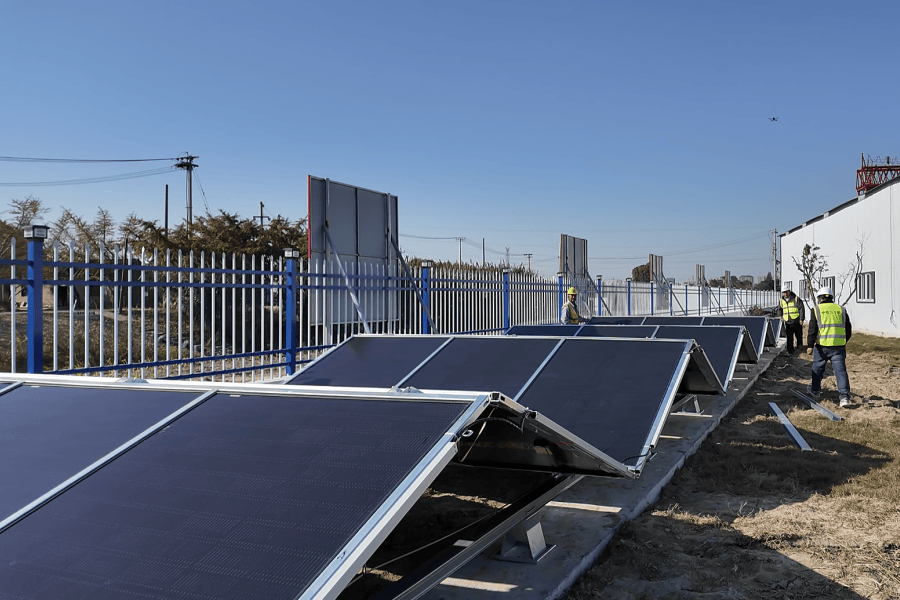
We deployed a hybrid system: a 430kW solar canopy (two 215kWh cabinets) and a 300kW advanced generator. The BESS cabinets, built to UL and IEC standards, do the heavy lifting. They smooth the solar output, store the midday excess, and power the loads through the evening peak. The generator now only runs as a last resort or for scheduled load tests. In the first year, they cut diesel consumption by over 70%. The thermal management system, which we specifically over-engineered for the damp, cold climate, has kept the batteries operating at optimal efficiency. The modularity was key C the entire system was integrated without disrupting daily operations.

Making the Call: Is It Right for Your Base?
So, how do you decide? It comes down to your specific mission profile. The 215kWh cabinet is a phenomenal solution for:
- Providing primary backup for defined, critical loads (comms, C2 centers).
- Integrating with renewable sources to cut fuel use and signature.
- Creating scalable microgrid segments across a distributed base.
It might be a less perfect fit if your sole need is multi-day, base-wide backup. Then, you're looking at a larger-scale, purpose-designed BESS or a hybrid strategy.
At Highjoule, our approach is never just to sell a container. We start with your load profiles, your threat assessment, and your sustainability goals. We might recommend a 215kWh cabinet, a fleet of them, or something different. Our value is in that upfront, honest analysis and the decades of deployment experience that backs it. The goal is energy resilience you can truly trust, with no surprises down the road.
What's the one critical load on your base that keeps you up at night? Let's talk about how to make it unbreakable.
Tags: UL Standard BESS LCOE Energy Resilience Military Energy Security
Author
James Zhang
20+ years agricultural energy storage engineer / Highjoule CTO