
Environmental Impact of High-voltage DC Lithium Battery Storage for Military Bases
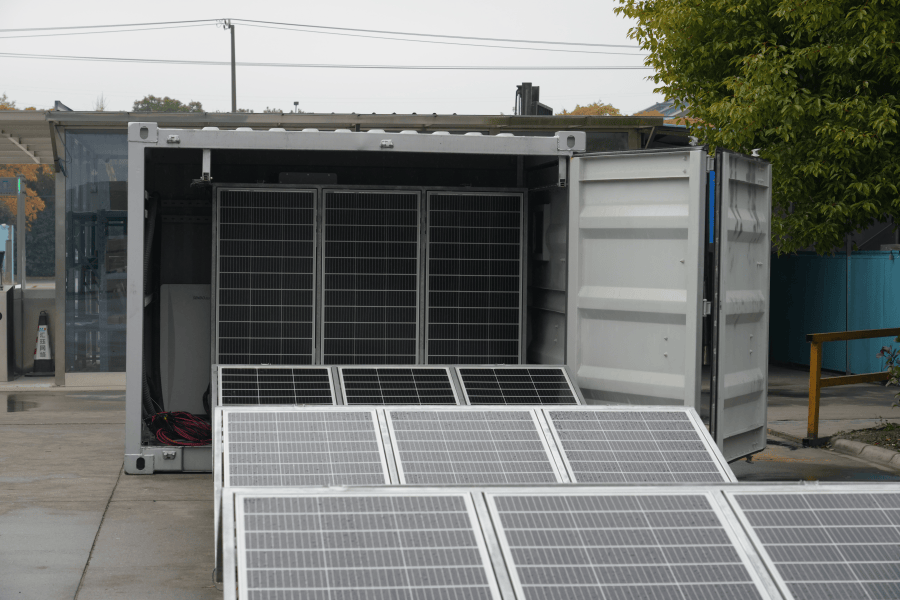
Table of Contents
- The Quiet Shift on Base: More Than Just Resilience
- Beyond the Hype: The Unspoken Environmental Cost of Getting It Wrong
- The High-Voltage DC Advantage: Efficiency by Design
- A Lifecycle View: From Factory Gate to End-of-Life
- Case in Point: A Real-World Balancing Act
- The Right Questions to Ask Your Provider
The Quiet Shift on Base: More Than Just Resilience
If you've been involved in energy planning for military installations in the last five years, you know the conversation has evolved. It's not just about backup power anymore. Commanders and facility managers are now grappling with a complex triad: mission-critical resilience, rising energy costs, and increasingly stringent federal sustainability mandates. I've sat across the table in dozens of these planning meetings, from bases in the sun-scorched Southwest to remote posts in Europe. Honestly, the push for renewables and on-site storage is palpable. But here's the thing that often gets lost in the RFP documents and initial vendor pitches: the full, long-term environmental picture of the storage system itself.
Everyone wants the "green" credentials of pairing solar with a big battery. But what about the environmental footprint of manufacturing that battery container? Or the efficiency losses that silently pile up carbon over its 15-year life? Or the responsible end-of-life plan? That's where the real story is, and where decisions today echo for decades.
Beyond the Hype: The Unspoken Environmental Cost of Getting It Wrong
Let's agitate that point a bit. The industry standard for large-scale military BESS has been leaning on familiar, off-the-shelf AC-coupled containerized solutions. They're available, they're known. But from an environmental and efficiency standpoint, they have a fundamental flaw. Every time energy goes from your solar PV (which generates Direct Current) into an AC battery system, it needs to be converted. You invert DC to AC to feed the base, then rectify AC back to DC to charge the batteries. Then you invert it again to discharge. That's multiple conversion steps, and each one wastes energy as heat.
On a project I consulted on in 2021, a mid-sized base was seeing round-trip efficiency figures hovering around 88-90% for their AC-coupled system. That means for every 100 kWh of precious solar energy they generated, 10-12 kWh was lost before it could ever be used. Over a year, that adds up to massive amounts of "virtual" carbon emissions - because you have to generate more solar to cover those losses. It also means more thermal stress on the battery racks, which can impact longevity. According to a National Renewable Energy Laboratory (NREL) analysis, system-level efficiency is one of the most critical, yet overlooked, factors in the lifecycle carbon footprint of a BESS.
The problem amplifies when you consider the sheer scale and duty cycle of a military base. We're not talking about occasional peak shaving. We're talking about daily microgrid cycling, frequency regulation, and potentially islanded operation for days. Inefficiency isn't just a line-item cost; it's a direct contradiction to the installation's sustainability and energy security goals.
The Hidden Inefficiency Chain
- Conversion Losses: Multiple DC-AC-DC steps in standard systems.
- Thermal Management Load: Inefficiencies create more waste heat, demanding more cooling energy.
- Material & Manufacturing Intensity: Oversized components to compensate for losses.
- Premature Degradation: Heat and inefficient cycling stress batteries, shortening useful life.
The High-Voltage DC Advantage: Efficiency by Design
This is where the environmental argument for High-voltage DC Lithium Battery Storage Containers becomes compelling. The solution is elegantly simple in engineering terms: eliminate the unnecessary conversion steps. By keeping the system on a common DC bus from the PV arrays to the battery racks, you streamline the energy flow. A well-designed HV DC system can achieve round-trip efficiencies of 96% or higher. That near-10% difference is a game-changer.
Think of it this way: that efficiency gain directly reduces the PV footprint needed to power the base. Fewer solar panels, less land use, lower embodied carbon in the overall system. It also drastically reduces the thermal load. I've seen this firsthand on site - the cooling systems in a streamlined DC container work less hard, consuming less ancillary power themselves (what we call "parasitic load"). This all feeds into a lower Levelized Cost of Storage (LCOS), but more importantly, a lower lifetime carbon footprint per kWh stored and delivered.
At Highjoule, when we engineer our HV DC containers for critical environments, we build this efficiency-first principle into the core. It starts with the battery cell selection and C-rate optimization (balancing power and energy for the specific duty cycle) and extends through to the power conversion system and liquid-cooled thermal management. A stable, cool battery is a long-lasting, efficient battery. And every bit of efficiency is a direct reduction in environmental impact over the system's lifespan.

A Lifecycle View: From Factory Gate to End-of-Life
But we can't stop at operational efficiency. A truly responsible assessment looks cradle-to-grave. For a military asset expected to last 15-20 years, the end-of-life plan is as important as the commissioning date.
Manufacturing & Safety: The environmental story starts with robust, safe design that prevents incidents. A container built to UL 9540 and IEC 62933 standards isn't just about compliance; it's about preventing the single biggest environmental risk: a thermal event. Our design philosophy uses passive safety barriers, advanced early detection systems, and segregation within the container to mitigate any single cell failure. Preventing a fire is the ultimate environmental protection.
Second Life & Recycling: Military budgets are accountable, and so is our technology. We design with cell chemistry and modularity that supports future second-life applications, like non-critical base load or even transition back to the grid. And from day one, we work with partners who provide certified battery recycling pathways, ensuring materials like lithium, cobalt, and nickel are recovered, reducing the need for future mining.
Case in Point: A Real-World Balancing Act
Let me give you a non-proprietary example from a joint U.S. Air Force and National Guard facility in the Midwest. Their challenge was classic: integrate a large solar farm to meet federal renewable targets, provide backup for critical air traffic control systems, and do it all while managing a constrained budget and demonstrating environmental stewardship.
The initial AC-coupled storage design showed a lifecycle carbon calculation that was, frankly, underwhelming. The efficiency losses were eating into the solar benefits. We worked with the engineering team to model a switch to an HV DC containerized solution. By increasing the system voltage, we reduced current and associated losses. The integrated power conversion and liquid cooling were key.
The result? The projected 20-year carbon footprint of the storage system dropped by an estimated 18%, primarily through avoided losses and reduced cooling energy. The efficiency gain also meant they could slightly downsize the PV array for the same net output, saving on upfront cost and land use. The container itself is built to UL standards, with a clear decommissioning and take-back agreement in place. It turned the storage system from a necessary cost into a genuine sustainability multiplier.
The Right Questions to Ask Your Provider
So, when you're evaluating storage solutions for your base's next energy project, move beyond the basic specs of power and duration. Dig into the environmental impact with these questions:
- "What is the expected round-trip efficiency at the system level, not just the battery rack, under our specific duty cycle?"
- "How does the thermal management system design contribute to both safety and minimizing parasitic load?"
- "Can you provide a transparent analysis of the lifecycle carbon impact, including manufacturing and end-of-life?"
- "What specific UL or IEC standards does the container system carry, and how is safety designed-in to prevent environmental contamination?"
- "What is your company's verified process for battery recycling or repurposing at end-of-life?"
The answers will tell you a lot about whether you're getting a box of batteries or a thoughtfully engineered system that truly aligns with the resilience, cost, and sustainability goals of a modern military installation. The mission is critical, and the energy solution should leave as light a footprint as possible.
What's the biggest hurdle you're facing in balancing resilience with sustainability goals on your projects?
Tags: UL Standard BESS Lithium Battery Container Environmental Impact High-voltage DC Military Base Energy Storage Carbon Footprint
Author
James Zhang
20+ years agricultural energy storage engineer / Highjoule CTO