
Smart BMS for Hybrid Solar-Diesel Systems: Benefits & Drawbacks for Military Base Power
Beyond the Generator: The Real Talk on Smart BMS Hybrid Systems for Military Sites
Let's be honest. For decades, the distant, constant rumble of diesel generators has been the unofficial soundtrack of remote military bases. It's a sound of reliability, but also of immense cost and logistical headaches. I've been on those sites, smelling the diesel fumes, watching the fuel convoys roll in, and thinking, "There has to be a better way." Today, that better way is the hybrid solar-diesel system, especially one with a smart Battery Management System (BMS) at its heart. But is it a silver bullet? Having overseen deployments from the deserts of the Southwest to forward-operating concepts in Europe, I can tell you the answer is nuanced. Let's grab a coffee and talk through the real benefits and drawbacks, the stuff you won't find in a glossy brochure.
What We'll Cover
- The Pain Point: More Than Just a Fuel Bill
- The Smart Solution: It's All About the Brain (The Smart BMS)
- The Tangible Benefits: Why You're Considering This
- The Real-World Drawbacks: What to Plan For
- Making It Work: An Expert's Field Notes
The Pain Point: More Than Just a Fuel Bill
The problem isn't just that diesel is expensive, though the International Energy Agency (IEA) consistently highlights the volatility of fossil fuel prices. The real aggravation is the vulnerability it creates. Every fuel delivery is a potential point of failure - a convoy that needs securing, a supply line stretched thin. I've seen bases where 70% of the operational energy budget was just for fuel, and a single disrupted delivery could trigger contingency protocols within 48 hours. Furthermore, modern military equipment - sensors, comms, data centers - demands pristine power quality. A diesel genset alone, with its harmonics and voltage fluctuations, can be surprisingly harsh on sensitive gear. The mission is moving towards energy resilience and independence, and the old model is holding it back.
The Smart Solution: It's All About the Brain (The Smart BMS)
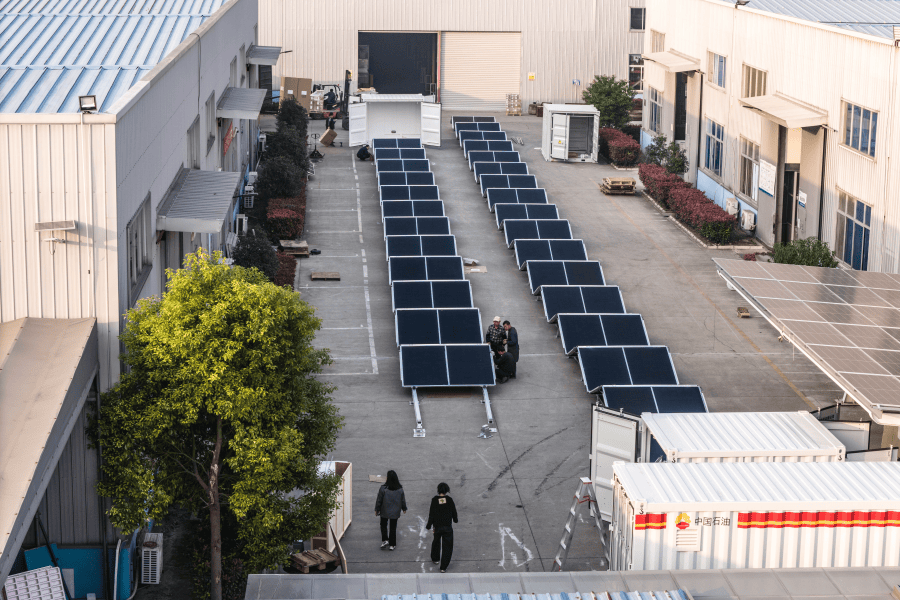
Enter the hybrid setup: solar PV to harvest free, local energy, a battery bank to store it, and your existing diesel gensets as the ultimate backup. The magic - and the complexity - isn't in the panels or the batteries themselves. It's in the smart BMS. Think of it not just as a battery monitor, but as the system's quartermaster. It doesn't just see voltage and temperature; it makes real-time decisions. It decides when to soak up solar, when to discharge the battery to avoid firing up the generator, and critically, how to keep every battery cell within its safe, happy operating window to ensure the system lasts a decade or more.

The Tangible Benefits: Why You're Considering This
So, what do you gain with a well-integrated, smart BMS-monitored system? Here's what I've witnessed firsthand:
- Radical Fuel & Maintenance Savings: This is the big one. The smart BMS optimizes the system to maximize solar self-consumption and use the battery as the primary buffer. Generators only run when absolutely necessary, and when they do, they run at optimal load. I've seen sites cut generator runtime by over 80%. That's less fuel purchased, transported, and stored, and far fewer expensive engine overhaul cycles.
- Silent, Undetectable Operation: For hours, even days, the primary power can come from the solar and batteries. The base gets quieter. The thermal signature drops. From a tactical perspective, this is a non-trivial benefit.
- Enhanced Power Quality and Reliability: The battery inverter provides grid-quality, stable power. The smart BMS ensures the battery is always ready to provide instantaneous backup if a generator stumbles during a switchover. For your server racks and lab equipment, this means fewer glitches and longer lifespans.
- Future-Proofing and Scalability: A modular system designed with standards like IEEE 2030.7 for microgrid controllers in mind allows you to add more solar or battery capacity later. The smart BMS is key here, managing the evolving ecosystem of assets.
- Compliance and Safety Made Manageable: A top-tier smart BMS, like those we design into Highjoule systems, is built from the ground up to interface with safety systems and comply with UL 9540 (ESS) and UL 1973 (batteries) standards. It provides the detailed, audit-ready data on cell health and system performance that safety officers and insurers demand.
The Real-World Drawbacks: What to Plan For
Now, let's get into the challenges. Ignoring these is where projects stumble.
- High Upfront Capital Cost (CapEx): The solar array, the battery bank, the power conversion system, and the sophisticated BMS and controls software represent a significant initial investment. The business case hinges on the long-term Levelized Cost of Energy (LCOE) - the total lifetime cost divided by energy produced. While the LCOE of solar+storage is now competitive, securing that initial budget can be a hurdle.
- System Complexity and Integration: You're no longer just maintaining generators. You have power electronics, electrochemistry, and complex software controls. The smart BMS is critical, but it's another layer. Ensuring it communicates flawlessly with the generator controller, the solar inverters, and the base SCADA system requires careful engineering and commissioning. I've spent weeks on site fine-tuning these communications protocols.
- Specialized Maintenance and Training: Your mechanics are diesel experts. Now you need personnel trained to interpret smart BMS alerts, understand battery C-rate limitations (how fast you can charge/discharge), and manage thermal management systems. The diagnostics are digital, not mechanical.
- Battery Degradation and Long-Term Performance: Batteries degrade. A dumb system will accelerate this. A smart BMS mitigates it by preventing over-charge, deep discharge, and operating at extreme temperatures. But you still need to plan for a gradual reduction in storage capacity over 10-15 years and have a lifecycle replacement strategy.
Making It Work: An Expert's Field Notes
So, how do you maximize the benefits and minimize the drawbacks? It comes down to design and partnership.
First, Design for Your Duty Cycle, Not a Catalog Spec. A base with a steady load profile is different from one with massive, sporadic pulses of energy use (like a radar). Your smart BMS needs to be configured for that. This affects the battery's C-rate requirement and the thermal management design. We once deployed a system for a communications station in California where the peak load was 4x the average. The BMS was programmed to pre-charge the battery to a specific set-point before known high-load events, seamlessly blending solar, battery, and a minimally loaded generator.
Second, Treat Data as a Critical Asset. The smart BMS generates a goldmine of data. The real value is in trending it. Is one battery module consistently 2C warmer than the others? Is the solar yield dipping seasonally? Proactive maintenance, based on this data, is what transforms a cost center into a reliable asset. At Highjoule, our remote monitoring platform is essentially a window into this BMS data, formatted for operational decision-making.
Finally, Plan for the Full Lifecycle. Ask your provider: What does year-10 service look like? How are battery modules replaced? Is the BMS software upgradable to support new protocols? Your solution should be a long-term partnership, not a one-time sale. The technology, especially the software managing it, will evolve.
The move to a smart BMS-monitored hybrid system is a strategic one. It trades fuel logistics for technical complexity, and upfront cost for long-term resilience and savings. The deciding factor is often the confidence that the system - especially its "brain" - is robust, compliant, and supported by people who understand your mission's non-negotiable need for reliable power. So, what's the one operational constraint in your current power setup that keeps you up at night?
Tags: BESS UL Standards Microgrid Smart BMS Hybrid Solar-Diesel System Military Energy Security IEEE 2030.7
Author
James Zhang
20+ years agricultural energy storage engineer / Highjoule CTO