
215kWh Solar Storage for Construction Sites: Cut Costs & Boost Reliability
Contents
- The Silent Power Problem on Every Construction Site
- Why Temporary Power Hurts Your Bottom Line (More Than You Think)
- A Better Way: The Integrated Solar-Storage Power Cabinet
- Real-World Case Study: 215kWh Cabinet System in Action
- Expert Breakdown: What Makes This Solution Tick (And Safe)
- Making It Work For Your Next Project
The Silent Power Problem on Every Construction Site
Let's be honest. When you're planning a commercial or industrial build, temporary site power is usually an afterthought. The default playbook? Rent a diesel genset, run cables everywhere, and brace for the fuel bills and noise complaints. I've been on hundreds of sites across the US and Europe, and honestly, it's the same story. You're focused on the structure, the timeline, the permits C not the hum of a generator in the corner.
But here's the thing I've seen firsthand: that temporary power setup is quietly eating into your project's efficiency, budget, and even its safety margin. And with more projects aiming for green building certifications and facing stricter local emissions regulations (especially here in the EU and in states like California), the old diesel-only approach is becoming a real liability.
Why Temporary Power Hurts Your Bottom Line (More Than You Think)
Let's agitate that pain point a bit. It's not just about diesel costs, which are volatile enough. It's about the total cost of unreliable power. A study by the National Renewable Energy Laboratory (NREL) highlighted that construction site energy management can contribute to up to 15% of total project overheads when you factor in everything. I've seen this breakdown on my own spreadsheets:
- Fuel & Rental Costs: The obvious one. Diesel is expensive, and long-term rentals add up.
- Unplanned Downtime: A genset fails or needs servicing. Everything stops. Labor costs don't.
- Grid Connection Delays & Fees: Waiting for the utility to provide a permanent hook-up can take months, and the temporary connection fees themselves are staggering.
- Noise & Emissions Fines: More urban sites face strict noise ordinances. Diesel particulate matter emissions can violate local air quality rules, leading to fines or work stoppages.
- Wasted Solar Potential: Many sites install basic solar for site offices. Without storage, all that free energy generated on weekends is wasted.
This complexity is exactly why we started looking at integrated solutions.
A Better Way: The Integrated Solar-Storage Power Cabinet
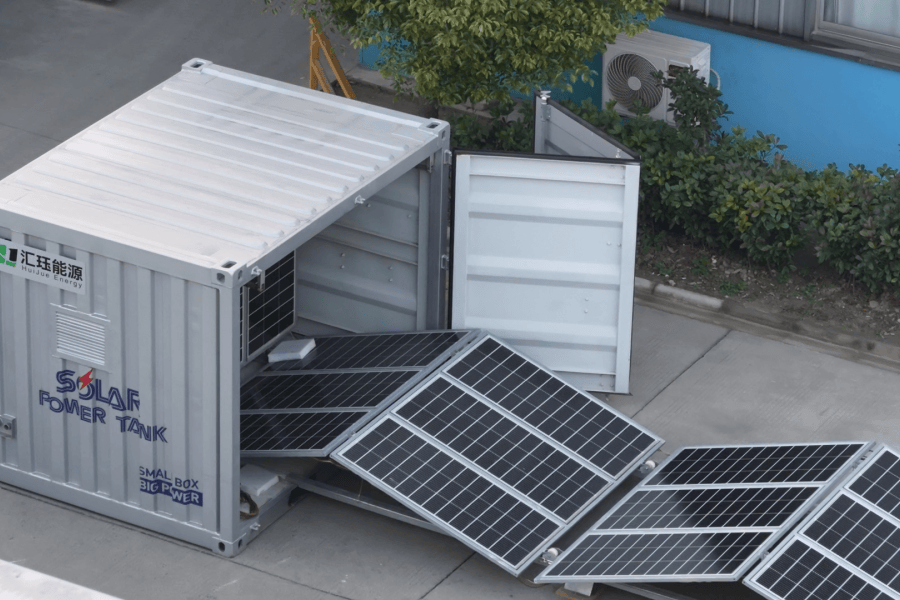
The solution isn't just adding batteries to a solar panel. It's about a designed, self-contained system. Think of it as a power cabinet or a mini, movable microgrid for your site. The core idea is pairing a robust photovoltaic (PV) array with a purpose-built Battery Energy Storage System (BESS) C like a standardized 215kWh containerized unit C to form the primary power source. The diesel genset? It becomes a silent backup, only kicking in during extended bad weather, drastically cutting its runtime.
This shift changes everything. You're now running on free solar energy most of the time, with the battery smoothing out supply day and night. The generator sits idle, saving fuel and maintenance. Honestly, the reliability jump is what site managers appreciate most C no more worrying about refueling schedules or generator hiccups.
Real-World Case Study: 215kWh Cabinet System in Action
Let me walk you through a recent deployment we did with a partner in Texas. They were building a mid-sized logistics warehouse. The permanent utility connection was 4 months out. The initial plan was two large diesel gensets running 24/7.
The Challenge: High fuel costs, noise limits from a nearby residential area, and a corporate mandate to reduce the project's carbon footprint.
The Highjoule Solution: We deployed a single 215kWh, UL 9540-certified battery storage cabinet, integrated with a 150kW rooftop solar array on the temporary site offices. The system was designed to handle the peak site load of ~85kW, including crane operations, welding stations, and site lighting. The existing diesel genset was kept as a backup, programmed for auto-start only if the battery state-of-charge dropped below 20%.

The Results (Over 3 Months):
| Diesel Fuel Use Reduction: | 92% |
| Estimated Fuel & Rental Cost Savings: | $28,500 |
| Generator Runtime: | ~6 hours per week (vs. 168 hrs previously) |
| Carbon Emissions Avoided: | ~42 metric tons of CO2 |
The project manager told me the biggest win was the set-and-forget reliability. The crew worked nights without noise issues, and the finance team loved the predictable, low weekly cost. The system paid for itself well before the grid connection was live.
Expert Breakdown: What Makes This Solution Tick (And Safe)
For a non-technical decision-maker, the specs matter, but the principles matter more. Here's my take on the key things that make a system like this work reliably:
- The Right Battery Chemistry & C-rate: We typically use LiFePO4 (LFP) chemistry. Why? It's inherently safer and has a longer lifespan than some alternatives. The C-rate is basically how fast you can charge or discharge the battery. For construction sites, you need a high discharge C-rate (like 1C or more) to handle sudden, large loads (like a crane motor starting). Our 215kWh cabinet is built to do exactly that C deliver high power on demand without breaking a sweat.
- Thermal Management is Everything: Batteries don't like extreme heat or cold. A cabinet sitting in a Texas sun or a German winter needs a robust, independent cooling and heating system. This isn't a simple fan; it's a dedicated liquid thermal management system that keeps the battery in its happy zone 24/7, extending its life and ensuring safety. This is a non-negotiable part of the design.
- Understanding the Real LCOE (Levelized Cost of Energy): Don't just look at the upfront capital cost. Look at the LCOE C the total cost of owning and operating the system over its life, divided by the energy it produces. With solar and storage, your fuel is free sun. So, while the initial investment is higher than a genset rental, the LCOE over a 6-12 month project often falls dramatically below diesel. You're trading a variable, high operational cost for a fixed, lower one.
- Safety & Standards You Can Trust: This is critical for the EU and US markets. Every component, from the battery cells to the fire suppression system inside the cabinet, must be designed to meet UL 9540 (the US standard for ESS safety) and IEC 62485 series (international safety requirements). At Highjoule, we build to these standards from the ground up. It's not a checkbox; it's the blueprint. This gives peace of mind to site safety officers and insurance providers.
Making It Work For Your Next Project
So, how do you explore this? It starts with a conversation during the site planning phase. We look at your peak and average load profiles, site location (for solar irradiance data), project timeline, and local regulations. The beauty of the cabinet approach is its modularity. The 215kWh unit is a common building block, but we can scale up or down.
The deployment is fast C often onsite and operational within days of arrival. And because we design for rugged, containerized mobility, when your project finishes, the system can be disconnected, moved, and redeployed on your next site, maximizing your investment.
Honestly, the industry is moving this way. The question isn't really if solar-storage becomes standard for temporary power, but when. The economics and operational benefits are just too compelling to ignore. What's the one pain point on your current or upcoming project that reliable, clean, quiet power could solve?
Tags: Construction Site Power UL Standard BESS LCOE Renewable Energy Solar Storage
Author
James Zhang
20+ years agricultural energy storage engineer / Highjoule CTO