
The Ultimate Guide to 20ft High Cube Mobile Power Container for Agricultural Irrigation
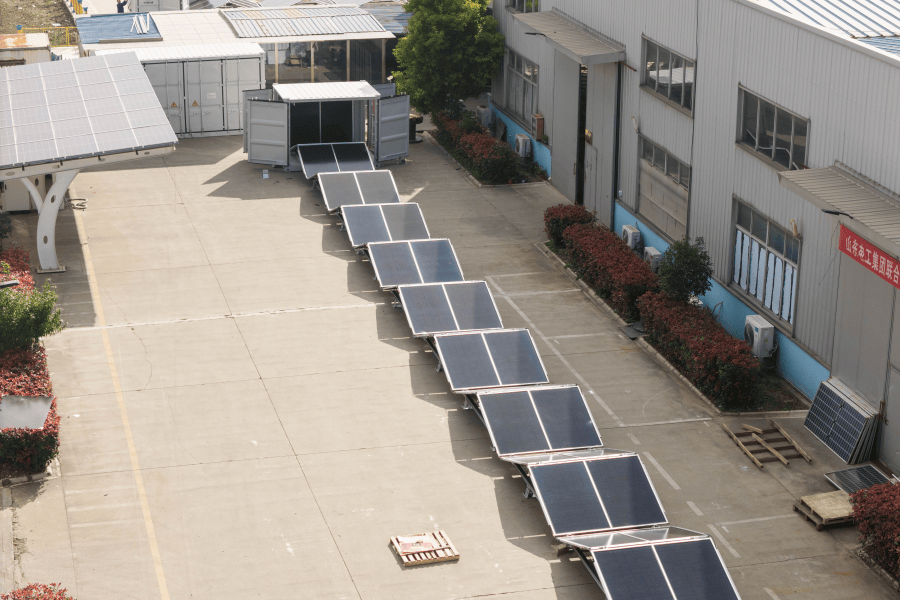
Table of Contents
- The Water and Power Dilemma
- Why Fixed Solutions Fall Short
- The Mobile Power Advantage
- Inside the 20ft High Cube Container
- A Real-World Case Study
The Water and Power Dilemma
If you're managing a large farm in California's Central Valley or running an agricultural operation in Southern Spain, you know the drill. The crop needs water, the sun is beating down, and the grid is either too expensive, too unreliable, or simply not there. Honestly, I've stood in fields with farmers who show me their electricity bills for pumping water, and it's a tough conversation. The IEA reports that global electricity demand for irrigation is set to grow significantly, putting more strain on rural grids and your bottom line.
The problem isn't just cost. It's about control. A sudden grid outage during a critical irrigation window can mean the difference between a profitable season and a loss. And with increasing volatility in energy markets, that fixed per-kWh price from your utility is becoming a relic of the past.
Why Fixed Solutions Fall Short
So, the natural thought is: "Let's add solar and maybe a stationary battery." It's a good thought. But in practice, on large or dispersed farms, it gets complicated. A fixed battery system for one deep well pump is a big capital commitment. What if your water needs shift next season because you're rotating crops? What if you need to service a field a mile away that suddenly has access to a new water source?
I've seen this firsthand on site. A fixed installation, once poured in concrete and wired in, loses its flexibility. Your energy asset is stuck. And from a pure financial perspective, the Levelized Cost of Energy (LCOE) - that's the total lifetime cost of your energy system divided by the energy it produces - only looks good if the asset is used constantly and optimally. In agriculture, demand is seasonal and often mobile. A stationary system can sit idle for months, which is a terrible return on investment.
The Mobile Power Advantage
This is where the concept of a 20ft High Cube Mobile Power Container changes the game. Think of it not as a battery, but as a "water-energy" command center on wheels. The core idea is agility. Instead of bringing power and water to your fields through miles of expensive, permanent infrastructure, you bring the power source to the water source.
It's a paradigm shift. This containerized Battery Energy Storage System (BESS) is a pre-engineered, plug-and-play solution. It arrives on-site with all the safety systems, power conversion, and climate control built-in, tested, and certified. For you, it means deployment in weeks, not years. It means you can lease or finance a unit for the peak irrigation season and redeploy it elsewhere afterward. The economics start to make profound sense.

Inside the 20ft High Cube Container
Okay, so what's actually inside this thing? Let's walk through it like I would with a client on a site visit.
First and foremost: Safety & Compliance. Any system you bring onto your property must be bulletproof. A reputable unit, like the ones we engineer at Highjoule, is built to the highest UL 9540 and IEC 62619 standards. This isn't just paperwork. It means the battery cells, the fire suppression system, the electrical isolation - everything has been torture-tested by independent labs. You're not buying a science experiment.
Second: The Heart - The Battery. We typically use Lithium Iron Phosphate (LFP) chemistry. Why? Thermal stability and longevity. The C-rate (a measure of how fast you can charge or discharge the battery) is balanced for irrigation duty cycles. You don't need a racing car engine to pump water; you need a reliable, durable workhorse. A moderate C-rate means less heat, less stress, and a system that will last for thousands of cycles.
Third: Thermal Management. This is the unsung hero. Batteries perform best and live longest in a tight temperature range. A high-quality container has a dedicated, independent HVAC system that keeps the interior at an optimal 25C (77F) year-round, whether it's parked in the Arizona desert or a German summer. This precise control is what ensures you get the rated capacity and lifespan.
Finally, the Power Conversion System (PCS). This is the brain. It manages the flow of energy - whether drawing from the grid during off-peak hours, absorbing solar from a temporary array you roll out, or discharging to run your pumps. A good PCS provides grid-forming capabilities, meaning it can create a stable "mini-grid" for your pumps even if the main grid goes down.
Key Specifications at a Glance
A Real-World Case Study
Let's talk about a project in Northern Germany, where a large potato farm was facing two issues: high demand charges from the grid for their powerful irrigation pumps and a need to utilize a nearby biogas plant's intermittent excess electricity.
The Challenge: Reduce peak grid draw and create a usable, schedulable energy asset from wasted biogas power, without committing to multiple fixed installations across 500 hectares.
The Highjoule Solution: We deployed one 20ft High Cube Mobile Power Container. During low-demand periods (or when the biogas plant was overproducing), the container would charge. During the daily irrigation peak, it would discharge, supplementing the grid and shaving the peak demand charge. The game-changer? After the potato season, the farmer was able to lease the container to a neighboring vineyard for their different seasonal water needs.
The Outcome: A 40% reduction in monthly peak demand charges and a new revenue stream from asset mobility. The payback period was cut almost in half compared to a fixed system because the asset utilization rate skyrocketed.

Making the Right Choice
Choosing a mobile power container isn't about buying the most megawatt-hours on paper. It's about partnership and total cost of ownership. You need a provider who understands agricultural cycles, who can offer flexible financing or leasing, and who has local service technicians. A container sitting idle for a week because a part needs to be shipped from overseas is a financial leak.
At Highjoule, our focus has always been on designing for real-world LCOE. That means engineering for durability, serviceability, and flexibility from the start. It's why our containers have standardized, swappable components and remote monitoring, so most issues can be diagnosed and often fixed before they ever cause downtime.
The future of resilient, cost-effective agriculture is decentralized and smart. It's about having control over your most critical inputs: water and the energy to move it. The right mobile power solution isn't just an expense; it's an agile energy asset that moves with your business needs. What's the one field or water source on your operation that, if it had reliable, affordable power tomorrow, would change your economics this season?
Tags: UL Standard BESS LCOE Europe US Market Agricultural Irrigation Renewable Energy Mobile Power Container
Author
James Zhang
20+ years agricultural energy storage engineer / Highjoule CTO