
215kWh Cabinet ESS Container for Industrial Parks: Benefits & Drawbacks
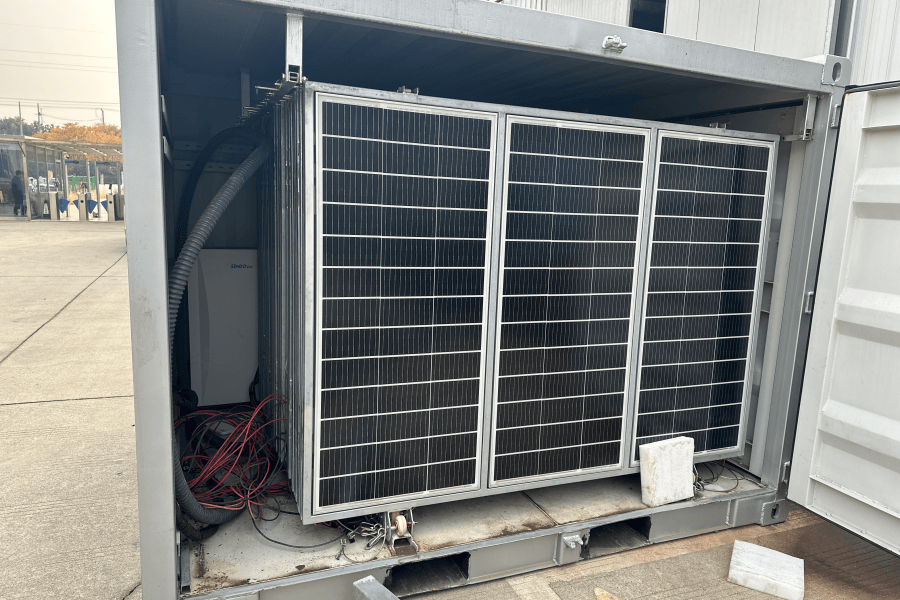
215kWh Cabinet ESS for Industrial Parks: The Good, The Bad, and The Real-World Truth
Hey there. If you're managing an industrial park in, say, Ohio or Bavaria, and you're looking at energy storage, you've probably come across the 215kWh cabinet-style container. It's become a bit of a standard offering. But let's have a real talk over coffee C is it the right fit for your specific site? I've been on the ground deploying these systems from California to North Rhine-Westphalia for over two decades, and honestly, the choice isn't always as straightforward as the brochures make it seem.
Quick Navigation
- The Real Pain Point: More Than Just Backup Power
- The 215kWh Cabinet: A Modular Solution Emerges
- The Benefits: Why It's Gaining Traction
- The Drawbacks & What to Watch Out For
- Making It Work: An Expert's Field Guide
The Real Pain Point: More Than Just Backup Power
It's not just about keeping the lights on during an outage anymore. The real pressure for industrial operators comes from three sides: volatile energy costs, increasingly strict grid demands, and the push for sustainability. I've sat with plant managers staring at demand charge spikes that can make up 30-50% of their total electricity bill. A report by the National Renewable Energy Laboratory (NREL) highlights how commercial and industrial demand charges are a primary driver for BESS adoption in the US.
On top of that, the grid is asking you to be a better citizen C managing your peak load, providing frequency response. And let's be honest, your board is asking for a clear carbon reduction roadmap. Trying to solve all this with a one-off, custom-built mega-system is a capital nightmare. The agility just isn't there.
The 215kWh Cabinet: A Modular Solution Emerges
This is where the containerized 215kWh cabinet model entered the scene. Think of it as a building block. Instead of engineering a massive, single battery system, you get a pre-engineered, tested module. Need ~1 MWh? Line up five of these cabinets in a 40-ft container. Need to scale later? Add another container. It promises speed and simplicity.

The Benefits: Why It's Gaining Traction
From my site visits, the advantages are clear when the application fits:
- Deployment Speed & Scalability: This is the biggest win. Since the core power block is pre-assembled and tested at the factory, onsite work shifts from complex electrical assembly to more straightforward interconnection. I've seen projects cut 4-6 weeks off their critical path. For a park adding capacity in phases, this modularity is a financial lifesaver.
- Predictable Compliance: A reputable provider like us at Highjoule designs the entire cabinet C cells, BMS, thermal management C as a unified system to meet UL 9540 and IEC 62485 standards. You're not piecing together uncertified components and hoping the whole thing passes inspection. This de-risks the project significantly for local authorities having jurisdiction (AHJs).
- Optimized Lifecycle Cost (LCOE): The modular design allows for more precise sizing. You're not overbuying capacity day one. Furthermore, advanced cabinet designs can optimize the C-rate C that's basically the speed of charge/discharge. A system tuned for daily demand charge management (a moderate C-rate) will have a much longer lifespan than one brutalized by constant, high-power frequency regulation.
A Real-World Case: Automotive Supplier in Tennessee
We deployed a 1.3 MWh system using six of these 215kWh cabinets for a tier-1 auto parts manufacturer. Their challenge was pure economics: staggering demand charges and time-of-use rates. The system runs 2-3 cycles daily, shaving peak load. The cabinet approach allowed us to fit the system into a tight corner of their yard with minimal site prep. The ROI? Just under 5 years, primarily from demand charge avoidance. The finance team loved that clarity.
The Drawbacks & What to Watch Out For
Now, let's get honest about the limitations. I've seen projects stumble here by not asking these questions early:
- Space Efficiency Trade-off: The modular cabinet-in-container approach isn't as space-dense as a fully customized, container-filling battery system. You're dedicating space to aisles, firewalls between cabinets, and auxiliary equipment. If your industrial park land is extremely expensive or limited, this "footprint penalty" needs to be in your calculus.
- Thermal Management Complexity: This is a big one. You now have multiple, discrete thermal systems (one per cabinet) that need to work in harmony. I've been on a site in Texas where uneven solar loading on the container caused one cabinet's cooling to work overtime, creating an efficiency imbalance. A top-tier design, like our Highjoule TMS, uses predictive algorithms and shared coolant loops to prevent this, but not all systems do.
- The "Black Box" Service Risk: Some vendors treat the entire cabinet as a sealed unit. If a single cell module fails, they want to swap the whole 215kWh cabinet. That's expensive downtime. Insist on a design that allows for module-level serviceability within the cabinet without a full shutdown.
Making It Work: An Expert's Field Guide
So, is the 215kWh cabinet the right choice? It can be, if you go in with eyes wide open. Here's my advice from the field:
1. Match the Technology to the Duty Cycle. Are you doing peak shaving, or are you participating in a fast-frequency response market? The battery chemistry and C-rate spec within that cabinet must match. Don't let a vendor sell you a standard unit for a non-standard application.
2. Audit the Total System, Not Just the Cabinet. Ask: How does the container-level fire suppression interface with each cabinet's BMS? What's the communication protocol (IEEE 2030.5 is becoming a must-have for grid integration)? Is the inverter compatibility truly seamless?
3. Plan for the Long Haul. Your vendor should provide a clear 10-year operational cost projection, accounting for expected degradation and maintenance. At Highjoule, we build this into our LCOE optimization models from day one, because your CFO will ask for it in year three.
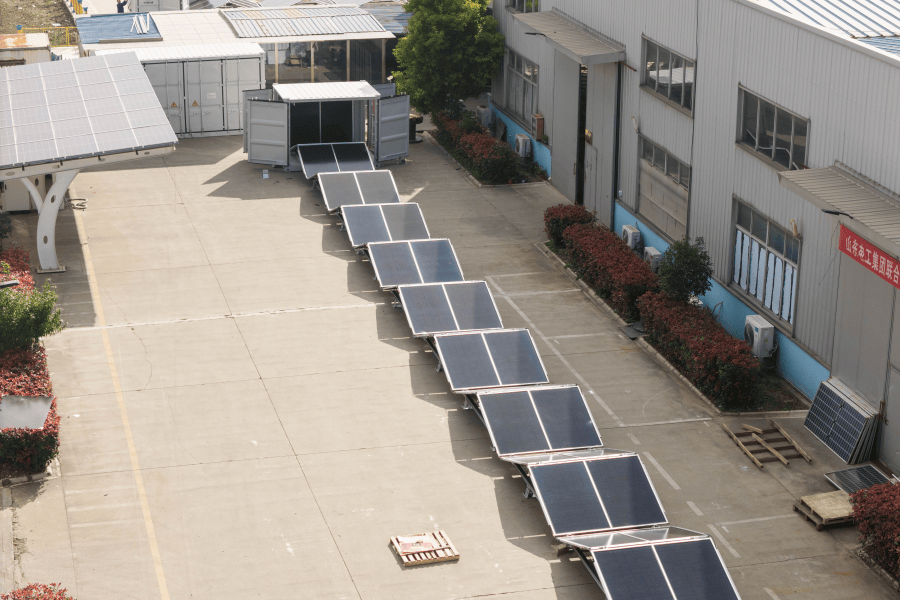
The 215kWh industrial ESS container isn't a magic bullet, but it's a powerful, pragmatic tool. Its success hinges on an honest assessment of your site's constraints and a partnership with a provider who understands the technology from the cell level up to the grid connection. What's the one site-specific challenge you're most concerned about tackling?
Tags: UL Standard BESS LCOE Europe US Market Industrial Energy Storage Renewable Energy
Author
James Zhang
20+ years agricultural energy storage engineer / Highjoule CTO