
Smart BESS Safety for Data Centers: Why Mobile Containers Need Smarter BMS Monitoring
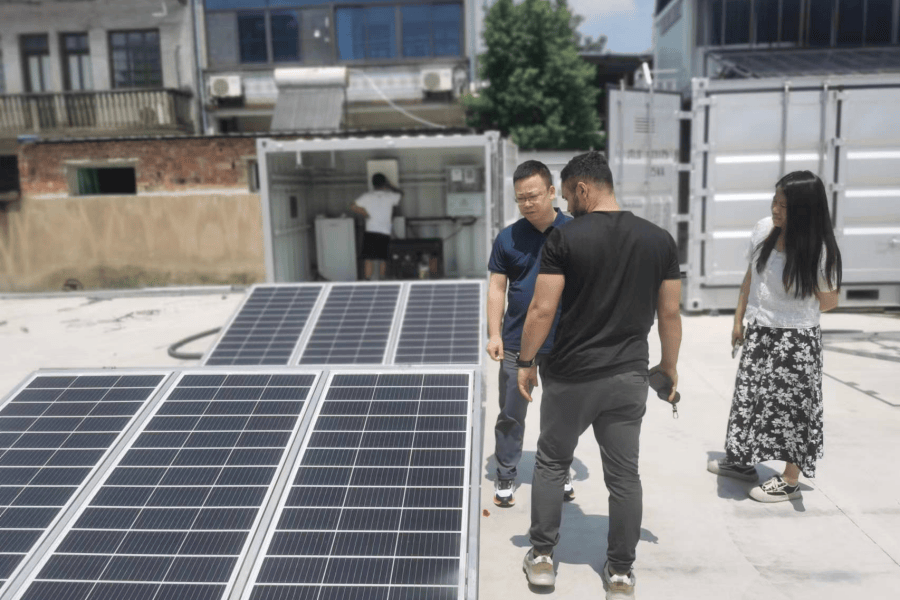
When the Grid Blinks: Rethinking Data Center Backup Power Safety
Honestly, I've lost count of the number of times I've stood on a data center site, the hum of servers in the background, and listened to a facilities manager express that low-grade anxiety about their backup power. It's not just about runtime anymore. The conversation has sharply shifted from "how long" to "how safe." Especially when we're talking about deploying mobile Battery Energy Storage Systems (BESS) in containers right next to these mission-critical, billion-dollar assets. The old diesel genset playbook doesn't apply here. Lithium-ion chemistry brings incredible power density, but it demands a new, intelligent layer of safety - a layer that goes far beyond a basic battery management system (BMS).
Over the last two decades, from projects in California to deployments in Germany, I've seen this evolution firsthand. The market is moving fast. According to the International Energy Agency (IEA), global grid investment needs to double to over $600 billion annually by 2030 to meet climate goals and ensure reliability. Data centers, as massive grid anchors, are at the forefront of this stress - and solution. They're turning to mobile BESS containers for flexibility and clean backup. But with this shift comes a critical, non-negotiable focus: Safety Regulations for Smart BMS Monitored Mobile Power Container for Data Center Backup Power. This isn't regulatory red tape; it's the foundational blueprint for risk management.
Quick Navigation
- The Real Problem: It's More Than Just a "Battery in a Box"
- The Staggering Cost of "Compliance-Only" Thinking
- The Smart BMS Difference: From Passive Monitoring to Active Guardianship
- A Case in Point: Lessons from a Northern German Industrial Park
- Moving Beyond the Checklist: What True Safety Looks Like On-Site
- Asking the Right Questions Before You Deploy
The Real Problem: It's More Than Just a "Battery in a Box"
Here's the core issue I see repeatedly: a dangerous underestimation of the system. A mobile power container isn't just a bunch of battery racks shoved into a shipping container. It's a complex, high-energy electrochemical system that operates in a dynamic environment. Think about it. It might be stationed in a hot Texas summer or a cold Scandinavian winter. It sits idle at 100% state of charge (SOC) for weeks, then needs to discharge at a high C-rate (that's the rate of charge/discharge relative to capacity) in milliseconds when a grid fault occurs. This thermal and electrical stress is immense.
The old-school approach was to tick boxes for UL 9540 or IEC 62933. And sure, those are essential. But compliance is a snapshot in time - a certification for a standardized test. Your data center's reality is a movie, with constantly changing scenes of load, temperature, and cell aging. A basic BMS might tell you the pack voltage and temperature, but is it sophisticated enough to predict a thermal runaway event by analyzing subtle voltage deviations between 10,000 individual cells? Probably not. That's the gap. The safety regulation isn't about the container; it's about the continuous, intelligent monitoring system inside it.
The Staggering Cost of "Compliance-Only" Thinking
Let's agitate this a bit. What happens when safety is treated as a checkbox? I've been on emergency call-outs where a "compliant" system triggered a full-site shutdown because its rudimentary BMS couldn't differentiate between a faulty sensor and a real cell failure. The cost? Hundreds of thousands in lost revenue per hour for the data center, not to mention the reputational damage.
The financial model breaks down. Your Levelized Cost of Storage (LCOS) - the all-in lifetime cost - skyrockets with unplanned downtime, premature system degradation, or worse, a catastrophic failure that voids insurance. The National Renewable Energy Lab (NREL) has done fantastic work showing that early failure detection through advanced analytics can prevent up to 90% of severe safety events. Ignoring the "smart" in Smart BMS monitoring isn't just a technical oversight; it's a direct threat to your project's financial viability and operational integrity.

The Smart BMS Difference: From Passive Monitoring to Active Guardianship
So, what's the solution? It's building your mobile container strategy around a Smart BMS Monitored system from the ground up. This is where the regulations are rightly heading. Think of it as the difference between a smoke alarm and a full-building, AI-powered fire suppression system.
- Predictive, Not Reactive: A smart BMS uses algorithms to track cell-level impedance and entropy changes. It can flag a cell that's starting to drift out of balance weeks before it becomes a critical fault, allowing for scheduled maintenance instead of an emergency.
- Thermal Management Integration: It doesn't just read a temperature sensor; it actively directs the cooling system. If it detects a hot spot developing in Rack 3, Zone B, it can increase airflow specifically to that zone, preventing a cascade while optimizing energy use (a huge factor for your LCOS).
- Cybersecurity as a Safety Layer: A mobile container with an IP address is a network device. Modern safety standards now mandate that the BMS monitoring platform has hardened, encrypted communication to prevent unauthorized access that could maliciously trigger a failure.
At Highjoule, this philosophy is baked into our mobile container design. Our systems are built to not only meet UL 9540A (the critical fire safety standard) and IEC 62443 (industrial cybersecurity) but to exceed them through continuous, cloud-connected analytics that we provide as part of our long-term service. We give you a dashboard that shows not just "is it working," but "how healthy is it, and what's its predicted lifespan?" That's real safety.
A Case in Point: Lessons from a Northern German Industrial Park
Let me give you a real example. We deployed a 2 MW/4 MWh mobile BESS container for a colocation data center in North Rhine-Westphalia, Germany. Their challenge was classic: provide UL/IEC-compliant backup power for a new server hall, but with a tight footprint and a mandate for zero unscheduled downtime.
The deployment was smooth, but the real value came six months in. Our smart BMS monitoring platform alerted the local Highjoule service team to a slight but consistent increase in the internal resistance of one specific battery module. The system voltage was normal; a basic BMS would have seen no issue. Our platform, analyzing historical and cross-module data, flagged it as a precursor to a connection fault.
We scheduled a maintenance window, dispatched a technician, and found a slightly loosened busbar connection in that exact module - a simple fix. If left unchecked, it would have led to localized heating, eventual failure, and a potential cascading outage during a grid test. The data center's operations director told me later, "That alert didn't just prevent a failure; it validated our entire safety investment." The system wasn't just safe; it was proven to be resilient.
Moving Beyond the Checklist: What True Safety Looks Like On-Site
Based on scenes like that German site, here's my blunt, on-the-ground insight: true safety is a process, not a certificate. When evaluating a mobile power container, you need to look for:
- Granularity of Data: Does the BMS monitor at the cell level, or just the rack level? Cell-level is non-negotiable for early warning.
- Response Protocols: What does the system do with an alarm? Does it just log it, or does it have programmed, safe shutdown sequences for different fault tiers?
- Service Partnership: Safety extends over 15+ years. Does your provider offer 24/7 remote monitoring and local service? A smart BMS is useless if alerts go to a team that can't act.
It's about moving from a passive, checklist safety to an active, intelligence-driven safety culture. That's the heart of the next generation of Safety Regulations for Smart BMS Monitored Mobile Power Container for Data Center Backup Power.
Asking the Right Questions Before You Deploy
So, where do you go from here? If you're considering a mobile BESS for your data center, shift the conversation with your vendors. Don't just ask, "Is it UL certified?" Dig deeper. Ask them:
"Walk me through how your smart BMS would detect and isolate a single failing cell in a 2 MW container."
"Show me the data from your monitoring platform for a similar-aged system in the field."
"What specific protocols are in place between your BMS and my building management system for coordinated emergency response?"
The answers will tell you everything. Honestly, the industry is at a tipping point. The companies that will lead are the ones that understand that safety is the ultimate feature, and it's enabled by relentless, intelligent monitoring. It's what lets you sleep at night, knowing your backup power is not just present, but proactively protected.
What's the one safety concern about mobile BESS that keeps you up at night? Is it the thermal management, the long-term degradation, or the integration complexity? I'd be curious to hear what you're seeing in the field.
Tags: UL Standard BESS Grid Resilience Data Center Backup Smart BMS Mobile Power Container Safety Regulations
Author
James Zhang
20+ years agricultural energy storage engineer / Highjoule CTO