
Benefits and Drawbacks of 215kWh Cabinet Mobile Power Container for Eco-resorts
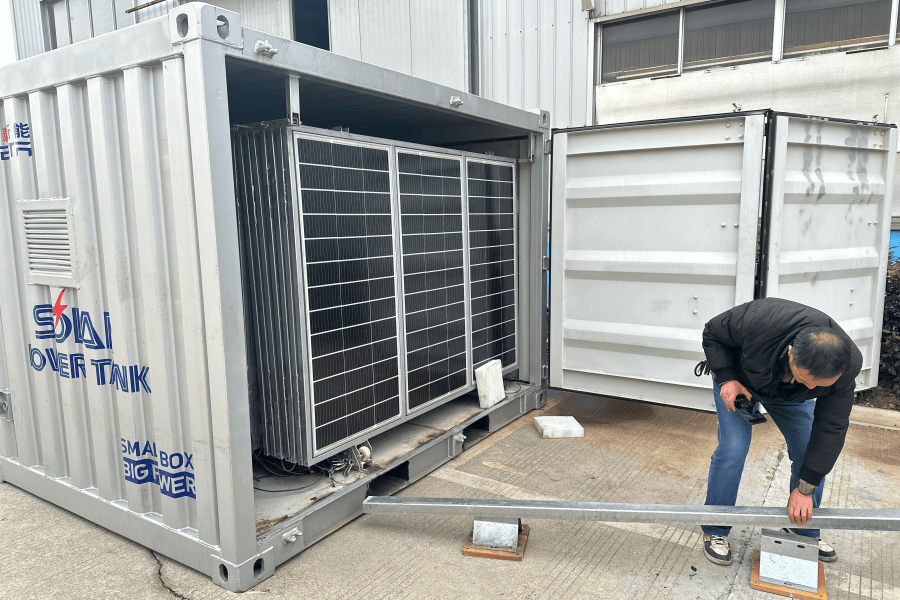
Table of Contents
- The Remote Power Dilemma for Eco-Resorts
- Why Fixed Solutions Often Struggle in Paradise
- Enter the 215kWh Mobile Power Container
- Weighing the Benefits: More Than Just a Battery Box
- Acknowledging the Drawbacks (Let's Be Honest)
- A Case in Point: A California Glamping Site
- Making the Right Call for Your Project
The Remote Power Dilemma for Eco-Resorts
Picture this: you've found the perfect location for an eco-resort. Breathtaking views, pristine nature, complete serenity. There's just one glaring issue C the grid is either laughably weak, prohibitively expensive to extend, or simply non-existent. I've been on site for these initial surveys, and the excitement in the room visibly deflates when the topic of reliable, clean power comes up. The dream of running on 100% renewables bumps against the hard reality of solar's intermittency and the deafening silence of diesel generators that seem to betray the very "eco" ethos. This is the core problem we see across markets from the California coastline to the Greek islands.
Why Fixed Solutions Often Struggle in Paradise
The traditional playbook often involves a fixed, poured-concrete battery storage installation. It sounds solid, but on the ground, it can be a nightmare. The permitting alone, especially in environmentally sensitive areas, can take ages. Site preparation costs skyrocket when you're dealing with difficult terrain. And honestly, what if your resort expands, or you need to shift your power hub due to landscaping changes? You're stuck. A fixed asset becomes a literal concrete constraint. According to the National Renewable Energy Laboratory (NREL), balance-of-system costs (everything except the battery modules) can constitute up to 30-40% of a stationary BESS project. In remote areas, that percentage is even higher.
The Flexibility Gap
This is where the industry has had a gap. We needed a solution that was robust and high-capacity but also acknowledged that these projects are living, breathing entities. The 215kWh cabinet-style mobile power container entered the scene to fill this exact niche. It's not a one-size-fits-all, but for specific scenarios, it changes the game.
Enter the 215kWh Mobile Power Container
So, what are we really talking about? Imagine a standardized, self-contained cabinet, pre-integrated with 215 kilowatt-hours of battery storage, a thermal management system, power conversion, and safety controls, all mounted on a skid or trailer base. It's delivered to your site largely pre-commissioned. This isn't a tiny power bank; 215kWh is serious capacity. It can, for instance, reliably back up critical resort loads (reception, kitchens, water pumps) for hours or shift a significant chunk of solar generation from day to night. Let's break down its real-world benefits and drawbacks, the stuff you won't always find in a glossy brochure.

Weighing the Benefits: More Than Just a Battery Box
From my two decades in the field, the advantages of this approach for eco-resorts are tangible and often decisive.
- Deployment Speed & Reduced Soft Costs: This is the big one. Because the unit is pre-assembled and tested in a factory environment, on-site work is drastically reduced. I've seen projects where we went from delivery to providing power in under 72 hours. This speed directly translates to lower labor costs and faster time-to-revenue for your resort.
- Inherent Flexibility & Future-Proofing: Your Phase 1 is by the river. Phase 2 is up the hill. With a mobile unit, you can literally tow it to the new optimal location. This modularity also allows for easier capacity expansion C just add another container. It treats energy infrastructure like the flexible asset it should be.
- Compliance & Safety Built-In: A reputable supplier like Highjoule will deliver these units pre-certified to key standards like UL 9540 for the energy storage system and UL 1973 for the batteries, which are critical for insurance and permitting in North America. For the EU, look for IEC 62619 and IEC 62933 compliance. This isn't just paperwork; it means the critical safety systems C from thermal runaway detection to fire suppression C are integrated and validated.
- Optimized LCOE in Niche Scenarios: Levelized Cost of Energy (LCOE) C the total lifetime cost per kWh C is the ultimate metric. While the upfront capex per kWh might be slightly higher than a mega-fixed system, the reduced installation cost, flexibility, and scalability often lead to a better overall LCOE for the evolving, mid-sized demand of an eco-resort. You pay for what you need, when and where you need it.
Acknowledging the Drawbacks (Let's Be Honest)
No technology is perfect, and a good engineer lays out the limitations upfront. Here's what you need to consider.
- Higher Capex per kWh (on paper): The engineering and packaging into a rugged, mobile form factor does come at a cost. When you purely compare $/kWh of battery capacity to a large-scale, ground-mounted stationary system, the mobile container will look more expensive. The value is in the total system savings and flexibility, which isn't always captured in that simple number.
- Footprint & Siting Nuances: It's a compact system, but it still needs a stable, level area for placement, considering access for future moving or service. You also need to think about connection points for your solar PV and resort distribution. It's plug-and-play, but not "drop-anywhere-in-the-jungle"-and-play.
- Thermal Management Considerations: All batteries need to stay in a happy temperature range. These containers have superb HVAC systems, but they do consume a bit of energy themselves ("parasitic load"). In extremely hot or cold climates, siting them in a semi-shaded area can improve overall efficiency. It's a small point, but one I always check on site.
- Limited to Mid-Scale Applications: A 215kWh container is a powerful tool, but it's not for a 500-room mega-resort. It's ideal for boutique locations, glamping sites, or as a modular building block for larger, phased developments. If your peak demand is consistently in the multi-megawatt range, you're in different technology territory.
A Case in Point: A California Glamping Site
Let me give you a real example. We worked with a high-end glamping operation in the Sierra Nevada foothills. Their challenge: they wanted to go fully off-grid, solar-powered, and eliminate diesel generators that spoiled the ambiance. Their load was variable C high on weekends, low mid-week C and they planned to add 10 more luxury tents in a year.
A fixed BESS would have been overkill initially and a constraint later. We deployed a single 215kWh mobile container alongside their new solar array. The benefits were immediate: silent operation, seamless overnight power, and full compliance with California's strict fire safety codes (thanks to the UL certifications). The clincher? When they expanded, we simply added a second container in parallel next to the new tent cluster, with minimal disruption. The flexibility paid for itself.

Expert Insight: C-Rate and Longevity
When evaluating a 215kWh container, don't just look at the capacity. Ask about the C-rate. Simply put, it's how fast you can charge or discharge the battery relative to its total capacity. A 1C rate means you can pull 215kW from it. A 0.5C rate means 107.5kW. For an eco-resort with high momentary loads (like everyone turning on AC at once), a higher C-rate is crucial. At Highjoule, our standard containers are optimized for the duty cycle of commercial sites C enough punch for peaks, but engineered for daily cycling without excessive degradation. It's this kind of practical design that determines a 10-year asset versus a 5-year headache.
Making the Right Call for Your Project
So, is a 215kWh mobile power container right for your eco-resort? Honestly, if you're battling high grid connection costs, operating in a sensitive environment with complex permits, or have a growth plan that's phased, it's an option you cannot afford to ignore. The drawbacks are primarily economic on a narrow spreadsheet, while the benefits C speed, flexibility, standards compliance C are operational and strategic wins.
The best advice I can give? Work with a provider that has real deployment miles. Ask them for siting guidelines specific to their container. Demand the UL or IEC certification paperwork. And most importantly, model your load profile and solar generation against the container's actual specs C not just its nameplate capacity. That's how you move beyond the generic "benefits and drawbacks" and find the right power solution for your slice of paradise.
What's the biggest energy puzzle you're trying to solve at your location? Sometimes, the conversation over a virtual coffee is where the best solutions start.
Tags: UL Standard BESS LCOE Eco-Resort Energy Mobile Power Container US EU Market
Author
James Zhang
20+ years agricultural energy storage engineer / Highjoule CTO