
Benefits & Drawbacks of 215kWh Pre-Integrated PV Containers for Grids
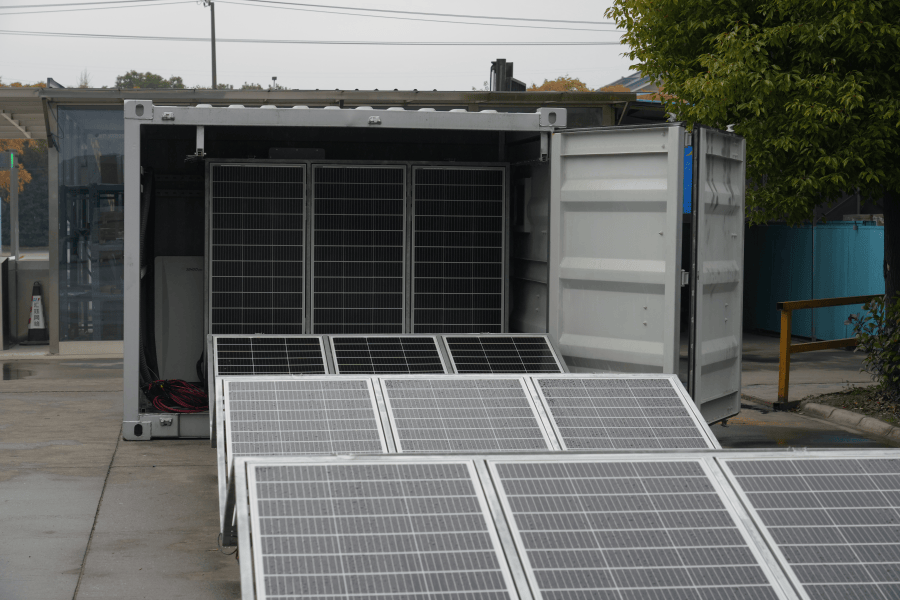
The 215kWh Pre-Integrated PV Container: A Grid Operator's Honest Field Guide
Hey there. Over a coffee, utility planners and engineers often ask me the same thing: "We need to add storage and maybe some solar, fast. These pre-integrated container solutions look neat on paper, but what's the real story on the ground?" Having spent the last two decades deploying BESS from California to Bavaria, I've seen the good, the bad, and the "we-should've-thought-of-that." Let's talk frankly about the 215kWh cabinet-style, pre-integrated PV container - a popular workhorse for public grids - and its actual benefits and drawbacks.
Quick Navigation
- The Grid's Tightrope: Balancing Speed, Cost, and Complexity
- Enter the 215kWh Pre-Integrated Container
- The Clear-Cut Benefits (Where It Shines)
- The Real-World Drawbacks (What to Watch For)
- From the Field: Making the 215kWh Unit Work for You
The Grid's Tightrope: Balancing Speed, Cost, and Complexity
Public utility grids are under pressure like never before. The mandate is clear: integrate more renewables, enhance grid stability, and do it without blowing the budget or timeline. The IEA reports that global grid-scale storage capacity needs to expand by over 40 times by 2030 to meet net-zero goals. That's a staggering number. On site, this translates into a brutal pain point: the "integration quagmire."
I've been on projects where we had to source batteries from one vendor, inverters from another, the thermal management system from a third, and then spend months - and a small fortune - on engineering, wiring, and testing to make them all talk to each other safely. Every additional interface is a potential point of failure, a compliance headache, and a cost overrun. For a public utility, time isn't just money; it's grid reliability and public trust.
Enter the 215kWh Pre-Integrated Container
This is where the pre-integrated, cabinet-based 215kWh container enters the scene. Think of it as a "storage appliance." The core idea is that all critical components - lithium-ion battery cabinets, power conversion system (PCS), thermal management, fire suppression, and controls - are assembled, wired, and tested in a controlled factory environment before being shipped inside a standard container. For grid applications, the 215kWh size is interesting. It's substantial enough to provide meaningful grid services (like frequency regulation or smoothing a 500kW solar PV farm's output) but modular enough to be deployed in multiples for larger needs.

The Clear-Cut Benefits (Where It Shines)
Deployment Speed & Predictability
Honestly, this is the biggest sell. A project in North Germany I worked on needed fast reactive power support. We deployed three of these 215kWh units. From site preparation to commissioning, it took under 8 weeks. The "plug-and-play" aspect is real. Because it's pre-engineered, you're not designing from scratch. You get a known footprint, a known weight, and a known electrical interface. This drastically shrinks your project's soft costs and engineering overhead.
Enhanced Safety & Built-in Compliance
Safety is non-negotiable. A reputable pre-integrated unit from a company like Highjoule is designed as a holistic system. The battery cabinets aren't just thrown in; they're housed with proper spacing, ventilation, and fire-rated barriers. The thermal management system is matched to the specific heat load of the 215kWh battery bank. Crucially, the entire unit is certified as a system to standards like UL 9540 and IEC 62933. I've seen firsthand how this simplifies the permitting process with local authorities - they see a certified "box," not a risky science project.
Optimized Lifetime & Lower LCOE
Here's a technical bit made simple: the Levelized Cost of Storage (LCOS) is your true north. A pre-integrated system aims to lower it. How? By ensuring all subsystems are optimized to work together. The battery management system (BMS) talks perfectly to the PCS, managing the charge/discharge cycles (the C-rate) to prevent stress. The cooling system maintains an optimal 25C 2C, which is the sweet spot for lithium-ion longevity. This coordinated care extends the system's life from, say, 12 to 18 years, dramatically improving your LCOS. It's about total cost of ownership, not just upfront price.
The Real-World Drawbacks (What to Watch For)
The "Black Box" Dilemma
The integration that speeds things up can also be a constraint. If the entire container is from a single vendor, what happens when you need to upgrade just the inverter in 8 years? Or if the manufacturer uses a proprietary communication protocol? You can become locked in. I advise clients to insist on open, standard protocols like Modbus or DNP3 for grid interconnection, even in a pre-integrated solution.
Scalability & Siting Nuances
A 215kWh unit is a fixed block. Need 217kWh for a specific application? Tough. You have to add a whole other unit. While modular, stacking multiple containers still requires careful site planning for spacing, cabling, and HVAC exhaust. They're not always the perfect fit for oddly shaped or space-constrained substations. I recall a project in a historic district in Massachusetts where the standard container's aesthetics and footprint became a significant hurdle.
Transport & Service Logistics
That container is heavy. You need suitable road access and a crane on site. And if a major component fails, sometimes the entire container might need to be shipped back, leaving you with zero capacity. That's why at Highjoule, our service model is built around local stock of critical spare parts and modular, on-site cabinet replacement. You shouldn't have to ship the whole house to fix a window.
From the Field: Making the 215kWh Unit Work for You
So, is it the right choice? It depends entirely on your use case. For a public utility looking to deploy proven, compliant storage at distribution substations for peak shaving or renewable firming, it's an excellent, low-risk option. The benefits of speed, safety, and predictable performance often outweigh the drawbacks.
The key is in the vendor selection. Don't just buy a container. Partner with a provider who has deep field experience. Ask them: Can you show me the thermal simulation for the battery cabinets in a Texas summer? How do you ensure compliance with the latest IEEE 1547-2018 standard for grid interconnection? What's your local service response time? The answers to these questions reveal more than any brochure.
For instance, our team recently supported a municipal utility in the Midwest deploying these units. Their primary challenge wasn't technology - it was training their local crew on maintenance. We co-developed a simplified, digital O&M guide with them. That's the kind of partnership that turns a pre-integrated product into a long-term grid asset.
What's the biggest site constraint you're facing in your next storage deployment?
Tags: UL Standard BESS LCOE Energy Storage Europe US Market Renewable Energy Utility Grid
Author
James Zhang
20+ years agricultural energy storage engineer / Highjoule CTO