
215kWh Solar Container BESS: Power Construction Sites Efficiently & Safely
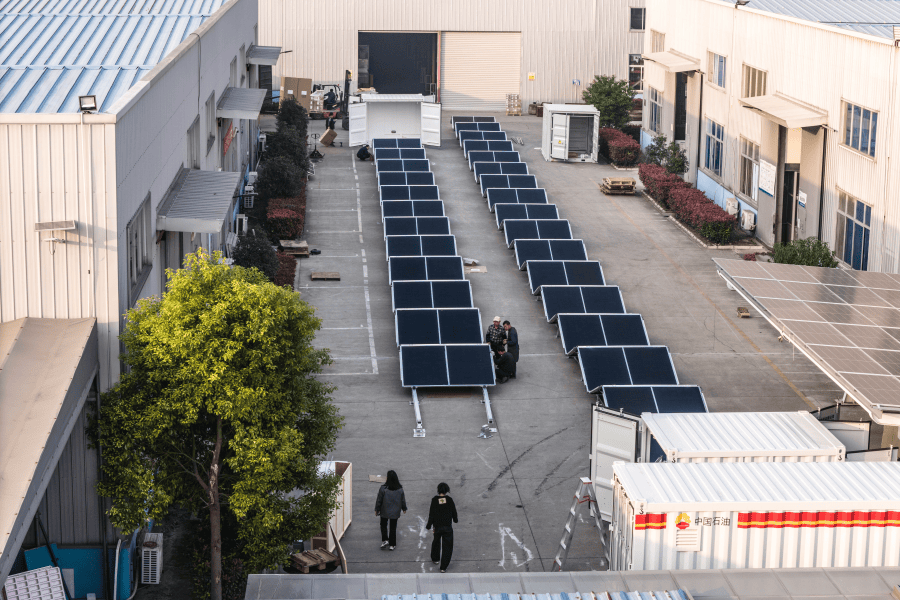
Table of Contents
- The Diesel Headache on Your Job Site (And It's Bigger Than You Think)
- Beyond the Bill: The Real Cost, Safety & Schedule Strain
- The 215kWh Solar Power Cabinet: Your Site Power Solution Unpacked
- The Good Stuff: Benefits That Hit Your Bottom Line
- Keeping It Real: What You Need to Consider
- Seeing is Believing: How It Worked in Dortmund
- The Tech Talk (Made Simple): C-Rate, Heat & True Cost
- Is a 215kWh Solar Container Right for Your Next Project?
The Diesel Headache on Your Job Site (And It's Bigger Than You Think)
Honestly, let's grab a coffee and talk about what keeps site managers up at night: reliable power. You know the drill. That diesel generator humming away C it's the heartbeat of the site, but man, does it come with baggage. We're not just talking about the obvious fuel bills anymore, though those sting, especially with prices bouncing around like they do. I've been on sites across the US and Europe for over two decades, and the reliance on diesel is a universal pain point. It's noisy enough to rattle your teeth, the fumes are something nobody wants to breathe, and the constant deliveries? They eat into your precious site space and schedule. The International Energy Agency (IEA) highlights the significant carbon footprint of diesel gensets in construction, a growing concern with tightening environmental regs, especially here and across the pond. It feels like you're constantly fighting the power source instead of focusing on the build.
Beyond the Bill: The Real Cost, Safety & Schedule Strain
Let's agitate that pain a bit, because it's often worse than folks admit. The fuel cost is just the tip of the iceberg. Think about the operational drag:
- Noise Pollution: Ever tried having a clear conversation next to a roaring genset? Or dealt with noise complaints from neighbors? It slows communication, impacts worker focus, and can even lead to fines or delayed permits in noise-sensitive zones. Honestly, it just grinds everyone down.
- Emissions & Air Quality: Those fumes aren't just smelly; they're a health hazard for your crew and a compliance nightmare. More and more cities, like those in California or under the EU's strict air quality directives, are imposing low-emission zones where old diesel gensets simply can't operate.
- Logistics & Security: Fuel storage is a security risk and a fire hazard. Theft happens. Spills happen. And every fuel truck delivery is a potential site disruption, requiring coordination, traffic management, and taking up space you don't have.
- Unpredictability: Gensets need maintenance, they break down. A power outage can stop critical pours, delay crane operations, and throw your entire schedule C and budget C into chaos. I've seen firsthand how a single genset failure can cost tens of thousands in lost productivity in a single day.
It's not just about power; it's about risk management, crew well-being, and hitting that project deadline.
The 215kWh Solar Power Cabinet: Your Site Power Solution Unpacked
So, what's a better way? Enter the 215kWh Cabinet Solar Container. Think of it as a clean, quiet power bank for your site. It's a self-contained unit C solar panels (often deployed on-site fencing or temporary structures) charge a large battery bank (that 215kWh capacity) housed securely inside a robust, weatherproof shipping container. This stored solar energy then powers your tools, lighting, offices, even smaller equipment during the day and night. It's not necessarily about going 100% off-grid on every massive site (though it can cover a significant chunk), but about drastically reducing diesel runtime, fuel costs, and all those associated headaches. It's about hybridizing intelligently.

The Good Stuff: Benefits That Hit Your Bottom Line
Alright, let's talk brass tacks C why this makes sense for your bottom line and sanity:
- Slash the Fuel Bill (Seriously): This is the big one. By using free solar energy, you dramatically cut diesel consumption. We're talking 50-80% reductions on fuel costs for the loads the BESS supports. That money goes straight back into the project. The math on Levelized Cost of Energy (LCOE) for solar+storage vs. diesel is becoming undeniably favorable, especially for longer-duration projects.
- Silence is Golden (and Productive): These containers run near silently. Imagine a quieter site, better communication, happier neighbors, fewer complaints. It improves the work environment instantly. No more shouting over the generator roar.
- Zero On-Site Emissions: Breathe easy, literally. No nasty fumes means better air quality for your crew, compliance with even the strictest local air quality rules (like those in Germany or California), and a genuine reduction in your site's carbon footprint. It's a tangible ESG win.
- Enhanced Reliability & Uptime: Pair it as backup with your genset, and the BESS provides seamless power during genset refueling or minor hiccups. For critical loads, it's a rock-solid power source. Fewer unexpected stops mean you stay on schedule. Highjoule units, like many modern systems, are designed for high cycle life and reliability C we build them tough for site conditions.
- Plug-and-Play Simplicity: Need to move it? No problem. These containerized units are designed for rapid deployment and relocation. A flatbed truck moves it, and it's quickly reconnected. It saves valuable setup/teardown time compared to complex temporary wiring runs.
- Safety First, Built-In: Reputable units, like ours engineered to meet UL 9540 and IEC 62933 standards, incorporate advanced battery management systems (BMS) and thermal management (liquid cooling is common for stability) specifically to prevent overheating and thermal runaway. They are inherently safer than large volumes of stored diesel fuel. Fire suppression and robust enclosures are standard.
Keeping It Real: What You Need to Consider
Look, I'm an engineer, not a sales guy pushing magic beans. Let's be upfront about the considerations:
- Upfront Investment: Yes, the initial capex is higher than just renting another diesel genset. This is the biggest hurdle for many. However, the focus needs to be on the Total Cost of Ownership (TCO) over the project life. The fuel savings, reduced maintenance costs (batteries need far less than diesel engines), and potential avoidance of emission fines often justify the investment, especially for projects 6 months or longer. Financing and leasing options are increasingly available too.
- Sunshine Dependency (Mitigated by Design): It needs sun to recharge efficiently. Cloudy days or short winter days mean less solar harvest. The key is smart system sizing (that 215kWh is a sweet spot for many mid-sized site loads) and intelligent energy management. The system prioritizes solar, uses the grid if available/permitted, and only uses the diesel genset as the last resort or for peak shaving. It's about optimization, not perfection on day one.
- Space Needs: You need a suitable, level spot for the container itself (roughly standard 20ft container footprint). You also need space for the solar panels C but this is often creatively found on site fencing, temporary canopies, or even cleared areas that aren't yet active.
- Power Output Limits: Understand its continuous and peak power rating (the C-rate C more on that below). A 215kWh unit is fantastic for tools, lighting, site offices, maybe smaller pumps. It likely won't run your biggest crane or a massive concrete pour pump directly all day on battery alone. It's about matching the solution to the appropriate loads. Hybrid systems handle the peaks.
Seeing is Believing: How It Worked in Dortmund
Don't just take my word for it. Remember that logistics hub project near Dortmund, Germany last year? Tight urban site, noise restrictions, and ambitious sustainability targets. They deployed a 215kWh solar container unit, integrating panels onto their perimeter fencing and a temporary warehouse roof.
The Challenge: Powering site offices, tool charging stations, and critical lighting while minimizing diesel use and noise under strict local ordinances.
The Solution: The Highjoule container provided the primary daytime power. A smaller, efficient diesel genset was kept for backup and occasional high-demand tasks (like running a large compactor).
The Result: They cut diesel fuel consumption by over 70%. Noise complaints dropped to zero. The project manager raved about the reduced logistics hassle C no more fuel deliveries clogging the access road. They hit their sustainability KPIs early. It wasn't just green; it was smooth and cost-effective. That's the real-world impact.

The Tech Talk (Made Simple): C-Rate, Heat & True Cost
Okay, let's get slightly technical for a minute, but I'll keep it coffee-chat simple:
- C-Rate (Not Scary): Think of this as the battery's "power tap." A 1C rate means the battery can discharge its entire capacity (215kWh) in one hour. A 0.5C rate means it takes 2 hours. A higher C-rate (like 1C or even 2C) means the battery can deliver bursts of high power quickly C great for starting motors or handling surges. Our typical 215kWh units for construction are often configured for sustained 0.5C-1C output, balancing power delivery with battery longevity. It's crucial to match the C-rate capability to your site's peak power demands.
- Thermal Management (Keeping Cool): Batteries generate heat, especially when working hard (high C-rate) or in hot weather. Poor heat management kills performance and lifespan. Quality units like ours use sophisticated liquid cooling systems. Think of it like the radiator in your car C it actively circulates coolant to keep the battery cells at their optimal, safe temperature range, ensuring consistent power and long life. This is non-negotiable for reliable site performance. I've seen cheaper, air-cooled units throttle power badly on a hot Texas afternoon C not ideal when you need to pour concrete.
- LCOE - The Real Cost Metric: Forget just the sticker price. Levelized Cost of Energy (LCOE) calculates the total cost of owning and operating the system per kWh it delivers over its lifetime. It includes the capex, installation, fuel (or sun!), maintenance, and eventual replacement. When you run the numbers, solar+storage for a significant portion of your site load often has a lower LCOE than pure diesel over a typical project duration. The more sun you get and the longer you use it, the better the LCOE becomes. It flips the script on the upfront cost argument.
The key takeaway? Look for units with robust thermal management and understand the C-rate needed for your specific site demands. Don't just buy on capacity (kWh) alone.
Is a 215kWh Solar Container Right for Your Next Project?
So, is this magic? No. Is it a powerful, practical, and increasingly cost-effective tool for smarter, cleaner, quieter construction sites? Absolutely. If you're facing:
- Soaring diesel costs eating your budget
- Noise restrictions or community pushback
- Strict emissions regulations
- Long project timelines (6+ months often tip the scales)
- A genuine commitment to reducing site environmental impact
...then a 215kWh solar container BESS deserves a serious look. It's not about replacing every diesel genset overnight; it's about making a strategic, impactful shift where it delivers the most value.
Highjoule has been deploying solutions like this globally for years, navigating UL, IEC, and local standards to ensure safe, compliant operation. We focus on making the technology work reliably in the real-world grit of a construction site C because that's where we've spent our careers. Honestly, the feedback from site managers who've made the switch is the best part C less stress, lower costs, quieter days.
What's the biggest power challenge slowing down your current project? Could shifting some of that load to solar storage be the key?
Tags: UL Standard BESS LCOE Energy Storage Construction Power Solar Container Renewable Energy
Author
James Zhang
20+ years agricultural energy storage engineer / Highjoule CTO