
Benefits and Drawbacks of 215kWh Cabinet Solar Container for Eco-resorts
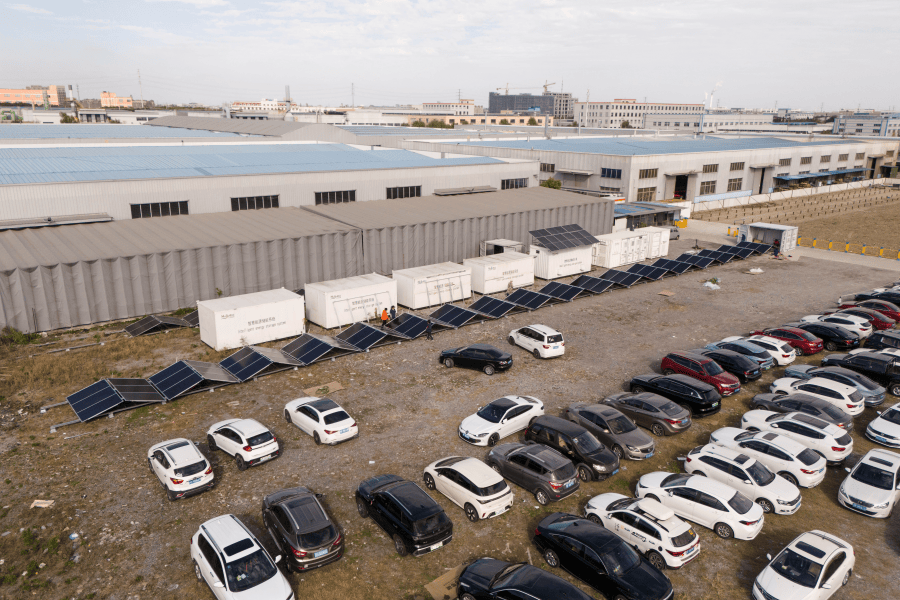
Table of Contents
- The Off-Grid Dilemma: More Than Just "Going Green"
- Enter the 215kWh Cabinet: Not a Magic Box, But a Smart Tool
- The Benefits: Why This Size Makes Sense for Resorts
- The Honest Drawbacks & How to Mitigate Them
- A Real-World Case: From Diesel Dependence to Solar Security
- Making the Right Call: Your Next Step
The Off-Grid Dilemma: More Than Just "Going Green"
Let's be honest. When you're running an eco-resort, "sustainability" isn't just a marketing buzzword - it's your operational backbone and often your biggest headache. I've sat across the table from owners in California's mountains and on Caribbean islands, and the story is always similar. You've got beautiful solar panels, but when the sun sets or a cloud bank rolls in, the party - and the power - can literally stop. The backup? Often a rumbling, expensive, and frankly polluting diesel generator. It undermines your entire eco-ethos. According to the International Energy Agency (IEA), achieving reliable renewable energy in remote areas remains one of the toughest nuts to crack, with system integration being the key barrier.
The real pain point isn't just having storage; it's having the right kind of storage. It needs to be safe enough to sit near guest cabins, robust enough to handle salty coastal air or mountain temperature swings, and scalable enough to grow with your resort. Many off-the-shelf residential systems aren't built for this 24/7 commercial duty cycle, and massive utility-scale solutions are overkill and budget-busters. That's the gap I've seen firsthand on site.
Enter the 215kWh Cabinet: Not a Magic Box, But a Smart Tool
This is where the pre-integrated 215kWh cabinet-style solar container enters the chat. Think of it not as a magical black box, but as a sophisticated, plug-and-play power plant in a box. It's designed to sit on a concrete pad, hook up to your existing solar array, and start managing energy. The "215kWh" size is particularly interesting - it's that sweet spot for small to medium-sized resorts. It's large enough to meaningfully shift solar energy to cover evening peaks (lights, kitchen, pool pumps) but compact enough to be delivered on a standard truck and installed without major civil works.

The Benefits: Why This Size Makes Sense for Resorts
Let's break down the real advantages, the ones that matter on your balance sheet and guest reviews.
- Diesel Displacement & Cost Certainty: This is the big one. A 215kWh unit can typically offset 80-90% of generator runtime. I've seen sites slash their diesel fuel bills by tens of thousands annually. You're swapping a volatile fuel cost for a predictable, sunk-capital cost. The Levelized Cost of Energy (LCOE) - that's the total lifetime cost per kWh - for solar+storage is now beating diesel in most regions, hands down.
- Enhanced Resilience & Guest Experience: Nothing kills a five-star rating like a blackout. This system provides seamless backup. When a cloud passes or during grid outages (if you're connected), it kicks in within milliseconds. Guests never notice. The lights stay on, the wifi hums, and the bar blender keeps working.
- Scalability in a Modular Format: Need more power as you add bungalows? You don't rip and replace. With a containerized system, you can often add another 215kWh cabinet alongside the first. It's like adding LEGO blocks of energy.
- Safety & Standards Built-In: A quality unit, like the ones we engineer at Highjoule, isn't just a bunch of batteries thrown in a box. It's a system with integrated fire suppression, thermal management (crucial for battery life and safety), and compliance with UL 9540 and IEC 62619 standards. This isn't just paperwork; it's a design philosophy that prioritizes safety from the cell level up, giving you and your insurers peace of mind.
The Honest Drawbacks & How to Mitigate Them
Now, let's have that coffee-chat honesty. No solution is perfect, and knowing the drawbacks lets you plan smarter.
- Upfront Capital Cost: Yes, the initial investment is significant. It's a capital asset. The key is to finance it as one - looking at the 10-15 year lifecycle, not just the year-one outlay. We work with clients to model the ROI, factoring in diesel savings, maintenance avoidance, and even potential revenue from grid services in some markets.
- Space & Siting Requirements: It's a container. You need a flat, stable, well-drained area, usually with some setback for safety and service access. It's not huge, but you can't tuck it in a closet. Proper siting is part of our deployment service to ensure longevity and performance.
- Technical Oversight & Maintenance: This isn't a "set it and forget it" appliance. While it's largely autonomous, it requires periodic check-ups, software updates, and performance monitoring. The drawback is needing a partner who provides that, either by training your staff or through a remote monitoring and maintenance plan. At Highjoule, our platform gives you a dashboard to see your energy flows, and our team gets alerts before you ever have a problem.
- Energy Density vs. Demand: A 215kWh unit has limits. If your resort has a massive spa with heated pools and industrial kitchens, one cabinet might only cover a portion of your load. An honest assessment of your load profile is critical. Sometimes, we recommend starting with one unit to tackle the most critical loads and prove the concept, with a clear path to scale.
A Real-World Case: From Diesel Dependence to Solar Security
Let me tell you about a project in British Columbia, Canada. A wilderness lodge was entirely dependent on diesel, with fuel barged in at enormous cost and risk. Their goal was energy independence and a cleaner operation. The challenge? Harsh winters, remote location, and a critical need for absolute reliability.
We deployed two 215kWh cabinet systems alongside their expanded solar array. The technical key was the C-rate - basically, how fast the battery can charge and discharge. We specified a system with a moderate C-rate, optimized for the long, slow solar charge during summer and the sustained discharge through winter nights, rather than brutal, short bursts that stress the battery. The thermal management system was also spec'd for sub-zero startup, which is a must in that climate.
The result? Diesel use dropped by 94% in the first year. The system paid for itself in under 7 years on fuel savings alone. But more importantly, the lodge now markets itself as truly carbon-neutral, a powerful differentiator. The containers, with their UL and IEC certifications, were also a non-negotiable for getting local permitting and insurance.
Making the Right Call: Your Next Step
So, is a 215kWh solar container right for your eco-resort? It's a powerful tool, but the answer depends entirely on your specific load, site, and sustainability ambitions. The benefits of fuel savings, resilience, and brand integrity are massive. The drawbacks of cost and complexity are manageable - but only with the right planning and partner.
The next step isn't to buy a box. It's to understand your own energy story. How many kWh do you use from 4 PM to midnight? What's your peak demand? How many gallons of diesel did you burn last year? Get that data. Then, have a conversation with an engineer who's been on sites like yours, who can translate that data into a system that works not just on paper, but in the real world, where it rains, gets hot, and guests expect the lights to stay on. What's the one energy problem keeping you up at night?
Tags: UL Standard BESS LCOE Energy Storage Solar Container Off-Grid Energy Eco-Resort
Author
James Zhang
20+ years agricultural energy storage engineer / Highjoule CTO