
Air-Cooled Pre-Integrated PV Containers for Mining: Benefits & Drawbacks
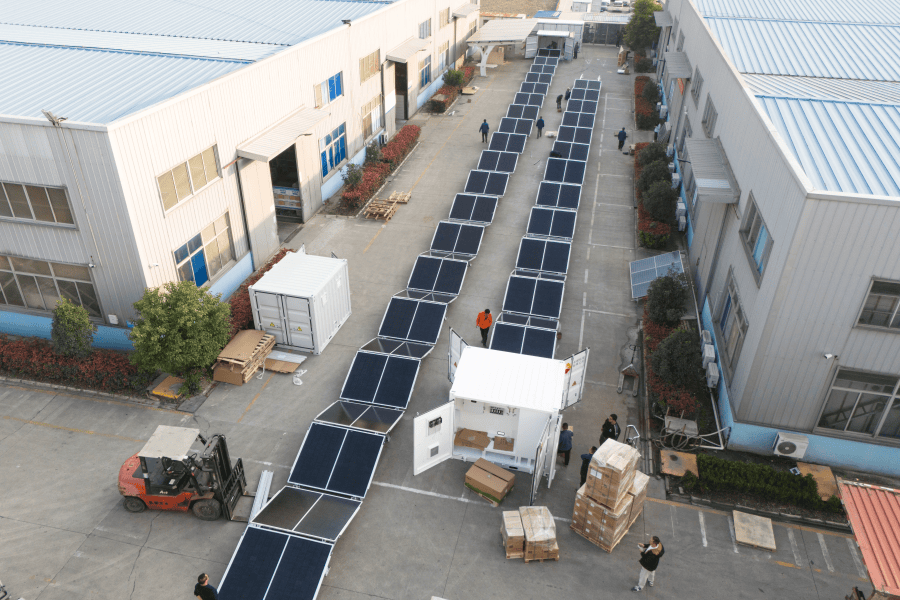
The Real Deal on Air-Cooled Solar Containers for Remote Mines (Like Mauritania)
Honestly, when I get a call about powering a remote mining operation these days, the conversation almost always turns to solar-plus-storage. And more specifically, to those all-in-one, ship-it-anywhere, pre-integrated container solutions. They sound perfect on paper, right? Especially for a place like Mauritania, with its vast solar resource and equally vast, grid-isolated mining sites. But having spent the last two decades knee-deep in BESS projects from the Nevada desert to the Australian outback, I've learned that the devil is in the thermal management details. Let's grab a coffee and talk about what you really get with an air-cooled pre-integrated PV container system C the good, the challenging, and what it means for your bottom line.
Quick Navigation
- The Core Problem: Why Off-Grid Mining is a Beast
- The Hidden Costs of "Simple" Solutions
- The Containerized Solution: A Closer Look
- Key Benefits for Mining Operations
- Real-World Drawbacks & Considerations
- Making It Work: An Engineer's Perspective
The Core Problem: Why Off-Grid Mining is a Beast
Look, the business case for renewables in mining is solid. The International Energy Agency (IEA) notes that mining is one of the most energy-intensive industries globally, and diesel fuel in remote locations is a massive, volatile cost center. But slapping some solar panels and batteries in the desert isn't like installing a system in a German industrial park or a California community. The environment is the enemy. We're talking about constant, fine abrasive dust that gets into everything, ambient temperatures that can swing wildly, and a complete lack of skilled maintenance staff on site. The core problem isn't just generating power; it's providing reliable, resilient, and low-operational-overhead power in a place that wants to destroy your equipment.
The Hidden Costs of "Simple" Solutions
I've seen this firsthand. A few years back, I was called to a site in the US Southwest where a mine tried a piecemeal approach - solar inverters from one vendor, batteries from another, and a makeshift cooling system. The thermal management was an afterthought. On a 115F (46C) day, the battery C-rate (basically, how fast you can charge or discharge it) had to be throttled back by 40% to prevent overheating. That meant the excavators couldn't run at full power when they needed to, directly impacting production. The Levelized Cost of Energy (LCOE), which looked great on the initial proposal, skyrocketed because the "solution" couldn't handle the real-world operating conditions. Downtime and underperformance in mining aren't inconveniences; they're existential threats to the project's economics.
The Containerized Solution: A Closer Look
This is where the pre-integrated, air-cooled PV container enters the chat. Think of it as a power plant in a box. All the components - PV inverters, battery racks, battery management system (BMS), fire suppression, and the air-conditioning units - are factory-assembled and tested inside a standard shipping container. For a site in Mauritania, this is a game-changer for deployment speed. It lands on site, you connect the solar field and the main power line, and you're substantially closer to being operational. The "air-cooled" part refers to using filtered air conditioning to manage the internal temperature of the container, as opposed to more complex liquid cooling systems.

Key Benefits for Mining Operations
Let's break down why this model is so attractive for remote operations:
- Plug-and-Play Deployment: The biggest win. It drastically reduces on-site construction time and complexity. You're not trying to wire major components in a dust storm.
- Predictable Compliance: When you work with a provider like Highjoule, the entire unit is built and certified to recognized standards like UL 9540 and IEC 62933 from the get-go. This is non-negotiable for our US and European clients and provides a clear path to compliance, even in regions with less stringent local codes.
- Reduced Site Footprint & Civil Work: Everything is contained. You pour a simple slab, and that's it. No need for multiple equipment foundations or a dedicated building.
- Inherent Scalability: Need more power? Order another container. It's a modular approach that aligns well with phased mine expansion.
Real-World Drawbacks & Considerations
Now, let's be real about the challenges, especially with air-cooling in a desert mining context:
- Thermal Management Efficiency: This is the big one. Air-cooling is simpler, but it's less efficient at moving heat away from battery cells than liquid cooling. In extreme ambient heat, the AC units have to work incredibly hard, consuming significant parasitic load (power used to run the system itself). This hits your overall energy yield. According to a NREL study, poor thermal management can accelerate battery degradation by a factor of two or more.
- Dust Filtration is a Constant Battle: The air filters on those AC units will clog with desert dust incredibly fast. I've seen weekly filter changes on some sites. If neglected, dust ingress can coat components, insulate heat, and cause failures. This is a major operational maintenance item.
- Limited Power Density: To avoid hot spots, air-cooled systems often need more spacing between battery racks. This can mean a lower total energy capacity per container compared to a liquid-cooled design, potentially affecting your space-to-power ratio.
- Single Point of Failure: If the container's AC system fails, the entire BESS inside can overheat and shut down within hours, if not minutes. Redundant AC units are a must, which again adds to cost and parasitic load.

Making It Work: An Engineer's Perspective
So, is an air-cooled container the right choice for a mining operation in a place like Mauritania? It can be, but only with eyes wide open. Here's my take from the field:
The decision often comes down to LCOE and Total Cost of Ownership (TCO). The lower upfront capex of the air-cooled system is attractive. But you must rigorously model the parasitic load from the AC and the potential for higher degradation rates. For a site with moderate ambient temperatures and a strong, planned maintenance regimen for filter changes, it can be a winner.
At Highjoule, when we engineer these solutions for harsh environments, we over-spec the cooling. We don't just use standard off-the-shelf AC units; we use industrial-grade, high-static-pressure units with multi-stage filtration. We design the internal airflow with computational fluid dynamics (CFD) to eliminate hot spots. And critically, we build in remote monitoring that doesn't just tell you a fault occurred, but predicts filter pressure drop and cell temperature imbalances before they become problems. It's about designing for the real world, not the brochure.
The goal isn't just to sell a container. It's to deliver a guaranteed uptime. That means having local service partnerships or fly-in teams ready to support, ensuring that the operational drawbacks are managed proactively, not reactively. Because in the middle of nowhere, the best technology is the one that keeps working.
What's the one operational constraint in your remote power project that keeps you up at night?
Tags: UL Standard BESS LCOE Renewable Energy Mining Operations Air-cooled ESS
Author
James Zhang
20+ years agricultural energy storage engineer / Highjoule CTO