
Navigating LFP Off-grid Solar Generator Safety for Public Utility Grids
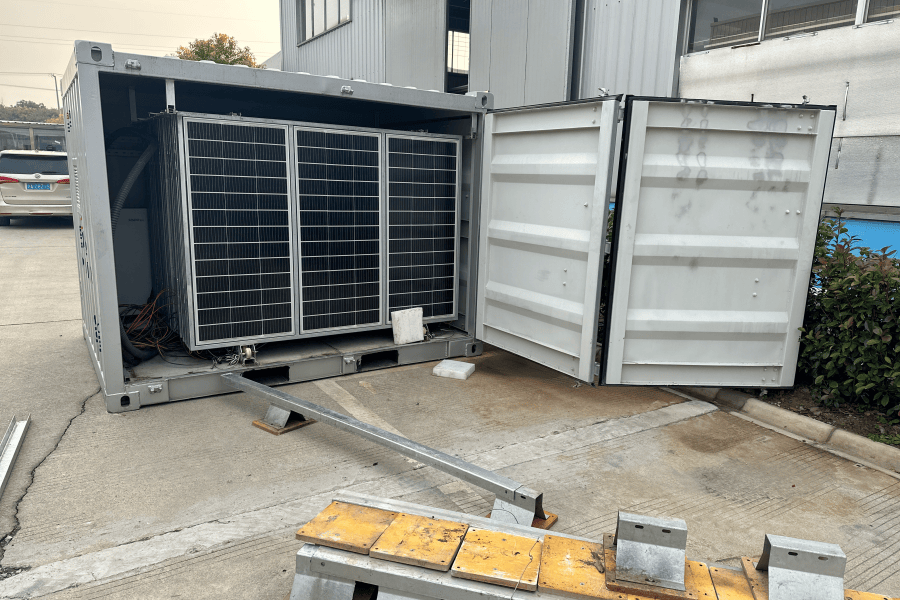
Table of Contents
- The Silent Challenge in Off-grid Deployments
- Beyond the Hype: The Real Cost of Getting Safety Wrong
- The Regulatory Compass: Your Blueprint for Success
- From Paper to Reality: A Case from the California Hills
- The Engineer's Notebook: Decoding Key Safety Tech
- Building with Confidence: A Partner's Perspective
The Silent Challenge in Off-grid Deployments
Let's be honest. When we talk about off-grid solar and storage for public utilities C think remote microgrids, backup for critical community services, or grid-edge reinforcement C the conversation usually starts with capacity, cost, and clean energy. Safety? It's often the checklist item we all agree is vital but, in the rush to deploy, can become a box-ticking exercise against a confusing backdrop of codes and standards. I've been on sites where the engineering focus was so intensely on integration and output that the nuanced safety ecosystem for the battery itself, particularly for LFP (LiFePO4), was treated as a secondary compliance task. That's a risk we can't afford.
Beyond the Hype: The Real Cost of Getting Safety Wrong
LFP chemistry is rightly celebrated for its stability. But "inherently safer" doesn't mean "inherently safe." In an off-grid public utility application, the stakes are uniquely high. These systems aren't in a controlled industrial park; they might be in a remote fire district, a mountain communications hub, or powering a rural water treatment plant. Failure isn't just an outage; it can compromise public safety and trust.
The aggravation comes in three forms: Financial, Reputational, and Regulatory. A project that fails to meet local UL or international IEC standards faces costly retrofits, delays, and potential fines. According to the National Renewable Energy Laboratory (NREL), integration and soft costs, which include permitting and compliance, can still make up a significant portion of total BESS project costs. More damaging is the long-term reputational hit. A safety incident, even a minor one, can stall an entire community's renewable energy transition for years. Honestly, I've seen this firsthand on site C one undersized ventilation design or a misunderstood communication protocol can unravel months of goodwill and engineering.
The Regulatory Compass: Your Blueprint for Success
This is where viewing Safety Regulations for LFP (LiFePO4) Off-grid Solar Generator for Public Utility Grids not as a hurdle, but as a design blueprint, changes everything. For the North American market, UL 9540 (Energy Storage Systems) and UL 1973 (Batteries for Stationary Use) are your foundational texts. In Europe, IEC 62619 is the key standard. These aren't just about the cell; they govern the entire system C from the battery management system (BMS) and thermal controls to the enclosure and how it communicates with the solar inverter and grid interface.
The core philosophy here is holistic system safety. It means your LFP generator is designed to manage faults, prevent thermal runaway propagation, and operate safely within its defined environment, whether it's facing a Texas heatwave or a Canadian winter. This integrated approach is the real solution to the pain points of cost and risk.
From Paper to Reality: A Case from the California Hills
Let me share a scenario from a project supporting a remote public utility district in California. The challenge was to provide resilient backup for emergency services during wildfire-related Public Safety Power Shutoffs (PSPS). The initial designs focused on pure capacity. However, by applying the regulatory blueprint from day one, we shifted the conversation.
The key wasn't just using UL 9540-certified packs. It was ensuring the entire enclosure was rated for the local fire code, designing a passive thermal management system that could maintain optimal temperature without grid power, and implementing a fail-safe communication protocol between the BESS and the legacy generator. The "safety regulations" dictated the spacing, the signage, the ventilation rates, and the shutdown sequences. By baking this in early, we avoided last-minute changes from the inspector, kept the project on schedule, and, most importantly, delivered a system the community could trust.

The Engineer's Notebook: Decoding Key Safety Tech
For the non-technical decision-maker, here's what you need to understand about the tech behind these rules:
- C-rate & Thermal Management: Think of C-rate as how hard you're pushing the battery. A high charge rate for quick filling is great, but it generates heat. LFP is robust, but excessive heat degrades it. Regulations push for systems where the BMS and thermal design (like liquid cooling or advanced air systems) work in lockstep to manage this. A well-managed battery lasts longer, directly improving your Levelized Cost of Energy (LCOE) C the true measure of your project's lifetime cost.
- The BMS as the Brain: The Battery Management System is the guardian. It continuously monitors voltage, temperature, and current for every cell group. The regulations define its safety functions: isolation detection, automatic disconnection on fault, and precise state-of-charge management to prevent stress.
- Container & System-Level Design: This is where companies like ours at Highjoule Technologies spend immense engineering hours. It's moving from certified components to a certified, integrated system. It means designing the container with proper fire-rated materials, explosion-vented compartments (if required), and ensuring that even if a single cell fails, the system contains it and alerts operators without cascading.
Building with Confidence: A Partner's Perspective
After two decades in this field, my strongest advice is to partner with a provider who treats safety regulations as their native language, not a translation exercise. At Highjoule, for instance, our off-grid LFP solutions are engineered from the ground up against UL 9540 and IEC 62619. This isn't a post-production certification; it's baked into the design phase. This approach saves our clients months of validation time and unforeseen costs.
The real value comes in the field. When our team deploys a system, we're not just connecting cables. We're ensuring the local utility crew understands the safety interfaces, that the monitoring system provides clear, actionable data, and that the long-term maintenance plan aligns with the regulatory requirement for ongoing safety. This turnkey, standards-native approach is what de-risks your investment.
So, as you plan your next off-grid public utility project, what will be your starting point: the megawatt-hour target, or the safety framework that ensures it delivers value for decades?
Tags: UL Standard BESS LFP Battery Off-grid Solar IEC Standard Energy Storage Safety Public Utility Grid
Author
James Zhang
20+ years agricultural energy storage engineer / Highjoule CTO