
All-in-One Mobile Power Containers for Utilities: Benefits, Drawbacks & Real-World Insights
Navigating the Grid's New Frontier: Are Mobile Power Containers a Game-Changer?
Let's be honest. If you're managing grid assets or planning infrastructure for a utility in North America or Europe, your to-do list is... daunting. You're balancing aging infrastructure, skyrocketing demand for renewables integration, and the urgent need for grid stability - all while stakeholders watch every dollar and timeline. I've been on those sites, from the heat of Texas to the regulatory mazes of Germany, and the pressure is real. Lately, a solution keeps popping up in conversations: the all-in-one, integrated mobile power container. It's often presented as a plug-and-play silver bullet. But after 20+ years deploying BESS, I know the real story is more nuanced. Let's grab a coffee and talk through the genuine benefits, the often-overlooked drawbacks, and what it really takes to make these units work for your grid.
Quick Navigation
- The Problem: Grids Under Pressure
- The Solution Emerges: The All-in-One Container
- The Benefits: Speed, Flexibility, and Simplicity
- The Drawbacks & Critical Considerations
- A Real-World Case: Lessons from the Field
- Making the Right Call for Your Grid
The Problem: Why Static, Bespoke BESS Deployments Are Giving Utilities Gray Hairs
The traditional utility-scale BESS project can feel like building a small power plant from scratch. I've managed projects where we spent 18 months just on site prep, civil works, and integrating components from a dozen different vendors. The National Renewable Energy Lab (NREL) has highlighted how these soft costs - permitting, interconnection studies, custom engineering - can sometimes rival the hardware costs themselves. The agility needed to respond to a sudden grid constraint or to provide fast frequency response just isn't there with a traditional build.
The Solution Emerges: The All-in-One, Integrated Mobile Power Container
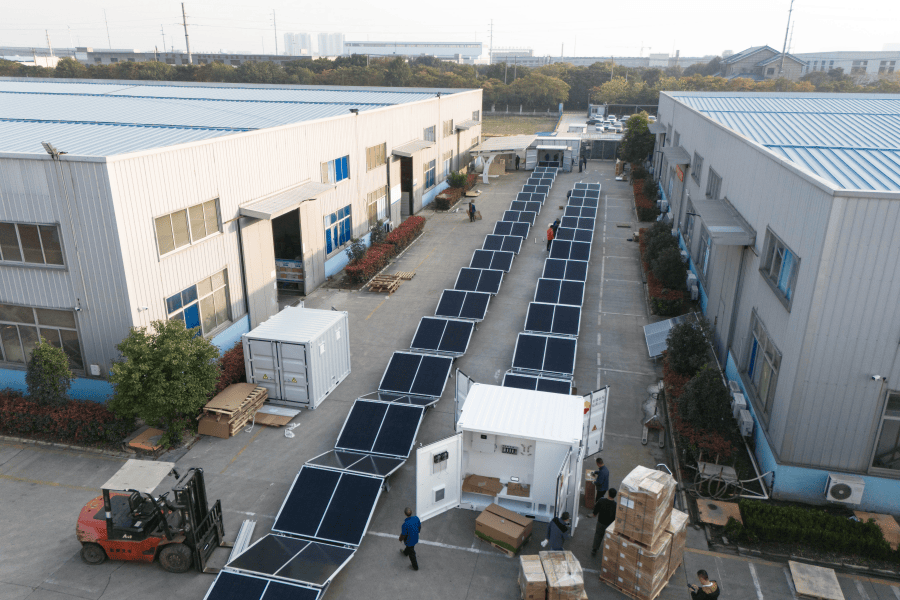
Enter the integrated mobile container. Imagine a 40-foot shipping container that arrives on a truck. Inside, it's not just battery racks. It's the entire ecosystem: battery modules, a built-in thermal management system, power conversion systems (PCS), fire suppression, and controls, all pre-wired, pre-tested, and certified at the factory. It's designed to be connected and operational in weeks, not years. Honestly, the first time I saw one of these deployed to bolster a weak feeder line during a peak summer event, I was impressed by the sheer reduction in on-site chaos.
The Benefits: Where These Units Truly Shine
The advantages are compelling, especially for specific use cases:
- Unmatched Deployment Speed: This is the biggest sell. You're moving from a construction project to a delivery and connection exercise. For utilities facing regulatory deadlines or urgent reliability needs, this can shave 12-18 months off the timeline.
- Inherent Mobility & Asset Flexibility: A substation upgrade might need support for 2-3 years. Once done, you can literally truck the unit to the next hotspot. This transforms a capital expenditure from a fixed, location-locked asset into a flexible grid tool, potentially improving its lifetime value.
- Reduced Site Complexity & Cost: Since most integration is done in a controlled factory environment, you need less specialized labor on-site. The foundation is simpler, and the risk of field integration errors - a major source of delays - plummets.
- Simplified Compliance Path: Reputable providers ship units that are pre-certified to key standards like UL 9540 and IEC 62933. This doesn't eliminate local permitting, but it gives AHJs (Authorities Having Jurisdiction) immense confidence, as they're reviewing a complete, tested system rather than a pile of components.

The Drawbacks & Critical Considerations You Can't Ignore
Now, here's the part we need to talk about frankly over our second coffee. These aren't magic boxes.
- The "Black Box" Dilemma & Vendor Lock-in: The deep integration that enables plug-and-play also means proprietary software and interdependencies. If the PCS from Manufacturer A has a fault, you often can't just swap in a unit from Manufacturer B. Your long-term operations and maintenance are tied to a single provider. At Highjoule, we tackle this by designing for serviceability with modular sub-systems and providing clients with transparent access to system data.
- Thermal Management in a Confined Space: This is a big one I've seen firsthand. Packing high-density batteries, transformers, and PCS into a steel box creates a serious thermal challenge. A poorly designed system will throttle output (reducing your effective C-rate) or age the batteries prematurely. You must scrutinize the cooling design - is it direct liquid cooling, forced air, and is it sized for the Arizona desert or the Scottish Highlands?
- Scalability Limitations: Need 500 MWh? A fleet of 50 containers creates a sprawling footprint and interconnection complexity that may negate the mobile advantage. For truly massive, GW-scale projects, a traditional, optimized plant design often wins on Levelized Cost of Storage (LCOS) in the long run.
- Total Lifetime Cost (LCOE/LCOS) Nuances: While upfront and deployment costs are lower, you must model the full 15-20 year lifecycle. Will the proprietary nature drive up O&M costs? Does the constrained design limit future battery chemistry swaps? The lowest capital cost doesn't always mean the lowest lifetime cost.
A Real-World Case: California's Peaking Capacity Crunch
Let's look west. A municipal utility in California was facing state mandates for local capacity and had a critical substation needing reinforcement, but the traditional upgrade was 3 years out. Their challenge: prevent potential rolling blackouts during the next two summer peaks.
The Solution & Outcome: They deployed two 2 MWh/1 MW all-in-one containers from a leading vendor (not us, but a competitor we respect). The units were on-site and grid-synchronized in under 90 days. They successfully shaved peak load and provided voltage support. The lesson? It was a perfect fit for a temporary, urgent, and well-defined need. However, in our post-deployment review with them, they noted the ongoing O&M costs were higher than their own stationary assets, and they were now evaluating if a permanent solution is more economical for Year 3 and beyond.
Making the Right Call for Your Grid
So, is an all-in-one mobile container right for you? Ask these questions:
- Is my need temporary or emergency-driven (e.g., grid repair, short-term capacity)? Strong candidate.
- Do I need a rapid, standardized solution across multiple, smaller distribution sites? Strong candidate.
- Am I building a 100+ MWh asset for 20-year base-load service? Probably not the optimal choice.
- Has the provider's design been validated by third-party testing (e.g., UL, DNV) for safety and performance under my specific grid codes? Non-negotiable.
The key is to see these containers for what they are: incredibly powerful tactical tools in your grid-modernization arsenal, not a one-size-fits-all strategic replacement for all storage needs. Their value lies in agility and speed.
At Highjoule, we've designed our MobileGrid Series with these exact lessons in mind. We don't hide the systems - we build them with serviceable modules, offer open-protocol communication options, and provide lifecycle cost modeling that separates the hype from the reality. Because honestly, your grid's reliability is too important for anything less. What's the most pressing grid constraint you're facing this quarter?
Tags: UL Standard BESS LCOE Utility-Scale Energy Storage Grid Stability All-in-One Container Mobile Power
Author
James Zhang
20+ years agricultural energy storage engineer / Highjoule CTO