
Off-Grid Solar Power for Telecom Towers: UL-Compliant BESS Solutions for Remote Sites
Contents
- The Silent Problem: Powering Remote Sites Ain't Simple
- The Real Cost of "Just Make It Work"
- It's Not Just a Box: What a True Off-Grid Solution Looks Like
- A Case in Point: From Diesel Reliance to Solar Silence in Rural Germany
- Beyond the Spec Sheet: The On-Site Realities of Thermal Runaway and C-Rate
- Your Next Move: Asking the Right Questions
The Silent Problem: Powering Remote Sites Ain't Simple
Let's be honest, when we talk about the energy transition, the spotlight's on flashy grid-scale projects. But honestly, some of the toughest, most critical power challenges are in places most people never see. I'm talking about remote telecom base stations. You know the ones C perched on a hilltop, tucked in a forest, or sitting in an arid plain, miles from the nearest reliable grid connection. For 20+ years, from the deserts of Arizona to the fjords of Norway, I've seen teams struggle with the same core problem: how do you deliver absolutely reliable, 24/7 power for critical communications infrastructure when the grid is weak, expensive, or simply non-existent?
The traditional answer has been diesel gensets. They're a known quantity, you just fuel them up. But I've been on-site at 2 AM when a generator fails in a storm, or spent days calculating the staggering logistics and security cost of getting fuel to a mountain site. According to the International Energy Agency, the telecom sector is a growing energy consumer, and off-grid sites are under immense pressure to cut costs and emissions. The "just throw a diesel at it" model is breaking down. The real need isn't just for power; it's for autonomous, resilient, and economically sensible power.
The Real Cost of "Just Make It Work"
So we agitate the problem a bit. What's the impact of sticking with the old way? First, it's operational expense (OPEX) that spirals out of control. Fuel is one thing, but add in the maintenance schedules, the parts inventory, the truck rolls for refueling and repairs C it adds up fast. I've seen OPEX for a single remote diesel site eclipse the capital cost of the generator itself in under two years.
Then there's the reliability gap. A base station going dark isn't just a "service outage." In many areas, it can cut off emergency communications. The financial penalties from network availability guarantees (SLAs) can be brutal. And let's not forget the environmental and community friction. Noise pollution, emissions, and the risk of fuel spills are becoming unacceptable, both to regulators and local communities. You're facing a triple squeeze: rising costs, rising reliability demands, and rising sustainability mandates. That's the headache keeping network operations managers up at night.
It's Not Just a Box: What a True Off-Grid Solution Looks Like
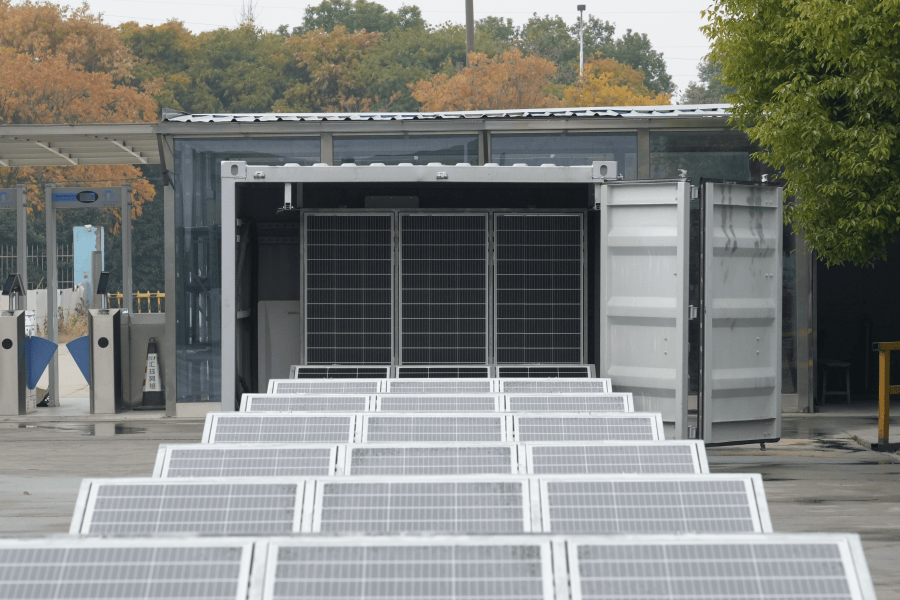
This is where a properly engineered Technical Specification of IP54 Outdoor Off-grid Solar Generator for Telecom Base Stations comes in C not as a generic product, but as a holistic solution. It's the answer to that triple squeeze. Let's break down what that spec really means on the ground.
First, IP54. This isn't just a nice-to-have. "Ingress Protection" means the unit can handle dust and water jets from any direction. I've seen enclosures that weren't rated properly fill with fine desert dust, killing electronics, or condense moisture internally in coastal areas, leading to shorts. IP54 is the baseline for true outdoor, 365-days-a-year durability.
Second, Off-grid Solar Generator. This implies an integrated system: solar PV input, a battery energy storage system (BESS), power conversion, and intelligent control all in one optimized package. The magic is in the intelligence C a system that seamlessly blends solar production, battery discharge, and a backup generator (if needed) to maximize solar harvest and minimize generator runtime. This is how you slash that OPEX.
And third, the unspoken hero: compliance. In the US and Europe, this means UL 9540 for the energy storage system, UL 1973 for the batteries, and IEC 62619 for international markets. These aren't just stickers. They are your insurance policy, born from thousands of hours of testing for safety, especially around fire and electrical hazards. At Highjoule, we've built our systems around these standards from day one. It's non-negotiable for us because we know what's at stake on a remote site. Our design philosophy prioritizes safety and longevity, which directly translates to a lower Levelized Cost of Energy (LCOE) over the system's 15+ year life C a key metric for any CFO.
A Case in Point: From Diesel Reliance to Solar Silence in Rural Germany
Let me give you a real example. We worked with a regional operator in Northern Germany, in Lower Saxony. They had a base station serving a small village and a stretch of autobahn. The grid connection was unstable and upgrading it was quoted at over ?150,000. They were running a diesel genset almost 24/7.
The challenge? Provide 99.99% uptime, eliminate daily refueling costs, and meet strict German environmental codes. The solution was a containerized, IP54 off-grid solar generator. We sized a solar array on the container's roof and adjacent ground mount, paired with a 120 kWh lithium-ion BESS, and integrated a small diesel genset as a backup for long periods of low solar irradiance in winter.
The outcome? The diesel now runs less than 200 hours a year, down from over 8,000. Fuel deliveries are down to a handful annually. The system is UL and IEC compliant, which smoothed the local permitting process. And the operator now has a predictable, fixed cost for power at that site. The ROI was clear in under 4 years, not even factoring in avoided grid upgrade costs.

Beyond the Spec Sheet: The On-Site Realities of Thermal Runaway and C-Rate
Now, any supplier can list a battery capacity in kWh. But as an engineer who's stood next to these systems in 115F (46C) heat, I look at two critical things: thermal management and C-rate.
Thermal management is everything. Batteries degrade fast if they're too hot or too cold. A passive cooling system might look cheaper on paper, but in a sealed IP54 enclosure under the Arizona sun, it's a recipe for premature failure. We insist on active, liquid-cooled thermal systems for our telecom units. It maintains optimal cell temperature, extends lifespan by years, and most importantly, drastically mitigates the risk of thermal runaway C a chain reaction failure that's every engineer's nightmare. A good spec will detail the thermal management approach; don't settle for vague promises.
Then there's C-rate. Simply put, it's the rate at which you charge or discharge the battery relative to its total capacity. A 1C rate means discharging the full battery in one hour. For telecom, loads are relatively steady, but you need high discharge capability for starting backup generators or handling short load spikes. Oversizing a cheap battery with a low C-rate (like 0.5C) to meet your daily energy needs might seem okay, but it can stumble when you need a burst of power. We design with cells and system architecture that provide the right C-rate for the application without over-engineering, keeping the solution cost-effective and robust.
Your Next Move: Asking the Right Questions
So, if you're evaluating an off-grid power solution for your remote sites, move beyond the basic kW and kWh. Start asking your potential suppliers questions rooted in real-world operation:
- "Can you show me the UL 9540 certification for the complete system assembly?"
- "How does your thermal management system maintain cell temperature between -20C and +50C ambient?"
- "What is the designed C-rate for discharge, and how does the system manage peak load events?"
- "Based on my site's solar profile and load, what's the projected annual generator run-hours and LCOE over 15 years?"
The goal is a partnership, not just a purchase. You need a provider with the deployment experience to get it right the first time and the service network to support it for the long haul. That's what we've built at Highjoule C a blend of engineered product and on-the-ground know-how. What's the one remote site on your map that's causing the most pain right now?
Tags: UL Standard BESS LCOE Europe US Market Renewable Energy Off-grid Solar Telecom Power
Author
James Zhang
20+ years agricultural energy storage engineer / Highjoule CTO