
Benefits and Drawbacks of All-in-one Integrated Pre-integrated PV Container for Industrial Parks
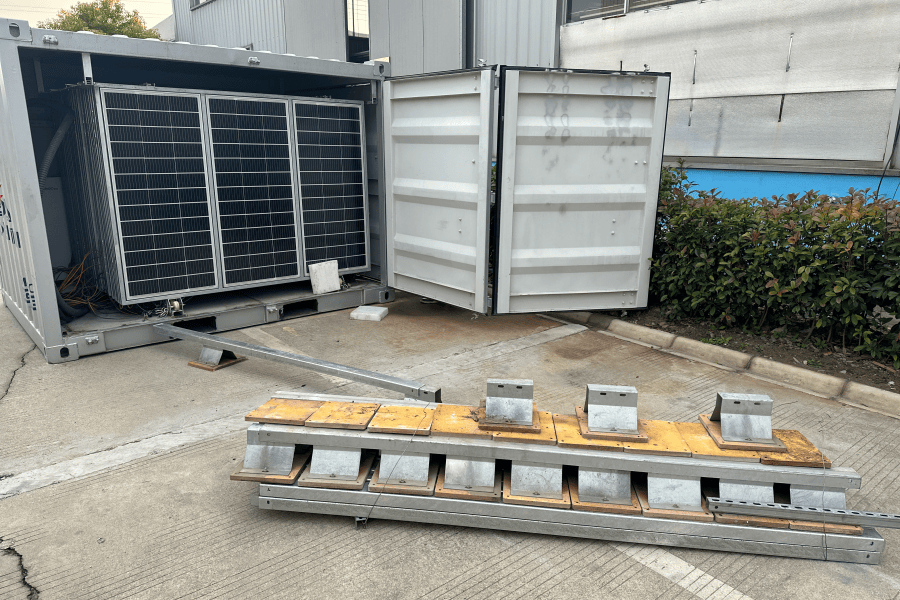
All-in-One PV & Storage Containers: The Good, The Bad, and The Real-World Reality
Hey there. If you're managing an industrial park or a large commercial facility in the US or Europe and looking at solar-plus-storage, you've probably heard the buzz about these all-in-one, pre-integrated containers. They're being pitched as the ultimate "plug-and-play" solution. Having spent the last two decades on sites from California to North Rhine-Westphalia, I've seen the hype and the reality. Let's grab a virtual coffee and talk honestly about what these systems can and cannot do for your bottom line.
Quick Navigation
- The Problem: Why On-Site Builds Are a Headache
- The Solution: What "Pre-Integrated" Really Means
- The Clear Benefits (It's Not Just Speed)
- The Drawbacks You Need to Plan For
- Expert Insight: Making the Numbers Work
The Problem: Why On-Site Builds Are a Headache
Let's start with the pain. Traditionally, deploying a Battery Energy Storage System (BESS) coupled with solar for an industrial site was a major construction project. We're talking about separate deliveries for battery racks, power conversion systems (PCS), climate control, fire suppression, and medium-voltage gear. On-site, it's a symphony of different trades - electrical, civil, structural - and honestly, the conductor's job is a nightmare. I've seen projects in Texas where a two-week delay in the HVAC install held up the entire commissioning, burning through the contingency budget. The National Renewable Energy Lab (NREL) has noted that balance-of-system (BOS) and soft costs can make up 30-50% of a BESS project's total cost. That's a huge variable when you're trying to lock in your project's financials.
The Solution: What "Pre-Integrated" Really Means
This is where the all-in-one, pre-integrated container comes in. Think of it like buying a fully equipped, climate-controlled data center on a skid, instead of building one brick-by-brick. A reputable provider like us at Highjoule assembles the entire system - batteries, PCS, thermal management, fire safety, controls - in a controlled factory environment. It's tested as a complete unit against standards like UL 9540 and IEC 62933 before it ever leaves the dock. When it arrives at your industrial park, it's more about placement, connection, and commissioning than assembly.

The Clear Benefits (It's Not Just Speed)
Okay, so why are people so interested? The benefits are tangible, especially for time-sensitive industrial applications.
- Dramatically Faster Deployment: This is the big one. Site work can be cut from months to weeks. A project we completed in Bavaria last year saw the container energized in under 8 weeks from site acceptance, compared to a projected 5-month timeline for a traditional build. That's months of energy cost savings and grid service revenue realized earlier.
- Predictable Cost and Quality: Factory integration locks in a huge portion of your cost. There are fewer surprises. The quality control is consistent because the work isn't subject to rainy days or subcontractor shortages on your site.
- Inherently Safer Design & Compliance: This is critical. In the factory, we can implement a unified safety philosophy. The thermal management system is precisely matched to the battery chemistry and C-rate (basically, how fast you charge/discharge the battery). The fire suppression is integrated into the design from day one, not retrofitted. For our US clients, having that UL 9540 certification on the entire assembled unit simplifies the often-daunting AHJ (Authority Having Jurisdiction) approval process immensely.
- Simplified Logistics and Footprint: One major delivery, one foundation to prepare. For an industrial park with space constraints, a single, optimized 40-foot container is often much easier to site than a sprawling equipment layout.
The Drawbacks You Need to Plan For
Now, let's be real. No solution is perfect. Here are the challenges I've seen firsthand that you must factor into your decision.
- Upfront Cost Premium: The engineering, integration, and testing done upfront mean the capital cost per kWh can be higher than sourcing components separately. You're paying for convenience and risk reduction.
- Scalability and Flexibility Constraints: Need to add 500 kWh next year? It's not as simple as just adding a few more racks. You're often looking at another full container. The system's design is fixed at the factory, so major component swaps or technology upgrades mid-lifecycle can be complex.
- Transport and Siting Challenges: That's a heavy, sensitive piece of equipment on the road. You need a clear route to the site and a strong, level foundation ready. I've been on a site in California where we had to re-route the entire delivery because of an unexpected bridge weight limit.
- Potential for Single Point of Failure: If the integrated cooling system fails, it can take the entire container offline, whereas in a distributed design, one chiller might fail without affecting all your battery strings. This is why at Highjoule, we design with N+1 redundancy for critical cooling fans and pumps, even within the container.
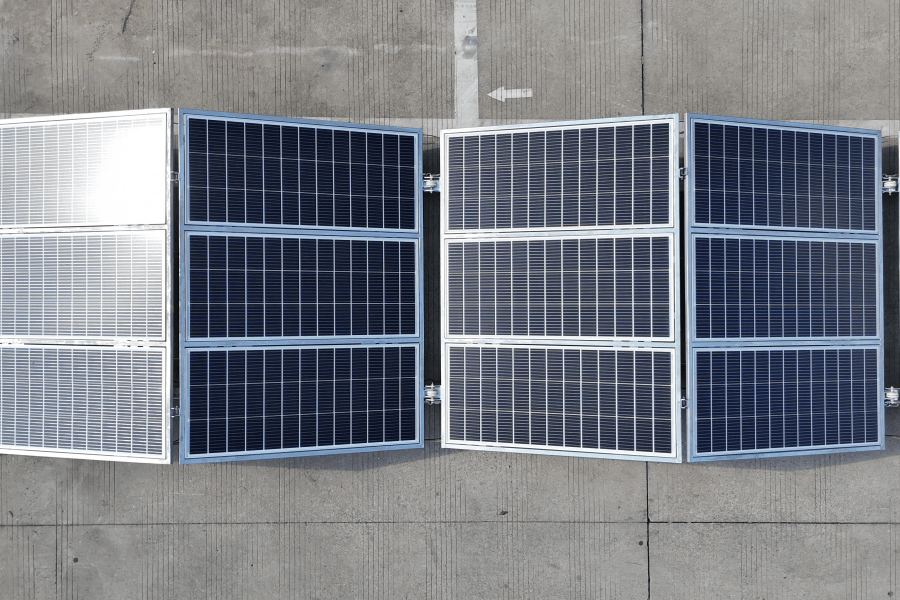
Expert Insight: Making the Numbers Work
So, how do you decide? It boils down to your project's economics and goals. The key metric here is Levelized Cost of Storage (LCOS) - the total cost of owning and operating the system over its life, divided by the total energy it will dispatch.
While the pre-integrated container might have a higher upfront capital cost, it often wins on LCOS for commercial/industrial applications. How? Speed-to-revenue: You start your demand charge management or grid services contracts months earlier. Lower operational risk: A robust, factory-tested thermal management system prevents premature degradation. Batteries are like people - they perform best and last longest in a stable, comfortable environment. Poor temperature management can slash cycle life. Reduced operational overhead: You have one warranty, one service contract, and one point of contact for the entire system, not a dozen.
The sweet spot? Projects with a clear, fixed capacity need, aggressive timelines, high local labor costs, and a premium on reliability and safety compliance. For a large industrial park looking to cap its peak demand and provide backup power, the math often leans heavily towards the pre-integrated approach. It turns a complex engineering project into more of a predictable procurement exercise.
What's your biggest hurdle right now - is it navigating local utility interconnection standards, or getting a firm handle on the total lifecycle cost? We find those are the two make-or-break points, regardless of the technology path you choose.
Tags: UL Standard BESS LCOE Europe US Market PV Container Industrial Energy Storage Renewable Energy
Author
James Zhang
20+ years agricultural energy storage engineer / Highjoule CTO