
Step-by-step Installation of Rapid Deployment Pre-integrated PV Container for EV Charging Stations
From Blueprint to Power: A Real-World Guide to Deploying Your EV Charging Power Hub
Honestly, if I had a nickel for every time a commercial or municipal client told me their EV fast-charging project was stalled by "interconnection delays" or "unexpected site work," well, let's just say I wouldn't be writing this blog. I've seen this firsthand on site, from California to North Rhine-Westphalia. The ambition for a robust EV network is there, but the traditional path - custom engineering, piecemeal procurement, and on-site assembly of solar, storage, and power electronics - is a notorious time and budget killer. Today, I want to walk you through a different approach, one that's turning heads from project managers to CFOs: the rapid deployment of a pre-integrated PV and battery container. Think of it less as a construction project and more as delivering a fully charged, plug-and-play power plant.
Table of Contents
- The Real Problem: It's More Than Just Plugging In Chargers
- Why This Hurts Your Bottom Line & Timeline
- The Solution, Unpacked: What's Inside the Box?
- The On-Site Playbook: A Step-by-Step Guide
- Case in Point: A Municipal Fleet Depot in Bavaria
- Expert Insight: The Tech That Makes It Work
The Real Problem: It's More Than Just Plugging In Chargers
Phenomenon: The drive for electrification is colliding with aging grid infrastructure. Utilities are overwhelmed with interconnection studies, and the cost to upgrade a local substation for a 350kW charging hub can be prohibitive. According to the National Renewable Energy Laboratory (NREL), grid upgrade costs can constitute up to 80% of the total infrastructure cost for public fast-charging stations. That's before you even factor in the demand charges that can cripple operational economics.
So, the savvy move is to generate and store your own power on-site with solar plus storage. But here's the rub: designing a system from scratch, ensuring all the components - battery racks, inverters, HVAC, fire suppression, PV combiners - talk to each other and meet local codes (UL 9540, IEC 62933, IEEE 1547) is a multi-vendor, multi-contractor nightmare. A single certification hiccup can set you back months.
Why This Hurts Your Bottom Line & Timeline
Let me agitate that pain point a bit. Time is capital. Every week of delay is lost revenue from those chargers sitting idle. More critically, on-site construction is fraught with risk: weather delays, tradespeople scheduling conflicts, and the ever-present chance of a field wiring error that leads to a thermal runaway event. I've been called to sites where a poorly integrated battery management system led to uneven cell aging within months. The International Energy Agency (IEA) stresses the need for standardized, replicable solutions to scale up EV infrastructure cost-effectively. The old way is the opposite of that.
The Solution, Unpacked: What's Inside the Box?
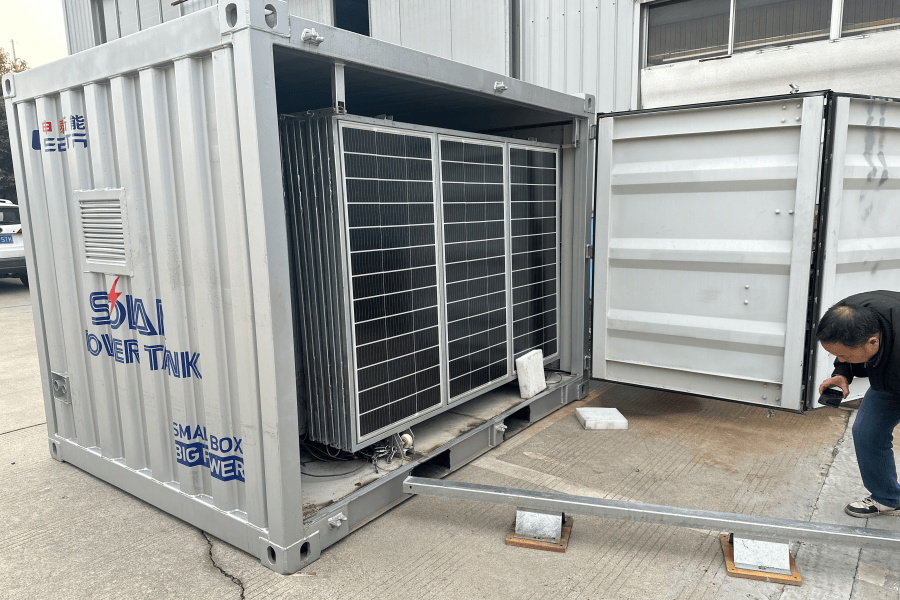
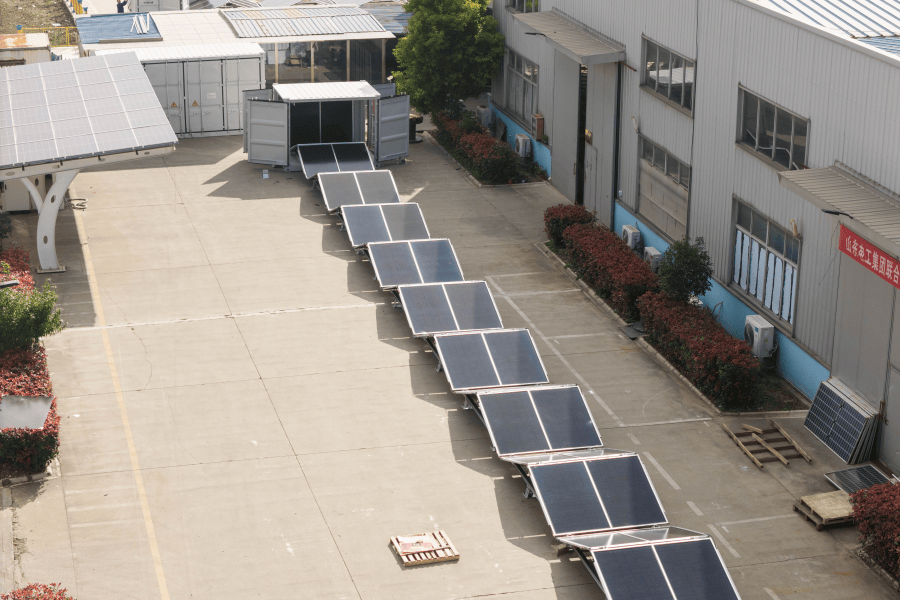
This is where the pre-integrated, rapid-deployment container changes the game. At Highjoule, we don't ship you a pile of components. We ship a solution. Imagine a standard ISO container that arrives on a flatbed truck. Inside, the battery3 (BESS) with its UL 9540-certified enclosure, PCS (power conversion system), MV/LV transformers, climate control, and fire safety systems are all factory-integrated, wired, and tested. The PV array is pre-engineered as a canopy or ground-mount kit that mates directly with the container. The core value? We've done 95% of the engineering, compliance, and integration work before it leaves our facility. Your site work becomes foundation, connection, and commissioning.

The On-Site Playbook: A Step-by-Step Guide
So, what does this streamlined process actually look like? Here's the honest, boots-on-the-ground sequence.
Phase 1: Pre-Site (The Paperwork & Pad)
This is where you save immense time. Because the system is pre-certified, your engineering firm can submit known, approved specs to the AHJ (Authority Having Jurisdiction). Simultaneously, site prep is gloriously simple: a level concrete pad with standard utility trenches for grid connection and data conduits. No custom pits or complex structural engineering.
Phase 2: Delivery & Placement (The "Big Lift")
Day 1: The container arrives. Using a standard crane, it's placed on the pre-positioned pad mounts. The PV canopy supports might be installed alongside. This is often a one-day operation.
Phase 3: Connection & Commissioning (The "Plug and Play")
Over the next few days, certified electricians make the final AC and DC connections. This is where our factory integration pays off - the connection points are clearly labeled and designed for field simplicity. Then, our remote commissioning team, working with your local electrician, powers up the system. We run through a pre-defined protocol, verifying communication between all modules and performing initial grid synchronization tests. From pad-ready to producing power, we've seen this phase completed in under 10 working days for a 500kW/1MWh system.
Case in Point: A Municipal Fleet Depot in Bavaria
Let's get concrete. A city in Bavaria needed to electrify its bus and service vehicle depot. The local grid connection was limited to 200kW, but their peak charging demand was projected at 750kW. A traditional grid upgrade quote came in at over ?500,000 with a 14-month lead time.
Challenge: Deliver resilient, high-power charging without the grid upgrade cost and delay.
Solution: A Highjoule pre-integrated container with 250kW of solar canopy and a 600kW/1.2MWh BESS.
Deployment: The site was a working depot, so disruption had to be minimal. The pad was poured in a corner of the parking lot over a week. The container and canopy were installed over a weekend. Final connections and commissioning were done during off-peak hours over the following week. The system now shaves the peak load, charges buses with solar during the day, and uses stored energy for overnight charging, all while keeping the grid draw under the 200kW limit. The project was operational in 11 weeks from order placement.
Expert Insight: The Tech That Makes It Work
You might wonder, "What's the magic inside?" It's not magic; it's deliberate design. Let's demystify two terms.
Thermal Management: This is the unsung hero. Batteries degrade fast if they get too hot or too cold. In our containers, we use a liquid cooling system that maintains an even temperature across every cell module. This isn't just about safety; it dramatically extends the battery's life, directly improving your Levelized Cost of Energy (LCOE) - the total lifetime cost per kWh stored and discharged. A stable battery is a profitable battery.
C-rate: Simply put, it's how fast you can charge or discharge the battery relative to its total capacity. A 1MWh battery with a 1C rate can deliver 1MW of power for one hour. For EV charging, you need a high C-rate to support those sudden, high-power demands. Our systems are engineered with this in mind, using battery chemistry and power electronics that can handle those bursts without breaking a sweat - or degrading prematurely. It's about having the power on tap when a fleet of trucks plugs in at 3 PM.
The goal at Highjoule is to embed this expertise into the product so you don't have to be the battery expert. You get a predictable, compliant energy asset. The question for your next EV charging project isn't just about the chargers you'll buy, but about where the power will come from - and how quickly, safely, and affordably you can make it appear. What's the single biggest timeline risk you're facing on your current plan?
Tags: UL Standard BESS Rapid Deployment Europe US Market EV Charging Infrastructure Solar Plus Storage
Author
James Zhang
20+ years agricultural energy storage engineer / Highjoule CTO