
Environmental Impact of 20ft High Cube 1MWh Solar Storage for Construction Site Power
Contents
- The Diesel Habit We Can't Seem to Kick
- Beyond the Carbon Footprint: The Hidden Environmental Toll
- A Mobile Power Plant in a Box: The 20ft High Cube Solution
- Real Numbers from a Real Site
- Making It Work: The Tech That Makes the Difference
- What Could Your Next Site Look Like?
The Diesel Habit We Can't Seem to Kick
Let's be honest. If you've been on a construction site in the last 20 years, you know the soundtrack: the constant, low-frequency rumble of diesel generators. It's the background noise of progress. We rely on them for everything C powering tools, site offices, lighting, security systems. They're reliable, they're familiar, and honestly, they're a massive environmental headache we've just learned to live with.
The problem isn't just the CO2. I've seen this firsthand on site. It's the local air quality C the particulate matter (PM2.5) and nitrogen oxides (NOx) that hang in the air right where people are working for 10-hour shifts. It's the 80-90 decibels of noise pollution that not only affect worker communication and safety but also strain relations with neighboring communities. And let's not forget the constant refueling logistics, the spill risks, and the sheer thermal inefficiency. You're burning expensive fuel to make electricity, and a huge portion of that energy just gets wasted as heat.
Beyond the Carbon Footprint: The Hidden Environmental Toll
When we talk about the environmental impact of 20ft high cube 1MWh solar storage for construction site power, we have to start by understanding what it's replacing. A typical mid-sized diesel gen-set on a construction site might burn 15-20 liters of diesel per hour. Over a year, that's significant. The International Energy Agency (IEA) consistently highlights off-grid diesel consumption as a major, yet often overlooked, source of emissions in the industrial sector.
But the impact is more localized than global climate figures suggest. We're talking about:
- Air Quality On-Site: Direct emissions at ground level, affecting worker health.
- Noise Pollution: Contributing to a stressful work environment and potential regulatory fines in noise-sensitive zones.
- Soil & Water Risk: Fuel storage and handling always carry a spill risk.
- Carbon Liability: As carbon reporting becomes stricter, every liter of diesel burned is a direct cost on your project's environmental ledger.
This is where the conversation shifts from just "being green" to operational intelligence and social responsibility.
A Mobile Power Plant in a Box: The 20ft High Cube Solution
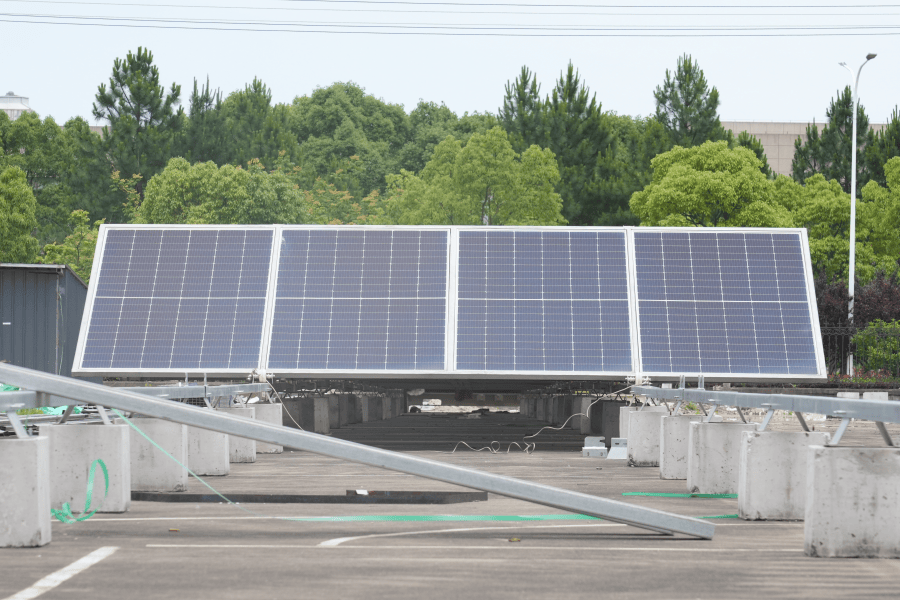
So, what's the alternative? Imagine rolling onto your site on day one with a standard 20-foot shipping container. But inside isn't cargo; it's a self-contained, silent power station. This is the premise of the modern 1MWh Battery Energy Storage System (BESS) paired with a scalable solar canopy.
The environmental impact calculus changes completely. The system operates on a simple cycle:
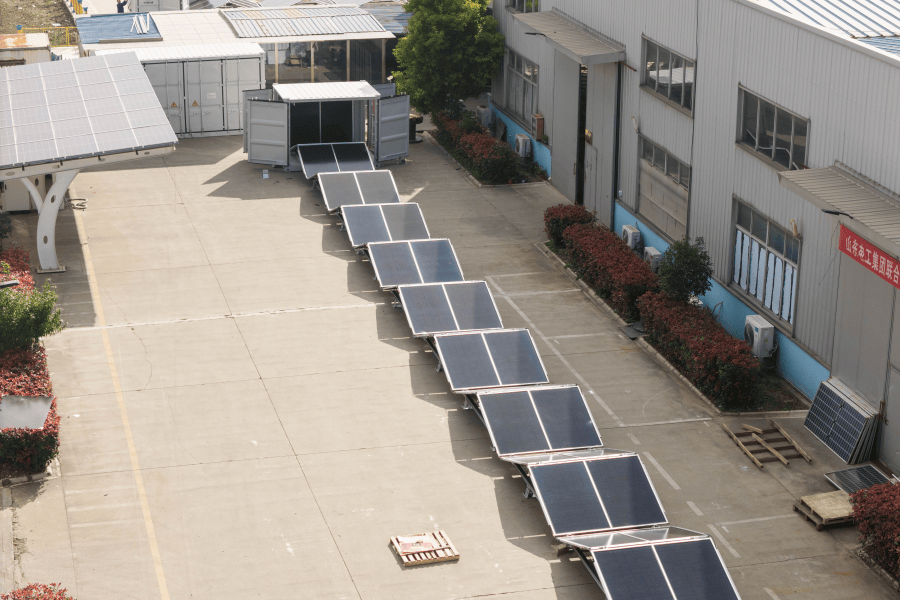
- Charge: During the day, integrated solar panels (deployed on the container's roof or as a nearby array) generate clean electricity, silently charging the battery.
- Store & Manage: The 1MWh battery bank (that's 1000 kilowatt-hours C enough to power the average American home for over a month) stores that energy. Advanced energy management software decides the optimal time to charge from the grid (if available) or discharge.
- Discharge: The system powers the site loads C silently, with zero local emissions.
The diesel generator? It becomes a backup, not the primary source. Maybe it only kicks in for a few hours a week during peak demand or unusually long cloudy periods. Its runtime C and its environmental footprint C plummets by 70-90%.

Real Numbers from a Real Site
Let me give you a concrete example from a project we supported in Southern California. A large infrastructure developer was building a new community, and local regulations had strict noise and emission limits for the 18-month construction phase. Running diesels 24/7 wasn't an option.
The solution? Two of our Highjoule 20ft High Cube 1MWh systems, configured with a quick-deploy solar canopy. The results after the first year were audited:
- Diesel Displacement: 85,000 liters of diesel not burned.
- CO2 Avoided: ~225 metric tons of CO2-equivalent emissions.
- Noise: Site boundary noise levels dropped from ~85 dB(A) to below 60 dB(A) during normal operation.
- Operational Bonus: They eliminated daily fuel deliveries and refueling labor. The power was just?- there.
This wasn't just a PR win. It was a hard-nosed operational decision that met regulatory demands, improved community relations, and had a predictable power cost. The Levelized Cost of Energy (LCOE) C the total lifetime cost divided by energy produced C became highly competitive once you factored in volatile diesel prices and the "cost" of non-compliance.
Making It Work: The Tech That Makes the Difference
Now, not all containerized storage is equal. Anyone can put batteries in a box. Making it reliable, safe, and efficient for the harsh environment of a construction site is where the engineering matters. Here's what we've learned from two decades in the field:
- Thermal Management is Everything: Batteries don't like extreme heat or cold. A passive ventilation system won't cut it. We use a closed-loop, liquid-cooled system that keeps the battery cells within a 2C window of their ideal temperature. This extends lifespan (crucial for the economics) and maintains safety, something standards like UL 9540 for energy storage systems take very seriously.
- The Right C-rate for the Job: "C-rate" is basically how fast you charge or discharge the battery. A high C-rate battery can deliver a lot of power quickly (like for a big crane), but it might stress the system. For construction sites, you need a balanced design C enough power (in kW) for your peak loads, and enough energy capacity (in kWh, the 1MWh) to last through shifts. It's about matching the technology to the real load profile, not just selling the biggest number.
- Built for the Real World: These units need to withstand dust, vibration, and variable weather. Conformal coating on critical PCBs, ingress protection (IP) ratings on enclosures, and compliance with IEC 62933 standards for stationary storage aren't just checkboxes. They're what let you sleep at night knowing your site power won't fail because of a bit of dust or a morning dew.
At Highjoule, this is where our focus has always been. It's not just about the battery chemistry; it's about the system integration, the safety interlocks, the UL-certified components, and designing for a 15-year lifespan, not just the 2-year construction project. That's how you genuinely improve the long-term environmental impact C by creating an asset that can be redeployed project after project.
What Could Your Next Site Look Like?
So, let's picture your next ground-breaking. Instead of the diesel symphony, the first thing you hear is?- well, construction. The power is on, silently, from day one. Your site managers aren't worrying about fuel deliveries or filter changes. Your sustainability report shows a dramatic drop in Scope 1 emissions. And the community around your site isn't filing noise complaints.
The shift to solutions like the 20ft high cube 1MWh solar storage for construction site power is more than a technical swap. It's a rethink of how we power temporary industry. The environmental benefit is clear and immediate C cleaner air, quieter sites, and a massive cut in fossil fuel use. But honestly, the business and operational benefits are what really drive the change.
Is your next project in an area with tightening emissions or noise rules? Have you run the numbers on your annual diesel spend and its volatility? Maybe it's time we talked about what a quiet, clean, and predictable power source could mean for your bottom line and your legacy.
Tags: Construction Site Power UL Standard BESS LCOE Renewable Energy Solar Storage Environmental Impact
Author
James Zhang
20+ years agricultural energy storage engineer / Highjoule CTO