
All-in-One PV Container Pros & Cons for Mining in Mauritania
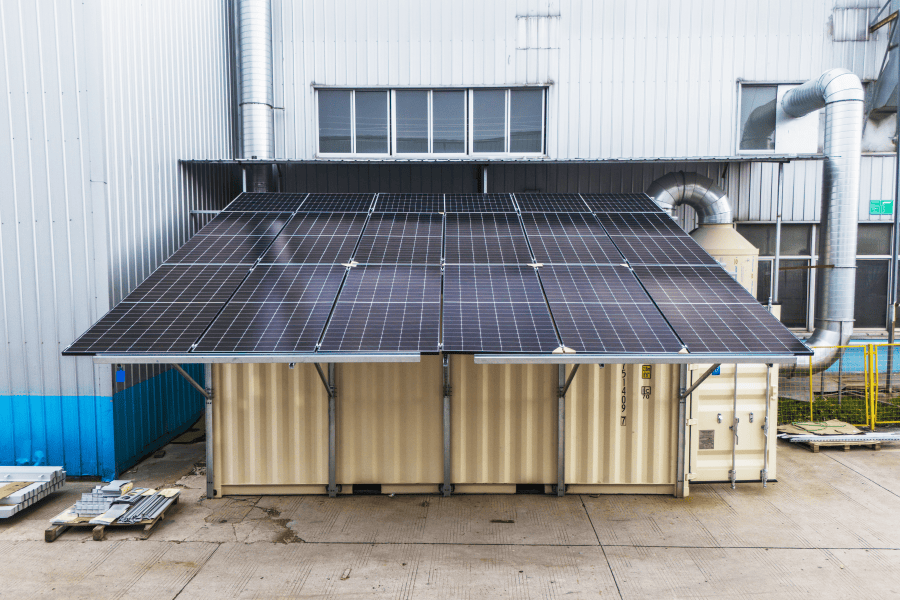
Table of Contents
- The Remote Power Problem: It's More Than Just Fuel
- Why "All-in-One" Isn't Always a One-Size-Fits-All
- A Closer Look: The Mauritania Mining Scenario
- The Tech Inside the Box: C-Rate, Thermal Runaway, and Real-World LCOE
- Making the Right Call for Your Operation
The Remote Power Problem: It's More Than Just Fuel
Let's be honest. When you're managing a mining operation in a place like Mauritania, or really any remote site, your power headaches are legendary. I've been on those sites. The constant drone of diesel gensets isn't just background noise - it's a symphony of operational cost, logistical nightmares, and carbon emissions you're increasingly being asked to account for. The fuel bills are eye-watering, the supply lines are vulnerable, and let's not forget the maintenance crews you need on standby just to keep the lights on. The problem isn't a lack of sun or wind; it's how to capture that energy in a way that's actually reliable, safe, and doesn't require you to build a mini power plant from scratch.
Why "All-in-One" Isn't Always a One-Size-Fits-All
This is where the promise of the all-in-one, pre-integrated PV and battery container shines. For my clients in the US and Europe, the appeal is instant: faster deployment, simplified logistics, and a vendor-managed, plug-and-play system. According to a recent NREL report on streamlining BESS deployment, reducing on-site construction and integration work can slash project timelines by up to 40%. That's huge. But here's the agitation part - where I've seen projects stumble. That "simplicity" can become a rigidity. What if your site needs a specific C-rate for high-power drilling equipment that the standard container doesn't offer? What if the thermal management system, designed for a German climate, struggles in the 50C Mauritanian heat? A pre-packaged solution is fantastic until it doesn't quite fit your unique site conditions or future expansion plans.
The Double-Edged Sword of Integration
- Benefit (Speed & Cost Certainty): Factory testing means most bugs are worked out before shipment. You get a known capex and a compressed schedule. For a mine looking to quickly offset diesel use and meet sustainability targets, this is a game-changer.
- Drawback (Limited Flexibility & Serviceability): Honestly, I've seen this firsthand on site. If a proprietary inverter inside a sealed container fails, you might be waiting weeks for a specialized technician, while your entire system is down. With a more modular, component-based approach, you can swap out parts from multiple vendors.

A Closer Look: The Mauritania Mining Scenario
Take a hypothetical but very real scenario based on our work: a mid-sized iron ore mine in Mauritania's arid region. The goal was to integrate solar to power the camp and some auxiliary processing loads, reducing a 2MW diesel dependency.
The All-in-One Container Approach: We evaluated a turnkey 1.5MW PV + 3MWh BESS container solution. The benefits were clear for this phase: rapid deployment (operational in under 12 weeks), a single warranty point, and built-in compliance with IEC 62485 and UL 9540 standards, which was non-negotiable for the European parent company's risk managers.
The Challenges We Anticipated (The Drawbacks): The harsh, sandy environment meant we had to scrutinize the container's IP rating and cooling system filtration - not all standard units are built for Saharan dust. Furthermore, the mine's plan to electrify their haul truck fleet in 5 years meant the storage system's power output (C-rate) might become a bottleneck. An all-in-one unit is tough to "upsize" cost-effectively.
The Tech Inside the Box: C-Rate, Thermal Runaway, and Real-World LCOE
Let's break down a few key specs in plain English, because this is where your operational success lives or dies.
- C-Rate: Think of this as the "sprint vs. marathon" capability of your battery. A 1C rate means a 3MWh battery can deliver 3MW of power for 1 hour. Mining equipment often needs big, quick bursts of power (like starting a large crusher). If your container has a 0.5C system, it can only deliver 1.5MW from that 3MWh pack - it's built for endurance, not power. You must match this to your load profile.
- Thermal Management: This is the unsung hero. In Mauritania's heat, a poorly managed battery degrades fast and, in worst cases, can pose a safety risk. A top-tier all-in-one unit will have a liquid cooling system and sophisticated battery management software (BMS) that monitors each cell. At Highjoule, for instance, our containers use a closed-loop liquid cooling that's independent of the dusty outside air, a critical feature for mining apps.
- LCOE (Levelized Cost of Energy): This is your true cost per kWh over the system's life. The IEA notes that solar-plus-storage LCOE is now competitive with diesel in most sun-rich regions. The all-in-one container boosts this by lowering installation soft costs. But the drawback? If the system isn't perfectly sized or requires expensive, proprietary maintenance, your long-term LCOE creeps up. The lowest upfront cost doesn't always mean the lowest 20-year cost.

Making the Right Call for Your Operation
So, is an all-in-one PV container the right move for a mining operation in a challenging environment like Mauritania? It can be a brilliant solution, but it's not an automatic yes. The benefits of speed, compliance, and simplicity are massive. The drawbacks around flexibility, site adaptability, and long-term service need your full attention.
The key is to work with a provider who doesn't just sell you a box, but understands the gritty reality of your site. Someone who asks about your dust levels, your future load growth, and your maintenance team's capabilities. At Highjoule, our engineering starts with those questions. We might still recommend a pre-integrated container - but it'll be one where we've spec'd the cooling, the C-rate, and the communication protocols specifically for a mining grid, and backed it with a service plan that doesn't leave you stranded. What's the one site condition you think is most often overlooked in these pre-packaged energy solutions?
Tags: UL Standard BESS LCOE Europe US Market Solar Container Renewable Energy Mining Energy
Author
James Zhang
20+ years agricultural energy storage engineer / Highjoule CTO