
Black Start Capable 5MWh BESS for EV Charging: Benefits, Drawbacks & Real-World Insights
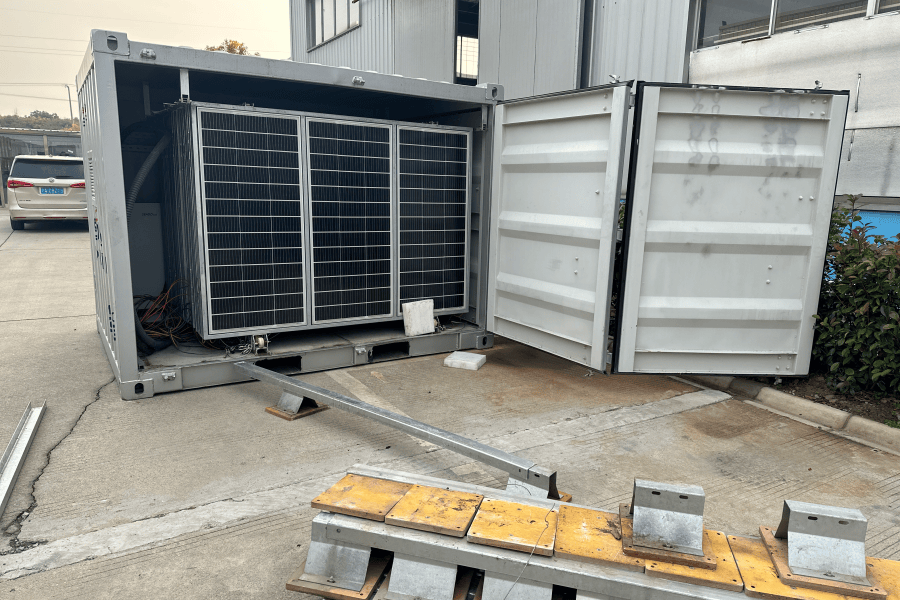
The Nuts and Bolts of a Black Start Capable 5MWh BESS for Your EV Charging Hub
Let's be honest. If you're planning a large-scale EV charging station, especially one with multiple DC fast chargers, you've already run the numbers on grid connection costs and power availability. It's a headache. I've been on site in places like California and Bavaria where the grid upgrade quote alone can stall a project for years. That's where the conversation turns to a utility-scale Battery Energy Storage System (BESS) C specifically, one with "black start" capability. A 5MWh system is a sweet spot for many of these sites. But is adding black start functionality a game-changer or an unnecessary complication? Let's talk through the real benefits and drawbacks, like we're looking at a site plan over a coffee.
Quick Navigation
- The Core Problem: More Than Just Backup Power
- What Black Start Really Means for an EV Site
- The Tangible Benefits: Why It's Tempting
- The Real-World Drawbacks & Costs
- A Real Case from the Field
- Making the Call: Is It Right for Your Project?
The Core Problem: More Than Just Backup Power
The problem isn't just about having backup power. It's about resiliency and revenue continuity. A traditional BESS can shift cheap energy to peak hours, sure. But during a widespread grid outage C which, according to data from the U.S. Energy Information Administration (EIA), are increasing in frequency and duration C a standard grid-following BESS shuts down. Your EV charging plaza, a potential lifeline and revenue generator, goes dark. Black start capability changes that equation. It allows the BESS to act as a mini, independent grid, starting itself and critical loads without any external power source. For a remote charging station or one in an area with unreliable infrastructure, this isn't a luxury; it's a core business requirement.
What Black Start Really Means for an EV Site
In simple terms, think of a black start BESS like the starter motor in your car. When the grid "engine" stops, this system has the built-in intelligence and power to restart itself and then sequentially "crank" other essential systems C like your charging station's control systems, payment kiosks, and eventually, the chargers themselves. It's a complex dance of power electronics, controls, and safety systems. The key component is an inverter that can switch from grid-following mode to grid-forming mode, essentially creating a stable voltage and frequency waveform from scratch. This is where adherence to standards like IEEE 1547 and UL 9540 isn't just paperwork; it's the blueprint for safe, interoperable operation.
The Tangible Benefits: Why It's Tempting
So, what do you gain with a 5MWh black start system?
- Uninterrupted Revenue & Critical Service: Your charging station remains operational during grid outages. For fleet depots (think electric buses or delivery vans) or stations along major highways, this is a massive competitive advantage and community service.
- Reduced Grid Dependency & Upgrade Costs: You can often avoid or defer expensive grid connection upgrades. The BESS handles peak demand surges from multiple simultaneous fast charges, a concept tied to its C-rate (basically, how fast it can discharge). A 5MWh system with a 1C rating can deliver 5MW instantly C that's serious power for chargers.
- Enhanced Project Value & Funding: In many regions, resilience is incentivized. A black start capable system can make your project eligible for grants, better financing terms, and command premium pricing or contracts from fleet operators who cannot afford downtime.
- Future-Proofing for V2G: As Vehicle-to-Grid (V2G) technology matures, your black start BESS could be the anchor for a local microgrid, coordinating power between parked EVs, onsite solar, and the local network.

The Real-World Drawbacks & Costs
Now, the other side of the coin. I've seen projects where the black start requirement was added as an afterthought, leading to budget and timeline overruns.
- Higher Capital Expenditure (CapEx): The power conversion system (PCS) for black start is more sophisticated and expensive. You're looking at a 15-25% premium on the power electronics side compared to a standard grid-following system.
- Increased System Complexity: This isn't a "plug and play" upgrade. It requires meticulous system design, specialized commissioning, and comprehensive operator training. The control logic for sequencing loads during a black start is critical and site-specific.
- Operational & Maintenance (O&M) Considerations: The system needs regular functional testing to ensure it will work when needed. This consumes energy and adds to long-term Levelized Cost of Energy (LCOE). Also, thermal management is even more crucial, as grid-forming inverters can experience different stress profiles.
- Energy Capacity Trade-off: A portion of the 5MWh battery's energy must be permanently reserved for the black start sequence and to maintain the microgrid until shutdown or grid restoration. This reduces the daily, revenue-generating cycling capacity.
A Real Case from the Field
Let me give you a concrete example from a project we supported in the industrial belt of Germany's North Rhine-Westphalia. A logistics company wanted to electrify its 50-vehicle depot and add public fast chargers. The local grid connection was maxed out.
Challenge: Secure 24/7 operation for the depot and public chargers, despite a constrained grid and occasional local faults.
Solution: A 5MWh BESS with black start capability, integrated with their onsite solar carports. The system was designed to UL 9540 and IEC 62933 standards, with a key focus on safety segregation and fire suppression C non-negotiables for us at Highjoule. The black start logic was programmed to first power the depot's control room and one critical charger lane, then gradually bring other loads online.
The Outcome: The depot operates independently during grid outages. More importantly, the BESS's daily peak-shaving eliminated a ?500,000 grid upgrade fee. The black start function, while rarely used, secured them a "critical infrastructure" designation from local authorities. The complexity? Real. The commissioning took three weeks, not one, and required deep collaboration between our engineers, the inverter supplier, and the site's electrical contractor.
Making the Call: Is It Right for Your Project?
So, how do you decide? Ask these questions:
- Is my site truly isolated or prone to long outages? If yes, black start moves from "nice-to-have" to essential.
- What is the true cost of downtime? For a highway station, it's lost revenue and brand damage. For a municipal bus depot, it's a transport crisis.
- Can my team handle the operational complexity? This isn't just about buying hardware; it's about owning a sophisticated power plant.
At Highjoule, when we design these systems, we don't just sell a container. We model the entire lifecycle cost, design the black start sequence around your specific critical loads, and ensure every component C from the battery racks to the climate control C is built for the dual duty of daily cycling and emergency islanding. The goal is to make the complex reliable, and the expensive justifiable.
Ultimately, a black start capable 5MWh BESS is a powerful tool for energy resilience. But it's a surgical instrument, not a Swiss Army knife. The benefits are profound if your site's economics and mission demand them. The drawbacks are manageable if they are understood, planned for, and priced in from day one. What's the one critical load on your site that absolutely cannot go dark?
Tags: UL Standard BESS Black Start Utility-Scale Energy Storage IEC Standard EV Charging
Author
James Zhang
20+ years agricultural energy storage engineer / Highjoule CTO