
Black Start BESS for Farm Irrigation: Pros, Cons & Real-World Insights
Contents
- The Problem: When the Grid Goes Down, So Does Your Water
- The Agitation: More Than Just an Inconvenience
- The Solution: A Self-Starting Power Island
- The Tangible Benefits: Why It's Worth a Look
- The Honest Drawbacks: What They Don't Always Tell You
- The Real-World: A Case from California's Central Valley
- Making the Call: Is It Right for Your Operation?
The Problem: When the Grid Goes Down, So Does Your Water
Let's be honest. If you're managing a large-scale agricultural operation in North America or Europe, you've felt the anxiety. A storm rolls through, a transformer fails, or grid demand peaks C and suddenly, the power is out. Your pumps stop. Your pivot irrigation systems freeze. And your crops, quite literally, begin to thirst. I've been on sites in Texas and Spain where a 12-hour outage during a critical growth period translated into six-figure losses. The grid is an amazing resource, but it's a one-way street. When it's disrupted, you're at the mercy of repair crews and weather. For modern, high-efficiency irrigation that relies on precise, scheduled pumping, this isn't just an outage; it's a direct threat to your yield and your bottom line.
The Agitation: More Than Just an Inconvenience
The pain goes deeper than just waiting for the lights to come back on. We're talking about crop stress that can permanently reduce quality and volume. There's the labor cost of scrambling to deploy backup diesel gensets C if you even have enough C and the fuel logistics headache. Then there's the compliance angle. In many regions, water rights and usage are tied to strict schedules; missing your irrigation window due to a blackout can have regulatory repercussions. According to a National Renewable Energy Laboratory (NREL) report, resilience against power outages is now a top-three driver for energy investments in the agricultural sector. It's no longer a "nice-to-have." It's a core risk management issue.
The Solution: A Self-Starting Power Island
This is where the conversation turns to black-start capable lithium battery storage containers. Forget thinking of a Battery Energy Storage System (BESS) as just a backup battery. A true black-start system is like having a self-contained, automated mini-power plant in a shipping container on your property. When the grid fails, it doesn't just provide power C it has the sophisticated capability to rebuild grid voltage and frequency from a completely dead state (a "black" site) and restart your critical loads, like those massive irrigation pump motors, without needing an external power source. It's the difference between a flashlight and an emergency generator that can start itself.

How It Works in Simple Terms
Think of your irrigation pump motor like a heavy train on a track. A normal backup system can keep it moving if it's already rolling. A black-start system is what can get that stationary train moving from a dead stop. It does this by carefully managing its power output (we engineers talk about C-rate C basically, how fast the battery can safely discharge its energy) to provide the huge initial surge (inrush current) needed to spin up the motor, all while maintaining stable voltage. The thermal management system inside a quality container is critical here, as this high-power event generates heat that must be controlled to ensure safety and long battery life.
The Tangible Benefits: Why It's Worth a Look
So, what are the real, on-the-ground benefits? Having commissioned these systems, here's what I see firsthand:
- Ultimate Operational Resilience: Your irrigation schedule becomes weather-proof and grid-outage-proof. The system autonomously detects an outage, isolates your critical circuits (forming a "microgrid"), and restarts them C often in seconds.
- Diesel Displacement & Cost Savings: You'll drastically cut runtime on diesel generators. This isn't just about fuel cost; it's about maintenance, noise, emissions, and on-site fuel storage risks. Over time, this significantly improves your project's Levelized Cost of Energy (LCOE) C the total lifetime cost per kWh.
- Grid Services & Revenue (Potential): When you're not using it, a large BESS can sometimes participate in grid service programs (like frequency regulation), creating an additional revenue stream. This is highly location-dependent, but it's a compelling upside.
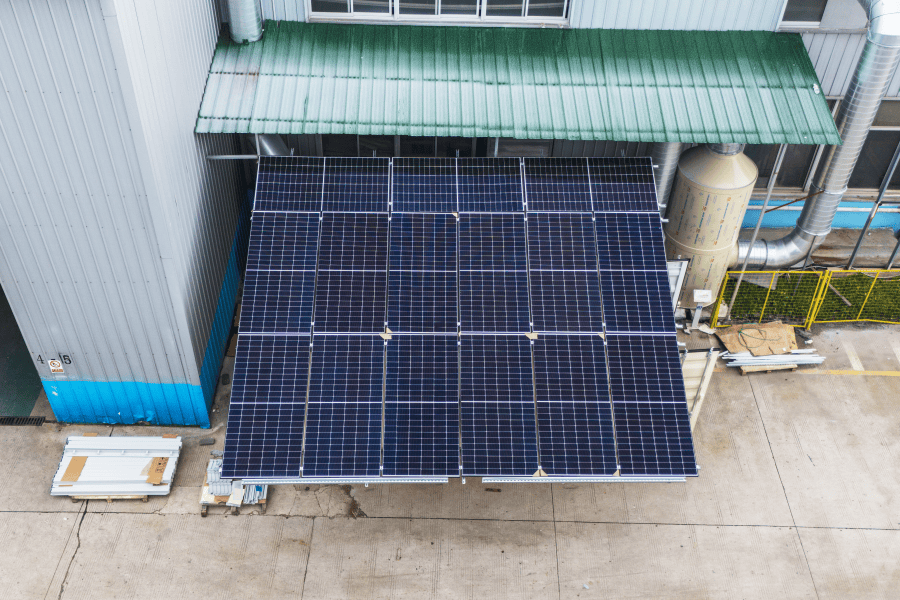
- Future-Proofing with Solar: A black-start BESS is the perfect partner for solar PV. It allows you to build a true, 24/7 renewable-powered microgrid for your farm, reducing daytime grid demand and providing night-time backup.
The Honest Drawbacks: What They Don't Always Tell You
Now, let's have that coffee-chat honesty. This is advanced tech, and it's not a magic bullet. Here are the drawbacks you must consider:
- Higher Upfront Capital Cost: A black-start system is more complex than a standard backup BESS. The power conversion system (PCS) needs to be more robust, and the control software is specialized. You're looking at a 15-30% premium, honestly.
- Design & Integration Complexity: You can't just plug it in. It requires meticulous electrical engineering to model the inrush currents of your specific pumps and design the protection coordination. The system must be compliant with UL 9540 (system standard) and IEEE 1547 (interconnection standard) in the US, and equivalent IEC standards in the EU. This isn't a DIY project.
- Ongoing Expertise & Maintenance: While largely automated, it requires periodic professional checks of battery health, thermal systems, and control logic. You need a provider, like Highjoule, that offers clear local service and maintenance agreements, not just a box drop.
- Energy Duration Limitation: It provides starting power and bridge power. For a multi-day outage, you'll need sufficient solar or a generator to recharge the batteries. Sizing the system's energy capacity (kWh) correctly for your expected outage duration and load profile is the most critical design step.
The Real-World: A Case from California's Central Valley
Let me give you a concrete example. We worked with a 500-acre almond orchard in California's San Joaquin Valley. Their challenge was peak grid demand charges and Public Safety Power Shutoffs (PSPS) C intentional blackouts to prevent wildfires.
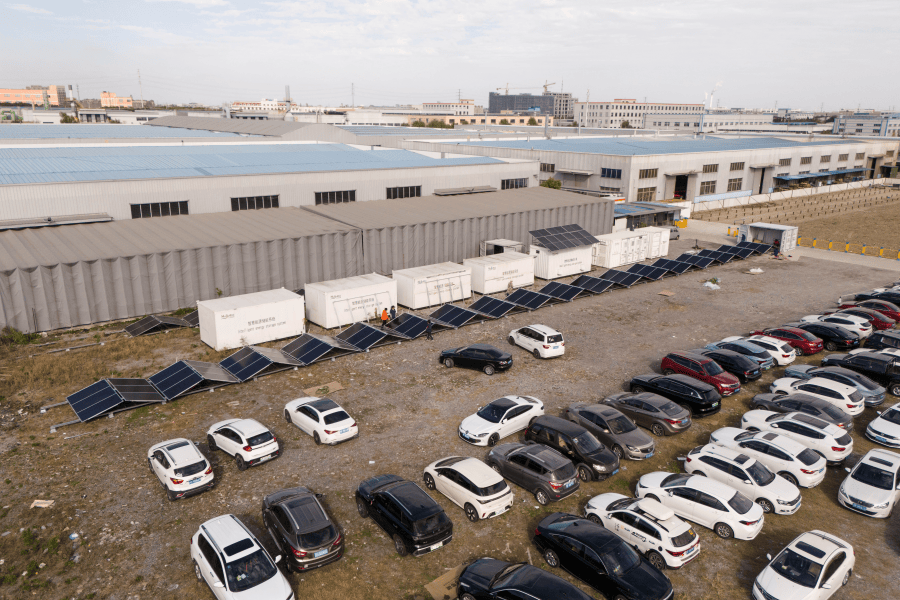
The Solution: A 1.5 MW / 3 MWh Highjoule BESS container with black-start capability, integrated with their existing 1 MW solar canopy. The system was designed to UL 9540 and UL 9540A (fire safety standard).
The Outcome: During a PSPS event last summer, the grid went down for 38 hours. The BESS detected the outage, black-started the critical irrigation pump house (a 600 HP load), and then coordinated with the solar to keep it running during the day. The batteries carried the load through the night. The diesel backup generator never needed to start. The farm maintained its irrigation schedule flawlessly, while also saving thousands in demand charges during normal operation. The key was the precise sizing and the robust, factory-tested black-start controls we built into the container.
Making the Call: Is It Right for Your Operation?
So, how do you decide? Ask yourself these questions, the same ones I go through with clients:
- What is the true financial cost of a 6, 12, or 24-hour irrigation outage? (Be brutal with the numbers).
- Is my region prone to increasing grid instability, wildfires, or storms?
- Do I have existing or planned solar that I want to leverage for resilience?
- Is my operation technical enough to manage this, and do I have a trusted partner for the long-term service?
The technology is proven. The standards (UL, IEC, IEEE) provide a clear safety framework. For many large-scale operations, the benefits of unbreakable irrigation scheduling and diesel displacement now clearly outweigh the higher initial investment and complexity. The question isn't really if the tech works C it's about finding the right partner who understands both the engineering and the dirt-under-the-fingernails reality of your farm. That's where the real value is built.
What's the one critical load on your farm that keeps you up at night when the weather forecast turns bad?
Tags: UL Standard BESS LCOE Europe US Market Black Start Agricultural Irrigation Renewable Energy Microgrid
Author
James Zhang
20+ years agricultural energy storage engineer / Highjoule CTO