
Black Start Battery Storage for EV Charging: Benefits, Drawbacks & Real-World Insights
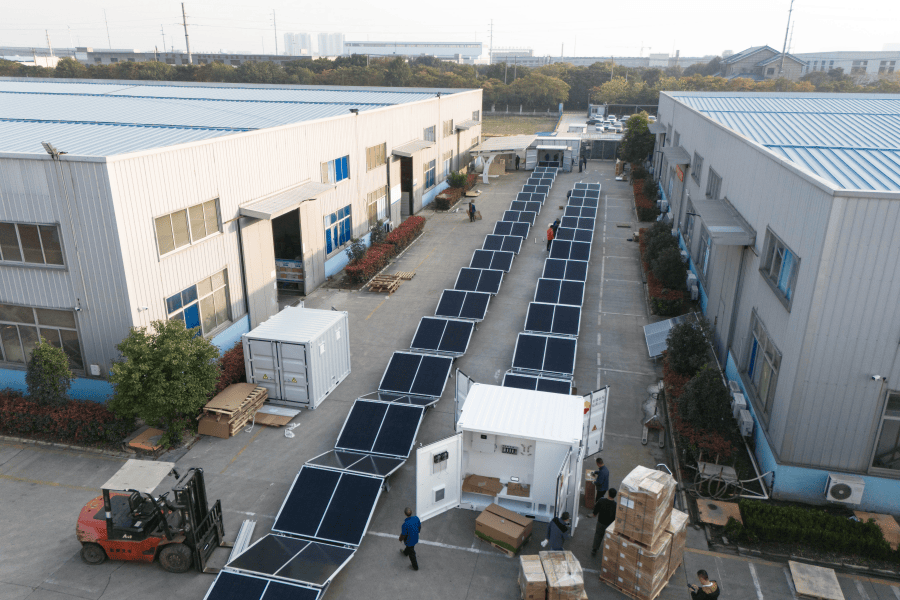
Black Start for EV Charging: The Grid's New Guardian or a Costly Overhead? Let's Talk.
Hey there. If you're reading this, you're probably weighing up a big decision for your EV charging project. The grid is getting unpredictable, and the idea of a black start capable battery storage system C a unit that can kickstart your charging hub from a dead stop during an outage C sounds incredibly appealing. But is it the right move for your business? Honestly, after two decades on sites from California to Bavaria, I've seen the hype and the reality. Let's grab a virtual coffee and break it down, not as a sales pitch, but as a practical chat between engineers.
Quick Navigation
- The Real Problem: More Than Just a Power Blip
- The Benefits Unpacked: Why It's a Game-Changer
- The Drawbacks, Honestly: What No One Likes to Talk About
- A Case in Point: California's Lesson
- Making It Work: The Expert's Checklist
The Real Problem: More Than Just a Power Blip
It's not just about the lights going out. The core pain point for commercial EV charging stations is revenue disruption and brand damage. A public fast-charger that's down during a grid failure isn't just losing $50 per hour in charging fees; it's breaking a promise to a fleet operator or a stranded driver. That driver will remember, and they'll go to your competitor next time. According to the National Renewable Energy Lab (NREL), grid disturbances are costing the U.S. economy billions annually, and the transportation electrification wave is adding a massive, sensitive new load.
I've been on site after a storm knocked out a substation. A charging plaza with twenty stalls was just?- dead. Cars were circling, drivers were frustrated, and the operator was staring at days of lost income. The standard grid-tied battery system? It also sat idle, waiting for a grid signal to wake up. That's the agitation C you've invested in resilience, but you're still hostage to the wider grid's health.
The Benefits Unpacked: Why It's a Game-Changer
This is where a true black start capable lithium battery container changes the calculus. It's designed to island itself and act as a microgrid anchor.
- True Grid Independence: The biggest benefit is operational continuity. When the grid goes dark, the system detects the outage, disconnects safely (per UL 9540 and IEEE 1547 standards), and uses its stored energy to create a stable, local "grid." It then powers up the critical loads C your charging station's management system, payment kiosks, and ultimately, the chargers themselves. I've seen this firsthand on site C it's like watching a heart restart.
- Enhanced Revenue & Brand Trust: Your station becomes the most reliable one in town. For fleet depots or highway corridors, this reliability is a direct revenue protector and a powerful marketing tool.
- Grid Services & Value Stacking: When the grid is healthy, this isn't a sleeping asset. A sophisticated BESS can provide frequency regulation, peak shaving, and demand charge management. This multi-revenue stream can significantly improve the project's Levelized Cost of Energy (LCOE) C basically, the total lifetime cost per kWh of using the system. It pays for itself faster.
- Future-Proofing: With grid codes evolving, having black start capability positions you ahead of potential future requirements for critical infrastructure.

The Drawbacks, Honestly: What No One Likes to Talk About
Now, let's be real. This capability doesn't come free.
- Higher Upfront Capital Cost (CapEx): This is the big one. A black start system requires more advanced power conversion systems (PCS), sophisticated controls, and often a more robust design to handle the inrush currents of starting a "dead" site. You're looking at a premium compared to a basic grid-following battery.
- Increased System Complexity: More components mean more potential failure points. The control software needs to be rock-solid to manage the transition from grid-tied to islanded mode seamlessly. Not all integrators have the real-field experience to get this right.
- Ongoing Operational Demands: You can't just "set and forget." The system needs regular testing to ensure the black start sequence works when needed. This requires skilled technicians and adds to operational expenses (OpEx). The thermal management system also works harder during a black start event, which needs to be factored into the design from day one.
- Energy Budgeting: You must reserve a portion of the battery's energy specifically for the black start sequence and critical site loads. This reduces the daily, revenue-generating cycling capacity of the battery. It's a constant trade-off between resilience and daily economics.
A Case in Point: California's Lesson
Let me give you a concrete example from a project we were involved with in Northern California. A logistics company built a new depot with 50 electric delivery vans. Their challenge was twofold: brutal demand charges from the utility and wildfire-related Public Safety Power Shutoffs (PSPS).
They opted for a black start capable 2 MWh container. The daily play was peak shaving, saving thousands on their bills. The resilience play was for PSPS events, which could last 48 hours. During one such event, the system islanded perfectly. It kept the depot's security, refrigeration for perishable goods, and two fast chargers operational, allowing them to prioritize critical vehicle routes. The catch? The upfront cost was about 18% higher than a non-black start option. Their ROI calculation, however, included the value of avoided business disruption, which made the math work. The key was a design that balanced C-rate (the speed at which the battery charges/discharges) for both daily cycling and emergency power needs.
Making It Work: The Expert's Checklist
So, how do you navigate this decision? Here's my field-tested advice:
- Conduct a Rigorous Value-of-Resilience Study: Quantify the cost of downtime. Lost revenue, contractual penalties, brand impact. If that number is high, black start makes sense.
- Demand Proven, Certified Hardware: Insist on containers built to UL 9540 and with PCS tested to relevant IEC standards. At Highjoule, for instance, our black start systems undergo a brutal factory acceptance test that simulates a full black start cycle before shipping. This de-risks the on-site commissioning.
- Plan for the Full Lifecycle: Factor in 5 and 10-year maintenance costs, including control software updates and battery health checks. A good partner will offer a performance guarantee and local service support.
- Start with a Phased Approach: For a large site, maybe the first phase is a standard BESS for demand charge management. Design the conduit and footprint, however, to add a black start capable unit later. This spreads out the CapEx hit.
The bottom line? A black start capable battery storage container for EV charging is a powerful tool, but it's a surgical instrument, not a blunt hammer. It's perfect for mission-critical charging hubs, microgrids, or areas with unreliable grids. For a simple urban lot with high grid redundancy, the benefits might not outweigh the costs. The decision hinges on your specific risk tolerance and business model.
What's the single biggest grid threat to your charging project's bottom line? That's the question I'd start with.
Tags: UL Standard BESS LCOE Europe US Market Black Start Grid Resilience Renewable Energy EV Charging
Author
James Zhang
20+ years agricultural energy storage engineer / Highjoule CTO