
Benefits & Drawbacks of C5-M Anti-Corrosion Pre-Integrated PV Container for High-Altitude BESS
Contents
- The High-Altitude Challenge: It's Not Just Thin Air
- C5-M Explained: More Than Just a Paint Job
- The Benefits: Why This Container is a Game-Changer
- The Drawbacks: The Honest, On-Site Reality Check
- Making the Right Call for Your Project
The High-Altitude Challenge: It's Not Just Thin Air
Let's be honest. If you're looking at deploying a Battery Energy Storage System (BESS) or a pre-integrated PV solution in the Rockies, the Alps, or any other high-altitude region, you already know the basics. Lower air density for cooling, wider temperature swings, and increased UV exposure are on your checklist. But from my 20+ years on sites from Colorado to Switzerland, the silent killer, the one that creeps up on project timelines and operational budgets, is corrosion.
It's not just about salt spray near coasts. At high altitudes, you get a brutal combination of factors. Intense, unfiltered UV radiation breaks down standard protective coatings faster. Thermal cycling - think -20C at night to 30C in the sun on the same day - causes micro-cracks. Then, you add in moisture, industrial or agricultural pollutants, and maybe even abrasive wind-blown particulates. I've seen standard C3 or C4 painted containers in mountain sites where the corrosion started at weld points and panel seams in under 18 months, not the 5-7 years you'd expect. According to a NREL report on renewable asset durability, environmental stress factors can accelerate degradation by up to 300% in extreme high-altitude environments. That's a direct hit to your Levelized Cost of Storage (LCOS) and a major operational headache.
C5-M Explained: More Than Just a Paint Job
This is where the C5-M anti-corrosion classification enters the chat. It's not a brand name, but a severity level defined by ISO 12944 and widely recognized in UL and IEC standards for outdoor steel structures. "C5-M" stands for "Very High" corrosivity, Marine atmosphere. "M" is key here - it signifies resistance to not just industrial pollution but also chloride-induced corrosion, which is relevant even inland from de-icing salts or certain agricultural chemicals.
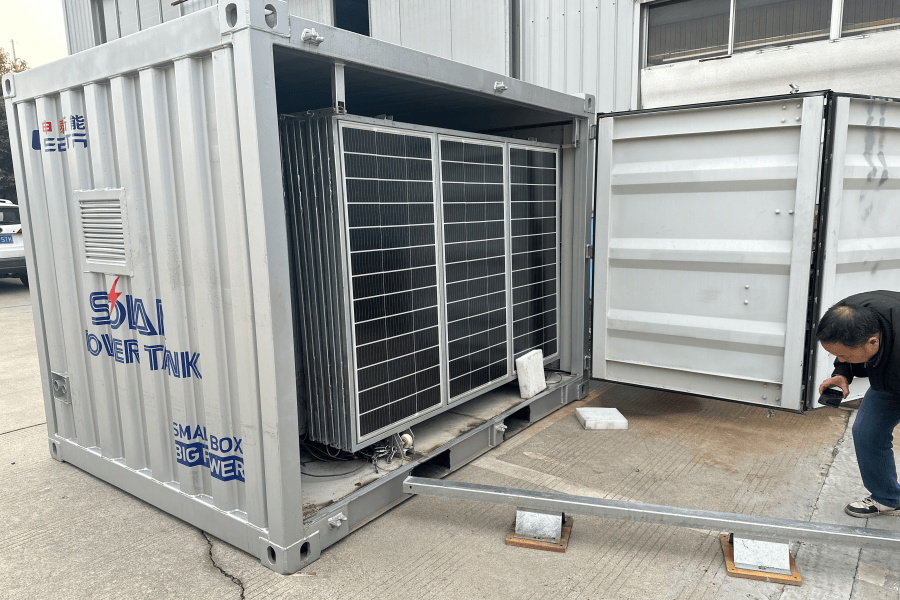
A true C5-M pre-integrated PV container isn't just dipped in better paint. It's a system:
- Surface Preparation: Near-white metal blast cleaning (Sa 2?) to create the perfect anchor profile.
- Coating System: A multi-layer, high-build epoxy/zinc-rich primer and polyurethane topcoat system, with a total dry film thickness often exceeding 280|m. That's 2-3 times thicker than standard industrial coatings.
- Design for Durability: This extends to sealed seams, drainage considerations, and the use of stainless steel or hot-dip galvanized fasteners for all critical external hardware.
When we at Highjoule specify a C5-M container for a high-altitude project, we're buying decades of designed protection, not just a box. It's about total cost of ownership.
The Benefits: Why This Container is a Game-Changer
So, what do you gain by opting for this specialized solution?
- Dramatically Extended Asset Life: This is the big one. You're effectively "future-proofing" the enclosure - the single largest physical component of your BESS - against environmental decay. A 20-25 year design life for the container aligns with the financial model of the batteries and inverters inside. I've seen firsthand how this eliminates mid-lifecycle repainting or, worse, structural repair campaigns that require full system shutdowns.
- Reduced Lifetime Operational Expenditure (OpEx): Zero planned maintenance for the enclosure's corrosion protection. You save on inspection, touch-up, and major refurbishment costs. In remote or logistically challenging high-altitude sites, the cost of sending a maintenance crew just for painting is astronomical. This saving flows straight to your bottom line.
- Preserved System Integrity & Safety: Corrosion isn't just cosmetic. It can compromise structural integrity, door seals (allowing moisture and dust ingress), and even electrical grounding paths. A C5-M container maintains a sealed, secure environment for the sensitive - and potentially hazardous - equipment inside, a non-negotiable for meeting UL 9540 and IEC 62933 standards for safety.
- Faster, More Predictable Deployment: A "pre-integrated" container means the PV mounting structure, cable management, and often even the BESS racks are factory-installed in the treated enclosure. On a windswept mountain site with a short construction window, bolting on pre-assembled components is far quicker and less error-prone than field-welding or painting. Time is money, and weather windows are precious.

The Drawbacks: The Honest, On-Site Reality Check
No solution is perfect. Let's talk about the trade-offs, the things you need to budget and plan for.
- Higher Upfront Capital Expenditure (CapEx): This is the most obvious drawback. A C5-M certified enclosure can command a 15-25% premium over a standard C3 industrial container. For a large-scale project, that's a significant line item. You must be confident that the long-term OpEx savings and risk mitigation justify this initial investment.
- Weight and Logistics: The thicker steel and coating layers add weight. This can impact transportation costs, especially for remote sites, and may require heavier-duty foundation pads. You need to factor this into your civil engineering plans from day one.
- The "Over-Engineering" Risk: Not every high-altitude site is a C5-M environment. A detailed site corrosivity assessment is crucial. I've been called to projects where a client insisted on C5-M for a dry, high-altitude desert site with minimal pollution. A robust C4 specification might have been perfectly adequate for 25 years, saving them that upfront premium. You're paying for insurance; make sure the risk is real.
- Repair Complexity: If the coating is damaged during transport or installation (it happens!), field repair to the original specification is highly specialized. It's not a job for a local painter. You need certified technicians with the right equipment, which can mean delays and higher costs for what looks like a minor scratch.
Take a project we completed in Nevada's high desert. The client initially balked at the C5-M quote. We worked with them to analyze the specific site conditions - low humidity, minimal pollutants, but high UV and sand abrasion. We landed on a hybrid: a C5-M spec for all underside and structural weld areas (prone to micro-condensation), with a heavy-duty C4 UV-resistant topcoat elsewhere. It delivered the protection needed without the full premium, showcasing the importance of tailored, not templated, solutions.
Making the Right Call for Your Project
So, how do you decide? It boils down to a disciplined evaluation. First, invest in a professional site corrosivity assessment. Don't guess. Second, run a 20-year total cost of ownership model. Factor in the estimated costs of maintenance, potential downtime, and component replacement for a standard container versus the higher CapEx of the C5-M. Third, consider your risk tolerance. For a critical grid-support asset or a remote microgrid where failure is not an option, the insurance premium of C5-M is often an easy yes.
At Highjoule, our approach is to bring this analysis to the table early. Our engineering team doesn't just sell a container; we help you model its lifecycle. We ensure our pre-integrated solutions, whether they end up needing full C5-M or a tailored spec, are designed from the ground up to meet UL and IEC standards, because that's the baseline, not the bonus. The goal is to give you a system that you can install, commission, and essentially forget about the enclosure for its entire service life.
What's the most surprising corrosion failure you've encountered in the field, and how did it change your specification approach?
Tags: UL Standard BESS PV Container C5-M Anti-Corrosion IEC Standard High-altitude Energy Storage
Author
James Zhang
20+ years agricultural energy storage engineer / Highjoule CTO